Search This Blog

CCE in brief

My photo
Recovering backpacker, Cornwallite at heart, political enthusiast, catalyst, writer, husband, father, community volunteer, unabashedly proud Canadian. Every hyperlink connects to something related directly or thematically to that which is highlighted.

Wednesday, 12 August 2015

Umm...


I'm sure this seemed like a good idea at the time:


"Give us your money so we can stop Harper wasting it."

From a public that already believes the "plus ca change..." line about politicians, this might have been reconsidered.

Game of Seats Gets its Dragons


Or at least a very big goose.  We may have a sense of self-importance about our politics and impact on the world stage, but in reality, this is where we rank on the world stage:

insta


It's kinda hypnotic, really.

But it's definitely not this:


Message?  If there is any, it's this - we're not dragon slayers, so we might as well have a bit of fun with the game.

Tuesday, 11 August 2015

Ground Up Leadership


If you're an archetype, or a caricature.  Real life is less Lord of the Rings, however, and more Game of Thrones.

And there are no Supermen from above, on a mountain top or in an ivory tower.

The secret of leadership isn't being a superhero; it's about building communities of engagement. They, not you, will build that world.

To dominate, have an enemy.  Live in silos, tear others down.  

To be a leader, have a vision.  Be the bridge between that vision and the people around you.  Believe in both.

It's that simple.


Monday, 10 August 2015

There is no Dear Leader in Democracy


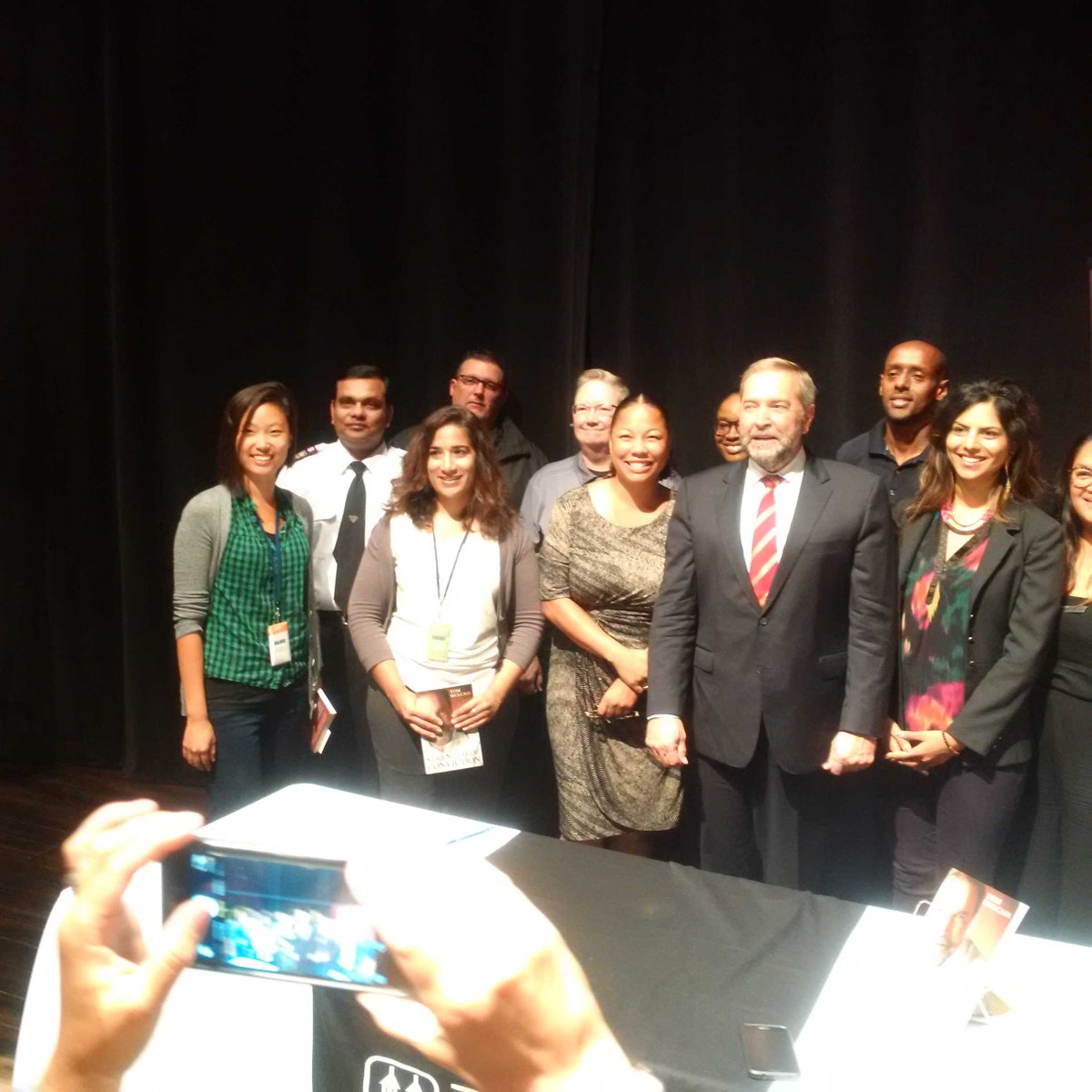
This morning, while training new DECAs at CSI Regent Park, I learned that Thomas Mulcair was launching his book and his campaign on the 1st floor of the building (Daniels Spectrum).  For a while, it seemed like he might come up for a tour of the facilities.

Embedded image permalink
I hardly qualify as a Dipper (I'm an aspirational post-partisan Liberal), but I was still glad that a party leader was visiting a public space in the community and might even pop up to CSI for a tour.  With a couple staff and CSI community members, I went down to plug social innovation in general and CSI in particular.  I had no problem tweeting promos that let people know he was there, nor in taking pictures of him with people who may or may not be supportive of him.

There were security folk present, but at no time was anyone pushed away, sniffed with dogs or ever made to feel like they didn't belong in the presence of The Leader for any reason.  Heck, I even got a pat on the back from one of Mulcair's folks for trying to coerce him up to the 3rd floor (offer's still open, btw!)

Maybe it's because Team Mulcair isn't as experienced with public engagement at rallies as the other guys; maybe it's that the audience was only a few dozen people.  I don't know.  What I do know is that everyone in the room was polite, engaging and non-confrontational and the leader was as approachable as anyone leading a book-signing can be.

Worth noting - I saw no evidence that members of the CPC or LPC War Rooms were present, which might have something to do with the civility.  Had they been present, they would have been looking for gotcha moments or inducing some of their own, which would likely have put a chill in the air (naturally, the whole reason for doing so).

Contrast this experience with Susanna Kelley's experience with Team Harper.  She's well-enough known that her threat-level could easily have been verified, if Team Harper had any real intent on transparency in their events and engagement with the public at large.

As Kory Teneyck has made clear, though, that's not the intent of Harper's campaign.  

When the CPC is doing a manufacturing announcement, see, they only want manufacturing people as backdrop.  If they're doing a safe-zone rally of established Harper fans, they're keeping everyone else out, like bouncers turning away poorly-dressed folk trying to get into a posh bar.

Put another way - if you're not the market for whatever's on offer at a given event, you're not welcome.  Between outings, you're not welcome.  

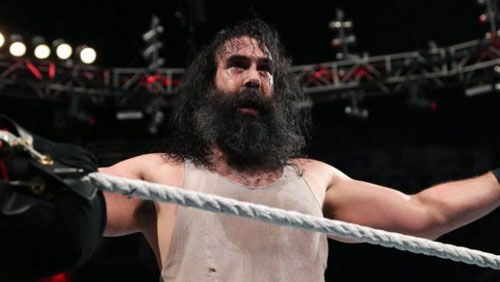
Like a WWF wrestler, when the PM is off, he's off - you only get to see the showman when he's on stage.  When he wants you to see him.  

The reverse isn't the case; it's a dangerous world out there full of people who may not have The State's best interests at heart.  They could be terrorists, or eco-terrorists, journalists or public servants. You don't need to know what the Leader is up to when he's not messaging, but he needs to know what everyone else is doing, just to be safe. 

I wish that was hyperbole; I wish I could laugh along with the snide dismissals partisan flaks will drown such statements in.  The problem is, they're right on the mark.  

When you're inside the bubble, it's hard to see how the isolation impacts you.  When you're confident in yourself beyond all measure, it's impossible to see how success can erode your integrity.  Like evolution, it doesn't matter if you believe in the human weakness for corruption; it exists regardless.

We have a government that talks about memorials to the victims of communism yet doesn't see how so much of their action could easily be first steps on that same slippery slope:

 - tough-on-crime mixed with tough-on-ideological opponents
 - the leader is less and less present, the partisan machine takes over government to extreme degree
 - communication disappears into messaging
 - the truth is vetted and the facts censored

Of course, you could easily think (and certainly, opposition parties will reinforce) that this is simply a CPC/government problem that a New Government could fix.  That's how the game works, right?


Italics mine.

Campaigns are increasingly not places to risk unscripted moments, planted or unplanted uncomfortable questions, etc.  It's too risky; you might end up with a bad quote or image that could derail your carefully constructed campaign plan.

The purpose of that plan?

Not for the common and noble purpose of serving the public through politics, certainly.  The public isn't to be served, and certainly not engaged.  It's to be sold and messaged to.

See, the other parties are seeing what works for the sitting government and, like it or not, are cribbing from their playbook.  They don't want to be undermined by such naive principles as transparency and accountability - that's for elections to decide, caveat emptor-style.

Public service isn't the objective.  Winning is.  

Winning in modern politics means putting the Leader first and all competition behind, with the  public little more than captive audience to the race before them.

When that happens - when a chasm of engagement and communication forms between government and the people - policy makers get further and further away from the concerns, priorities and aspirations of the people.  

The people's representatives have less and less voice; the media is increasingly kept at arm's length; the people themselves are being vetted on partisanship before being allowed to access their own government.

When the Leader comes first, the people come last.  That might be smart campaigning, but it makes for very poor democracy.

Friday, 7 August 2015

Trudeau's Close


Trudeau's closing remarks have become the subject of controversy.

I compared them to cilantro - people seem to love 'em or hate 'em, with a smattering of people who just found them odd.

Here they are in full:


The first reaction I had when he began to speak was a cringe - OMG, he's repeating the negative again!!

The next thing that stood out for me was the We are who we are, Canada is what it is line - what the hell was that?  What are we, what's Canada - a Zen koan?

I was left feeling I'd heard a well-delivered elementary school class presentation - aspirational, but lacking substance, caught up on tropes in lieu of vision.

After having listened to this speech multiple times now, I still feel that way, but I think I have a better sense of what he was trying to achieve.  

Recognizing that he clearly got a lot right for a lot of people (granted, everyone I know who likes it is partisan; everyone I know who doesn't like it is either partisan or not a fan of Trudeau in general), here's what I think could have been done to make it better.


 - the concept works, but the "I'm not ready" part is just too risky and unnecessary.

Mr. Harper has spent millions of dollars on attack ads in an attempt to portray me as young and, because I'm young, not up to the job of leading our country.

There are youth voters who feel marginalized.  There are a lot of parents of these youth who worry about their children's future, because they see their kids marginalized, especially when it comes to work opportunities.


Something like this is good - I like that it empowers people to think for themselves, something rare in political comms.

Mr Harper believes that being the boss means standing against - standing against change, against facts that disagree with his ideology.  He seems to believe being the boss means opposing new ideas.


Said with quiet confidence.  I hear him, I want to know what he thinks - what he really thinks.


Harper's boss - he likes being boss, he's not comfortable with challenge.  He's got his base, but he stands squarely against modern reality of demographic tipping points, a new economic revolution and new understandings of everything from the environment to design thinking.

This is his weakness - he simply doesn't understand what's happening in our world and is instead trying to cling to a mythic past.


Leadership isn't about keeping the people in line; it's about empowering them to reach higher.


All good.

Subtle shout-out to his dad is fine, but what a great opportunity to provide context.  How does he feel the country in his bones?  Why?  Trudeau's been to every corner of the country - a couple short anecdotes about what defines Canada for him, in his bones, would really help here.
Also - one of Harper's weak points that flows against the common narrative is that he doesn't crave power in the way a Donald Trump does; Harper is a man deeply uncomfortable in the world for whom power is a means to an end.  He doesn't want power - he needs it, which is different.
What I learnt from my father is that leadership is born of love this country.  You have to feel the pulse of its rivers in your veins; you need to feel the majesty of its mountains in your bones.
The country, you see, is a living, breathing creature - not a resource to be exploited.
Above all, you need to believe in its people.
- save this for later...

He likes being the boss.  He believes in conformity.  He sees our beautiful country as a resource to be exploited, not as our home.

And he fundamentally doesn't trust Canadians.  This is why he only speaks to his party faithful, is secretive with our public information and why he micromanages your Members of Parliament.

I'm not interested in being the boss.  I want to be the next Prime Minister of Canada.  

Leadership isn't about keeping the people in line; it's about empowering Canadians to reach higher.

Mr Harper feels that his Canada is under attack - that new ideas, opposing ideas are threats to the Canada he clings to.

I respectfully disagree.

The Canada I know recognizes that diversity is strength and that new ideas aren't our greatest threat, but our greatest asset.

We don't cling to the past out of fear of change - we confidently build a better future, and we do it together.


- it took a while, but I think I got what the tenor of this line was; I just think it needs to be a bit more clear.

- could stick with this, but "respectfully disagree" is so much more Canadian (eh?)


- And ultimately, why I didn't like this line; one, it's too nebulous and two, it speaks to stagnancy.  We are who we are, Canada is what it is.  No; we are dynamic, thriving, evolving.  The stand-pat argument is Harper's.


- I really, fundamentally disagree with this.  You can have an economy that does wonders for the middle class - as arguably the industrial economy did - and still have booming poverty, employment discrimination, etc.  It's his line, but it's not a concept I can support.

A country that works for everyone involves an economy that works for everyone.


Mr. Harper has spent millions of dollars on attack ads in an attempt to portray me as young and, because I'm young, not up to the job of leading our country.

Mr Harper believes that being the boss means standing against - standing against change, against facts that disagree with his ideology.  He seems to believe being the boss means opposing new ideas.


Leadership isn't about keeping the people in line; it's about empowering them to reach higher.


What I learnt from my father is that leadership is born of love this country.  You have to feel the pulse of its rivers in your veins; you need to feel the majesty of its mountains in your bones.

Above all, you need to believe in its people.

He likes being the boss.  He believes in conformity.  He sees our beautiful country as a resource to be exploited, not as our home.

And he fundamentally doesn't trust Canadians.  This is why he only speaks to his party faithful, is secretive with our public information and why he micromanages your Members of Parliament.

I'm not interested in being the boss.  I want to be the next Prime Minister of Canada.  

Leadership isn't about keeping the people in line; it's about empowering Canadians to reach higher.

Mr Harper feels that his Canada is under attack - that new ideas, opposing ideas are threats to the Canada he clings to.

I respectfully disagree.

The Canada I know recognizes that diversity is strength and that new ideas aren't our greatest threat, but our greatest asset.

We don't cling to the past through fear of change - we confidently build a better future, and we do it together.

The Canada I want my children to grow up in is one where everyone's children have the opportunity to reach their full potential, whatever that might be, and be part of what makes Canada the best country in the world.

A Canada that inspires the rest of the world as well.

That's the Canada I believe in; that's the Canada we all know and love.

It's the Canada we can build together.

That's it.

I'd like to have more substance - expand on what the idea of Canada really means - but I there's a time limit and I recognize that the Party wants to take their time with the substance.

You have to start somewhere, though.  The spark, the inspiration and the empowerment of people along the way is what leadership is all about.

Thursday, 6 August 2015

Topless with Trudeau and the Ford Factor


(quote thanks to Peter on Warren Kinsella's non-blog)

Much hay has been made about the picture war emerging from #Elxn42, both the pics parties want you to see and the ones they don't.  


There was Trudeau boxing - personally, I'm undecided about whether I think that works to or against Trudeau's favour.  Boxing involves physical discipline, which - rightly or wrongly - we associate with toughness and leadership.  It's also about competition, which is what elections are, and a subtle reminder that the only time Trudeau's gone toe-to-toe with a Tory in any kind of arena, he beat him soundly.  

At the same time, though, fisticuffs is school-yard stuff, surely not what we want to see from our leaders.  Then again - are attack ads any different?

More nuanced - different audiences will automatically have different reactions to any situation, and that reaction can after-the-fact be nudged by whatever spin gets placed on the emerging story.  That, truly, is a big part of what campaigns are - massive efforts by parties to define their side/leader positively and the other guys negatively, whatever the reality of context might be.  A great piece on the fakery of campaigns can be found here.

Part of any partisan spin doctor's job is to read the emotional tea-leaves of the nation and find out what they are and aren't in the mood for, how they will and won't react to particular messages and themes.  It's a tough job, often gotten wrong.


So - how do you feel about Justin Trudeau posing with a naked woman at what is clearly an event of some kind?  Is he doing what politicians do - take pictures with people, give them some memories and minor engagement?  Hanging with the people in a relatable way, as some people believe Rob Ford does?

Or is he demonstrating a lack of political savvy, demonstrating immaturity?  Is this evidence that his staff isn't on the ball, because they allowed a picture of him with a semi-nude woman?

There's no one answer to this, but that doesn't matter - what matters in a campaign is the majority's answer.  That's what spinsters need to check the pulse of and, where possible, nudge in their favour.

Pride, of course, is a celebration of diversity.  For most of Western history (and unquestionably into the present), being gay was sinful, socially ostracising in much the same way as being black or in many circumstances (including politics) being a woman was.


People avoided openly gay peers out of fear; LGBTQ individuals had to live in shame and fear of being discovered for being what they truly were, for the social consequences of being themselves were high.


For women and minorities, no such hiding option was available - on the job market, on the bus and in our Legislatures, access was limited.  That was life.

As such, the world of high power in politics and in business were dominated by white men of a certain age group.  That demographic tended to view their position of power as inherent to who they were and made decisions that reflect their viewpoints only.  Marginalization was - and to a large degree still is - institutionalized.

We have made progress, though - the existence of Pride is proof of that, as is the US's first black president and the growing number of women as political leaders.  In politics, on Bay Street, in a growing number of places, the upper echelons of society increasingly reflect the demographic reality of the nation.


Does Trudeau having his picture taken at a public event with a half-naked woman make him more one of the people (and therefore better able to understand and represent their interests) or does it make him look unfit for leadership?  Will more people like the message the picture conveys or not - or will the spinsters be the one to determine the emotional frame the picture generates?

I don't have answers, nor polling data, nor decades of campaign experience to draw on.  

What I do know, from a casual survey of people I know and of online discussion, that the general response to the picture seems to be "meh."

People likely to vote Conservative are in high dudgeon about the picture.  People likely to vote Liberal are staunchly defensive of what it represents.  Dippers are rubbing their hands with glee. Most people, though, don't really care.

Which to me is a good thing.  I'd like to think we're at a point of social maturity where we aren't scandalized or titillated by the human form presented publicly.  A woman should be able to walk around with a tight red dress and not have to beat off staring eyes and wandering hands on the streetcar, just as a half-naked man mowing the lawn doesn't draw much attention.

Freedom of speech, freedom of expression, the right to participate, the caveat of being respectful to others as they do their own thing, so long as they don't hurt others in the process.

That's what we're after, right?  Those are principles much of Harper's base at least pretends to be in favour of, n'est ce pas?

Do we want leaders who are like us, representative of us, able to craft and defend policy that reflects our reality?

If he were to run for Mayor today, Rob Ford would in.  The fact that he's a law-breaking, drug-using pathological liar doesn't matter - enough people see him as human and relatable, his positions sound-bite simple enough to give him a win.

If Rob Ford were in an electoral contest with Stephen Harper, what would the result be?  How uncomfortable would Ford make Harper feel, how clearly would he draw a contrast between the antiseptic introverted ways of Stephen Harper compared to the vicarious populism of Rob Fuckin' Ford?  

That's not the race we have, clearly - Trudeau is no Ford.  He is, however, more human and relatable than Harper is.  


Another thing Trudeau isn't is tightly scripted nor controlled (so far) by his team.  This isn't the case for way too many politicians who, in hard truth, are somewhat marginalized themselves.  Harper might be his own watchdog, but the way he governs has expanded the chasm that exists between MPs and their constituents.  

The ability for Conservative MPs to be among the people, their constituents is stifled by The Man at the top - the white, anglo middle-aged man who is a picture-perfect representation of yesterday's institution and the discrimination it embodied.

Team Trudeau has clearly been trying to portray their guy as the embodiment of a new kind of leadership that is more engaged with people and less focused on cold partisan calculation.  

Team Harper has been trying to present Trudeau as young, immature, too focused on fun people engagement stuff and less serious about political calculus.

I think public reaction to the images that emerge from this this election go beyond all this.  How we respond to imagery that shows our leaders dipping their toes in all the colours and diversity of our country says at least as much about us and our social maturity as it does about theirs.

Would we rather our politicians be stage-managed like actors, or put on leashes like kindergarteners?

If that's how we expect our leaders to be - have we any right to complain about shrinking freedoms at the individual level?

Such are the meta-questions that plague Canadian democracy, and ones we'll learn a lot about over the rest of the campaign.


Monday, 3 August 2015