Search This Blog

CCE in brief

My photo
Recovering backpacker, Cornwallite at heart, political enthusiast, catalyst, writer, husband, father, community volunteer, unabashedly proud Canadian. Every hyperlink connects to something related directly or thematically to that which is highlighted.
Showing posts with label Samara. Show all posts

Friday, 29 August 2014

Please help me set my #OGT14 table! (UPDATED)


Events take place starting at 6:30PM in Jean Pigott Hall at Ottawa City Hall, 110 Laurier Avenue West, Ottawa. The doors will be open at 6PM.

I have to fill a maximum of 8 minutes of speaking time saying something poignant about why you can't have Open Government without a Responsible Society.

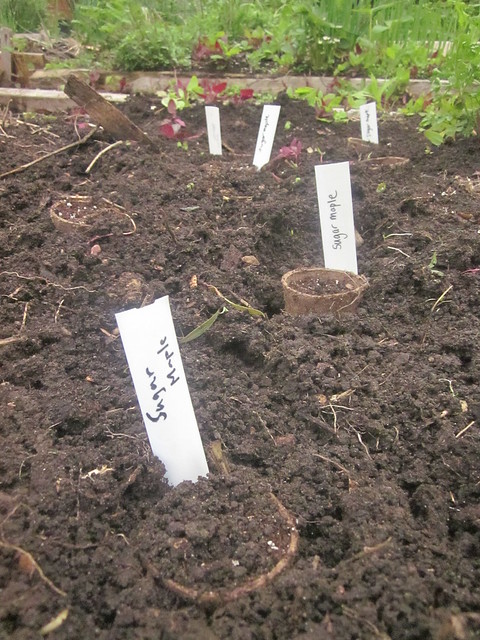
What I wasn't counting on was this - I've been assigned a 2 x 6 table that I need to populate with something.  Here are my directions:
Embedded image permalinkRemaining décor is up to your imagination. Bring your own displays, banners, posters, props, pamphlets, swag ... Etc, but be aware that they will need to be free standing or on the table.
Here's where I need your help.

My firm Wakata Inc. is dedicated to public affairs with a social purpose; I like to frame my partner Jen Li and I as the stone in the soup, bringing people and organizations together and facilitating shared solutions.  While I'm going to #OGT14 as me, not as Wakata, I want to hold true to what I believe in.

So - what should I display on my table?  Who can I promote, what shared solutions can I hint at in my space?

M first thoughts were that I'd like to promote the following:

Samara - democracy renewal
Why Should I Care - civic engagement
Exhibit Change - improving communication and comprehension
SoJo - a cool web platform that will create community and help individuals turn ideas into action.
MaRS Solutions Lab - anyone planning policy past the four-year cycle deserves some space!

I would have included Make Web Not War, but I imagine they have their own table, being the patrons of #OGT14 and all.

Those are my first thoughts, though I would need some resources from them to put on my table around the stone I just asked Richard Pietro to pick up for me somewhere between Vancouver and here.

What do you think?  All cool suggestions are welcome - and feel free to share them on Twitter using #OGT14!


UPDATED Sept 2 2014:

And the gold star for first carrot goes to Samara!  Samara has offered materials about their Everyday Political Citizen project for my #OGT14 table.

Samara is a perfect compliment for what OpenGov and Responsible Society are all about - our politics can do better, but not without an informed, engaged public.  Their Everyday Political Citizen project is designed to recognize and celebrate the democratic catalysts in our midst; the people who ask questions, who encourage you to get informed, who believe that it's through direct engagement that we can make a difference.

My #EPCitizen nominee for this year, as it happens, is Richard Pietro.

Richard has picked up a stone out west for me to use as the centrepiece of my table, the thing that brings groups like Samara (and hopefully, SoJo, WSIC, Exhibit Change, MaRS) together.  This is appropriate, because his #OGT14 tour has served the same role this summer - bringing together an incredibly diverse community from across the country around one shared theme:

Open Government.

Richard's brought the stone, Samara the first ingredient - but there's lots of space left!  Who's up next?


Monday, 2 June 2014

Open and Yellow: Effective Advertising Starts with Why


@YellowPages_ca gets a tip of the hat for a brilliant ad campaign currently adding some freshness to Toronto's subway system.
 
Most ads promote a company, service or product directly.  They tell us what they are in flashy phrases, tell us how they do it better than anyone else and of course, tell us we want what they have to offer.
 
This wasn't Yellow Pages' jumping-off point.
 
Yellow Pages clearly thought through why they exist - to provide people access to the services and information they need.  How might they do so more effectively?  Through the development of an App, of course.  They adapted to the times to ensure they were implementing their why in the most effective way possible.
 
Then, they developed an ad campaign that carried their why further.  Instead of using ad space to tell people what they do and how well they adapt to the times, they designed a campaign that actually demonstrates what they do.  It's mercilessly efficient; no opportunity to implement their why is wasted.
 
Even better, the campaign is clearly targeted to the end-users that are being exposed to these ads.  What do people using public transit do?  Well, the use public transit to get from point A to B.  Why should the care about Yellow Pages?  Yellow Pages can help them use the tools they use already more effectively, giving them more access within their existing patterns of behaviour.
 
That's smart, but that's barely scratching  the surface of what these ads achieve.
 
By promoting local business areas, Yellow Pages is supplementing the work of local BIAs - something individual businesses will surely be appreciative of.  By providing information about things to see and do in Toronto, Yellow Pages is enhancing and aiding the City's Economic Development and Culture division.  The City (and its elected officials) will surely recognize the value of that.
 
It's CSR, advertising and social capital-building, all at once.  So what's this got to do with #OpenGov and #OpenData?
 
Across the board, government is struggling to implement it's why effectively.  This is in no small part because governments and bureaucracies are focused on what they do, not why they do it.  What they do is provide services, build and maintain infrastructure, create and enforce laws and occasionally consult with stakeholders (like voters).   
 
Why they do it is murkier.  That's their mandate is the short answer, but why is this mandate important?  Why do we need government at all?
 
Government is not focused on individual wins or maximizing the profit of shareholders any more than its goal isn't to put a chicken in every pot.  In practice, government is a Social Gardener - it exists to foster sustainable, dynamic growth across the system.  Strong individuals, strong communities, a strong society.
 
This is why we are seeing increasing interest in Open Government and Open Data across the board - how might government better empower citizens and companies to cross-pollinate and support each other?  How might government spend less time (and money) in sales or defense and more implementing their why?
 
Governments could do worse that follow Yellow Pages' example.
 
Through opening public data and making it accessible as possible, Government empowers citizens to see what the landscape looks like so that they might navigate it better.  Transparency isn't just about letting people see into the sausage-making process; it's an opportunity to clearly articulate the why in each and every decision and engagement.
 
By embracing the tools that people use and designing both their services and promotions with end-users in mind, government can design services that are actually meant to be used, rather than simply exist should someone decide to look for them.
 
The other key thing that government could learn from Yellow Pages is that ROI isn't always a clear-cut two-step process.  Sometimes adding value because you can helps achieve your why more effectively than only committing to something transactionally.
 
There are plenty of people in government who think the way Yellow Pages does, just as there are plenty of external partners ranging from Make Web Not War to Samara to the Maytree Foundation who feel the same way.

Government doesn't need to be all things to all people any more than Yellow Pages needs to deliver every service they promote.  That's not their why.
 
It's time government rediscover their purpose and spend less time maximizing revenue or downsizing services and instead dedicate their time and resources to improving efficiency by reducing duplication, gaps and overlaps within the system.  They might generate less profit that way, but they'll inevitably reduce costs, which leads to the same goal, and they'll improve circulation within the system.
 
I can't think of a better why than that.


Friday, 4 April 2014

2014: The Year of Open Data and Responsible Citizens

 image


Which Political Leader is the only one who can beat the other guy and single-handedly heal our community?  Exactly - but that's how we're sold our politicians, isn't it?  More and more resources are being spent in promoting people at the top of a given silo while at the same time, competing organizations keep taking pot-shots at each other's foundations.  Meanwhile, closed internal cultures are coming into conflict with social media and the emergence of Open Data and a newfound appetite for real accountability.
 
The Star's idea isn't new.  Versions of it have already manifested with Samara's Everyday political citizen project; from a different angle, organizations like Maytree with their non-partisan GOTV training and civic engagement groups like Why Should I Care are seeking to open up information, access and the confidence to reach out and lead from the front within non-traditional political/policy actors.
 
In other words, empowering everyday citizens to become hidden experts. 
 
These are exactly the sorts of people the catalysts of the Open Government/Open Data movement are looking to partner with and co-design processes and platforms with, using techniques and methodologies like those of Swerhun and Exhibit Change.
 
Open Data for a Responsible Society consisting of engaged citizens.  There isn't anything revolutionary about this idea, but it is good to hear it coming around again.


Tuesday, 1 April 2014

Come Outside, Pierre Poilievre - Spring Is Coming!


Rules?  What rules?  The Globe and Mail has clearly missed that the only rule that matters when a Party feels they have an empire - they act, they create their own reality... they're history's actors.  All of us, we're just left to study what they do.  We commit sociology by studying, they just do.

Which, of course, is the ideology that's fueling Stephen Harper and his point men/women (but not, I would say, his whole Party).  Poilievre is poster boy for the smug entitlement that has corroded the institution Harper inherited from Preston Manning.

But there's something else going on here, something meta that the hyper-partisan and delusionally confident mud-slingers like Poilievre are missing (when you feel like you shape creation, you do tend to miss both the nuances and the bigger picture).

First - does no one else see the irony in any Members of Parliament (which serves the sole purpose of holding Government to account) serving as Government (so, holding themselves to account?) now reshaping the laws around democracy to better suit their interests?  It's like Magna Carta in reverse.


This is a key point I don't think enough people are paying attention to.  We've gotten so used to relying on Parliamentary traditions and conventions that we forget just how much of the current operation of Parliament is not reflected in our Constitution.  In fact, our Westminster Parliamentary system wasn't actually designed to have Political Parties duking it out over which gets to form the Monarch's government.  

It's no wonder our politics have gotten so squirrely and that Party Leaders now serve as partisan lords and stand-in monarchs both.  Political Parties evolved out of the Restoration, when the Horse Drivers (Whigs, now called Liberals) and Outlaws (Tories, now called Conservatives) were at odds over the religion of the King.

These were different perspectives that formed groups within Parliament, the body meant to hold Government to account.  It's by convention only (it being easier to tweak an existing system instead of implementing a new one) that we're now at a place where the politicians elected to hold Government to account on behalf of the people are now acting as Government and holding themselves to account.

Is it any surprise we now have Governments acting like Monarchs and focused on doing whatever it takes to win majorities so they can act, essentially, like empires?  When they are accountable to themselves only, who's to stop them?

Which brings us to point number two.


Given this reality of win-focused, self-serving partisan groups (largely directed by unelected, unaccountable to the people backroom operators) it's no wonder why there has been a notable shift in how civic protest against the closed-door, unrepresentative nature of our politics is manifesting itself. 

While the tough-minded alphas at the top insist that people are sheeple and that any changes they implement are etched in stone, discontent with the system entire (and the people nudging it away from true democratic operation) is swelling. 

Occupy was a lot of noise, little action and has been easily dismissed.  Idle No More brought more action to the table, but has not been seen as a wide-spread movement.  

It's really hard for people who don't believe in committing sociology to recognize emerging social trends until it's too late.

Both Occupy and Idle No More still exist, but more importantly they have fed into a longer-gestating Open Data movement that's started within bureaucracies and aims to completely transform how our government functions.  The partisans can bark orders, micro-manage and catalyze all the scandals they want; they come and go from government all the time.  The Public service has to take a longer-term view and, as such, is becoming much more strategic in how it both plans and positions policy for their "political masters." 


That's before you take into account Samara's almost ethnographic deconstruction of our system's failings, non-partisan GOTV training for less-likely-to-vote (and therefore, be engaged by partisans) communities and of course, the broader Open Data/Open Government movement.


Make no mistake - there is a movement out there, and it's growing stronger.  

You can call it the Canadian Spring (which, as a Game of Thrones fan, I enjoy) or, for historic relevance and bodacity, the Peaceable Revolution.  However you brand it, the direction is clear - change is on the horizon.  The further this or any government tries to tighten its grip, the more public trust - including that of their own partisans - will slip through their fingers.

In trying to recreate a mythical past, folk like Poilievre aren't further entrenching their power for perpetuity - they're merely expediting their fall from grace.

Which is why it pays to commit a little sociology every now and then; it actually helps overcome blindness.

If, that is, you're open to seeing.

Monday, 17 March 2014

Open Government on the Open Road


The missing bridge Richard Pietro speaks of is trust.  Trust between citizens and politicians, between partisans and activists, between each of us.

A bridge is a connecting link that allows for traffic to go both ways.  Bridges serve as catalysts for connectivity, opening doors for communication, collaboration and opportunity.

Richard is a catalyst.  A former political candidate who grew frustrated with much of the self-serving nature of partisan politics, Richard has become a focal point in Toronto's Open Data/Open Government community.

It's easy to blame this disconnect on one person, or one class - easy, but inaccurate.  Our social disengagement is due to a number of complex, interwoven factors, including:

- the growing power of Partisan Parties in our political process
- the busy-ness of our daily lives, the density of our social concerns (you can't talk healthcare without talking transit, can't talk poverty without talking mental health, can't talk economics without talking culture, etc) 
- traditional communication gaps that have grown into chasms 

Blame is easy.  Punishment can be rewarding, whether it's voting the bums out, firing or throwing someone in jail - but it's often a band-aid solution that avoids structural problems and actually serves to harden the walls between us.


There are cracks showing in these walls, though, with tendrils of community growth peeking through.  The Open Government movement is an example of this; across Canada and the world, policy planners, social activists and partners from the private and not-for-profit sectors are joining with governments to dismantle the firewalls around public data.

It's reason to hope - the people in positions of power, the "data-keepers" and the social change agents are all working together to open government and everything it does to public participation.  

However this, in itself, isn't enough.  People need to know these doors are open and trust that if and when they walk through, they will be welcomed as a collaborator, not dismissed as an outsider.  

This is an enormous challenge - breaking past many layers of assumption, mistrust and disengagement to bring people back together in collaborative ways.  

There are many players chipping away at these walls in different ways, including co-working social sustainability organizations like The Social Gardner, civic information and engagement groups like Samara and Why Should I Care and emerging networks like #dezTO.  Richard himself is co-founder of Citizen Bridge, which looks to open data for the public in a way that makes it accessible.

Pockets of these Peaceful Revolutionaries are popping up across the country - there's a strong community in Toronto and another in Ottawa.  In fact, 2014 saw Open Data Days in:


Edmonton            Toronto
Guelph                 Vancouver
Montreal              Waterloo
Ottawa                 Windsor
Sherbrooke

But what of the communities in between?  

What about those within these cities who would like to know more but don't know this emergent community exists?  Individual bridges are a starting point, but what we really need is a network.

Which is why Richard is bringing Open Government on the Open Road in a non-political tour like no other before it.  


Starting in July this summer, Richard will be hopping on a motorcycle with a few supplies and taking off on an exploration of Canada.  Along the way he'll be talking all things #OpenData at City Halls, coffee shops, community centres and anywhere engaged people and music are to be found.  


Unlike a political leader's campaign, Richard isn't out to promote himself; he's out to connect people to what's rightfully theirs - community, public data, the levers of government.

While he's not looking for photo ops or press hits, some of us love the concept of his tour so much that we're working on creating a website where people can record video of his journey and their own take on Open Government to crowd-source a documentary (or documentaries) that demonstrate how this open-stuff works in practice.

Expect something magic to come of this journey.  

After all, Richard is the guy who brought together senior bureaucrats from Ontario and Toronto, Microsoft, engaged citizens, community groups and a very special civics class from Humber Collegiate in a government building to talk engagement will listening to Rage Against the Machine, as well as this guy.

I expect we'll all gain fresh insight into Canada and Canadians with all our magnificent diversity, but also a deeper understanding of all the things that bring us together.  There will be adventures, challenges, new friendships and sad partings along the way, but everywhere Richard goes, new connections will be made.

Which is why Open Government is like a Yamaha motorcycle - it opens up the country for new opportunity, new connectivity and growth.

The #OpenGov movement is a journey towards individual freedom, community engagement and a sustainable society.  Hop on, folks - it's gonna be one hell of a ride.


Tuesday, 4 March 2014

Canadian Winter, Partisan Blindness


Knowing people on the inside of  the top three parties, I can tell you this isn't an unusual sentiment.  

There's a definite feeling of being at the front lines of democracy, the line between Canadian Values and the barbarians at the gate (or in government).  Partisans both paid and wanting to be paid work hard, they take public beatings and do the sausage making that no one wants to know about, though they eat the sausage heartily.


Here's the thing - partisan politics is convention, not law.  Canadians don't elect Parties, they elect Parliamentarians.  Not the name on the ballot?  See a separate section for Party of Choice?  Exactly.    


Parliamentarians hold government to account.  Government is the crown - Ministers don't even have to be elected.  The way the system functions now, it's like the over-eager volunteer is acting like the boss and getting mad that their contributions aren't being recognized or appreciated, when in fact they're working against the system.


This doesn't mean there can't be an on-paper place for political parties in Canada; lots of systems have been proposed and exist in other jurisdictions.  


But the reason typical Canadians aren't hard-core partisans first isn't because they're too afraid to pick a side - it's because they see themselves as Canadian and don't recognize that there are sides.  Ideas, yes, ideologies, yes, but the partisan tribe thing is insider-baseball.  


Which is why now is the perfect time for Open Government and Open Data.  It's a movement that is non-partisan, solution-focused and goes out of its way to be responsible and representative instead of strategic and confrontational.

Canada's already a party - it's the partisans who are hiding in the bathroom the bathroom.  

It's not every-day Canadians who need to be convinced to support Political Parties; it's partisans that need to be reminded what public service is really about.

Saturday, 17 August 2013

Environmental Assessment: Andrew Coyne Commits Sociology


There's this thing partisans do where they take the excesses their opponents and define them by it.  The Tories decry the Liberals as arrogant elitists, entitled to their entitlements and point to Sponsorship Scandal as proof of their corruption.  Liberals, meanwhile, can point to Karlheniz Schreiber, Fake Lakes, political truths, robocalls, the Chuck Cadman Affair or, of course, the Senate Scandals as evidence the Tories are callous, contemptuous and irresponsible.


Yet it would appear that governments of every partisan stripe are eventually consumed by the same behaviours and resulting falls in cyclical fashion.  There's a reason for this - when you demonize your opponents, you start to feel morally superior to them.  Whenever you feel a sense of superiority (or entitlement), your standing as a bulwark against the bad guys begins to matter more than how you maintain it. 

We see it again and again and again - when it becomes about winning, not achieving, you've lost.  But our system is designed to produce winners and losers.  First-past-the-post politics begs for win-at-all-costs human behaviour, which is what we get.  It's the same behaviour that leads to the corruption we all abhor in others but justify when our turn comes.

Meanwhile, the pendulum swing between Parties crafting policy that makes them look different than competitors rather than being the best aggregate option for constituents results in this fractured push-and-pull of progress.  Services will be built up without cautious planning for sustainability, torn down, then reinstated in new iterations.  Voters focusing on increasingly niche areas of policy that impact them directly are voting, if they vote at all, on those narrow pieces - after all, it's not like they can vote on individual policies, only the people representing them.


Across the board, people - even elected ones - are saying the system of Parliamentary democracy in place right now is flawed, with the fractures that have been present from the beginning growing into fissures over time.  Voter apathy, voter engagement, voter awareness is far from ideal.  It's not in the best interests of Political Parties to have a balanced conversation, either - they want the attention on issues that favour their brand exclusively.

When put on the spot, though, the vast majority of these pols will point the finger at the other guy exclusively, suggesting the problem is unilateral.  After all, they are still partisans and their commitment is still to helping their Party win.  The political people are as trapped by the partisan-edged focus of our system as the rest of us are.

There are myriad solutions to this systematic problem that could be explored.  Mandatory voting and online voting have been discussed; scrapping our first-past-the-post system has been considered.  We can get all kinds of creative, reducing the clout and reach of Political Parties, insisting on more training for elected officials and periodic issues-testing - we could even separate policy from politicians or institute mixed-Party governments as a rule.  These are all ideas that can be debated and tested and iterated, if everyone fixes on the ball of reform.


Problem is, they won't, because of all the reasons stated above.  If one Party wants a change, the others have to want something different if they're to stand out.  Focused on the win, there will always be a reluctance to accept that one's own methodology is at fault.

Of course, it's not all up to them, is it?  It's our system they are trapped in - ultimately, it's up to us to break the cycle.  That process starts by recognizing that with us or against us isn't going to work - what we demonize in others exists to some degree in ourselves, as well.  Focusing on commonality, not differences, is what builds ground to grow on.  From there, it takes a diverse mix of ideas, approaches and perspectives to inform a truly sustainable system.

It's probably the wrong season to be digging into root causes, however - after all, winter is coming.  It might just be the right one, however, to start planting seeds.


Tuesday, 22 May 2012

Canada's Youth - Unemployed Today, Leading Tomorrow


This is a troubling article, to be sure.  More broadly; not only are youth giving up on the job search, but they are turning against social insitutions they feel are repressing them.

For anyone who's looking, though, there's also an incredible opportunity waiting to be seized.


Governments don't have the money to do this.  Many small businesses are cash-strapped as it is.  More to the point, a lot of young people are disenfranchised with work and employment in its current model.

It's not that they don't want to work - it's that they want to be respected and have ownership of their work.  They want to build something for themselves, not for a generation from whom they feel increasingly disconnected.  The thought that settled baby-boomers are going to tell them to pick up and move across the country to drive a cab, because that's what's available, is deeply offensive to them.

The solution to this?  Entrepreneurship. 

Those at the top with the financial resources need to start connecting their funding with start-up capital and mentorship opportunities.  Governments starved for new policy directions and ideas would do well to foster these connections.

Places like the MaRS discovery District and the Centre for Social Innovation are leading the way on this front.  In terms of social participation, civic engagement projects like Samara and Why Should I Care are helping to connect young people with those in power and provide them with a voice that gets heard.

And there are ideas out there - practical, sustainable, affordable ones that, with the right nurturing, can change the world for the better.

If you want to know more, drop me a line - ccarteredwards@gmail.com.

Friday, 6 April 2012

Thinking First: Political Marketing, the Marketplace of Ideas and Engaging Citizens


 Part of accomplishing this is creating a market place of ideas and keeping a bead on the traffic flow. Facebook, polling, comment cards, etc amass data and feed into this. So do aggegrates and next-gen social/policy networks like the ORION Network. 

These marketplaces are also providing opportunity for idea sharing and new audiences but to attract attention, providers need to be spectacular.  How do you really ensure you stand out in a crowd and engage potential audiences in the right way?  By understanding how engagement works in the first place.

That means, directly stimulating positive physical responses in the crowd; you're looking to nudge things like oxytocin levels and positive neurotransmitter connections, ie dopamine.  to accomplish this you first have to understand how the brain perceives and responds to stimulus. Hence, neuro-marketing and NLP, even the renewed focus on mental health with hints at proactive approaches.

To understanding this stuff, you have to think about it; much of cognitive function is counter-intuitive.  The more you think anything through, in all it's variables, the harder it becomes to fall back on reactive responses. 


It's a brave, exciting new world.