Recovering backpacker, Cornwallite at heart, political enthusiast, catalyst, writer, husband, father, community volunteer, unabashedly proud Canadian.
Every hyperlink connects to something related directly or thematically to that which is highlighted.
Jian Ghomeshi has hired the best legal defense he can get.
Marie Henein is worth every considerable penny she gets paid - she delivers wins for her clients. She does this partly by eviscerating her clients' victims. She plays mind-games, she knows what triggers to pull and what buttons to push to break or establish perspective frames in the minds of her audiences. Truth, after all, is in the eye of the beholder.
She does this in good conscience, because hey, it's not personal - it's just business. She's just making a living, right?
The sort of "fairness" folk like Henein are able to deliver is inaccessible to most Canadians. Our prisons are filled with people who've committed less heinous crimes than those Ghomeshi is accused of. There are plenty of people in the justice system for crimes the likes of which more than a couple politicians have committed in the public sphere and gotten away with.
Equally, there are plenty of victims out there who know that to seek justice is more likely to lead to revictimization than closure.
Such is the pervasiveness of laissez-faire capitalism - justice is not a law of social gravity, it's a commodity to be bought and sold. If you've got the coin for it, at least.
What we have taken to calling justice is, in truth, anything but. Justice has become what we can get away with or what we can bully/con/charm/buy our way out of.
You can't have freedoms without responsibility - so what we need is a Responsible Society. But such is not our culture at present.
With the preponderance of free social engagement tools, however, there's a not-so-subtle shift happening - a social murmuration is starting to emerge. Leaders with foresight are seeing where this shift leads and are, in fits and spurts, getting ahead of the curve.
You can't have responsibility without mindfulness, without knowing context both spatial and temporal.
Social media is a filter that creates an illusory removal from context. You think you can post anonymously or have your content get lost in the din, meaning you have no accountability for what you say. Comments can be veiled threats, as was received by Ontario Ombudsman Andre Marin - or, they can be a whole campaign, as was vikileaks.
One the supposed anonymity of social media clearly doesn't do is remove consequence. Rehtaeh Parsons, Amanda Todd and many, many others can speak to that. Countless others who have thankfully not been driven to suicide, but have seen their reputation raked through the mud by anonymous posters have suffered as well.
Thankfully, with the bleed of information and the probing of grassroots into the concrete bunkers of the nation, it's getting harder and harder to stay anonymous, meaning accountability is starting to filter back into the equation. The grand irony, of course, is the fact that Anonymous currently plays such a huge role in forcing transparency and accountability.
Social media isn't the only sphere where an apparent lack of accountability and the reliance on a somnambulant public have resulted in transgressions of ethics. The ongoing Senate scandals, various robocall shenanigans, whatever's up with Rob Ford and crackand prison visits - these are all scenarios that would never have been possible without the potential of anonymity or the expectation that Canadians don't care.
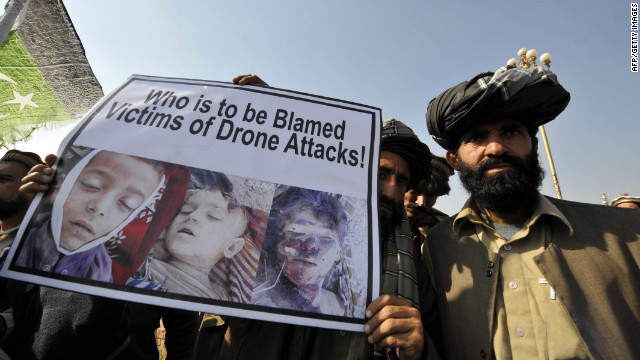
One thing about drones - you never need to look your targets in your eye. You don't need to train your physique to be in the best possible position of defence, because you will never be threatened yourself. The daily life, the personal interactions, the hopes, fears and doubts - or confidence, hatred and bitterness that may present itself in the eye of your opponent will never register. Neither will, of course, the civilian casualties that will also fall to your attack. It's all in a day's work, after all.
The point of drones, though, is to protect "our" troops from harm. If we can create a fortress America that lets only the economically good people in and export defence through technology, "we" can live a perfect life in a colony removed from the strife churning in that sea of troubled waters.
We won't need to worry about them, unless they are perceived to threaten our freedom.
Drones, robocalls, anonymous tweets... they're all about the elusive dream of freedom as defined by Ayn Rand and Great Big Sea:
Watching the 3rd Pirates of the Caribbean Film last Night - At World's End - I was reminded of the theme of piracy, as defined by the film makers - piracy, in their version of the world, equates with freedom. No rules, no accountabilities, just clear horizons and bottles of rum.
This is the definition of freedom that seems to have the greatest traction these days. It's why Rob Ford is so popular - he gives the finger to the rules and all personal expectations of his post, texting while driving, getting a little unruly out at events, dismissing bothersome reports and facts and just going with his gut. By and large it's working for him, personally - whatever happens to Toronto's reputation, whatever gridlock occurs at City Hall or however we collectively fall behind, people still say that they'd prefer acrack-smoking Rob Ford to someone like David Miller.
Rob Ford is popular because he acts like he is consequence-free, as we would like to be. However, his actions (and inaction) are not consequence free - the consequences of his actions have been downloaded to others. Depending on what comes out of the crack episode, we may find that some rather severe consequences of his actions have landed on the backs of others, directly, and on all of us by association.
That's the thing about the Pirate model of freedom - yes, Pirates didn't have to work much, nor work hard and yes, they were free to roam the seas, taking what they wanted. But what they took, they took by force from others. There actually wasa pirate code, because it very quickly became clear that shipboard anarchy was a recipe for disaster. Anarchy, each man for himself, doesn't work -it never has.
Be it sexting (sending pictures of ourselves or sending pictures of others), robocalls, drone attacks or any number of actions that derive self-gratification, there are always consequences. You can turn a blind eye and hope to escape direct accountability or you can assume you'll never get caught. If you're powerful enough, you can count on your might of weapons or money to keep consequences at bay, but again you're ignoring a basic historicaltruth - what goes around, comes around.
Rob Ford will face consequences, in time. So too will the peoplewho have enabled him thus far. Sexting bullies and pornographers are slowly being caught up in accountability as well. The US is paying for its actionsthrough a thousand cuts that will take their toll, with time. Some people will merely see their reputations damaged, while others will see the organizations they have worked hard to build begin to fracture.
We can look back on history as a series of vignettes of aggressive, selfish and willfully ignorant people getting ahead on the backs of others - but we can also see a larger picture of that selfish success becoming watered down as consequences become more severe and society, more complex.
Thing is, we know, from study after study, how harmful our current approach is to both our health and our economy. The Feds have even developed a psychological health and safety standard to address the kinds of concerns that stem from the labour relations practices favoured by the likes of Tony Clement. When there aresucceeding, best-practice models to crib from, why on earth aren't we consciously choosing to do better? If we truly believe people matter, precarious employment leads to presenteeism and the like, why aren't we investing inthe people who shape our policy?
Bruce K. Co-author of Smart Customers, Stupid Companies. Helps companies be more humane.
Henry Blodget's excellent piece on short-term greed got me thinking about a very basic question: do companies owe their employees loyalty when the economy gets tough?
For some time, I've been appalled that major companies are simultaneously laying off employees and reporting record profits. The picture differs depending on where you live and work, but that's a fairly common trend.
What do these large dollar numbers have in common: $6.5 billion, $5.5 billion, $4.2 billion, and $1.9 billion? They represent the latest quarterly net profits made by too-big-to-fail banks—in order, JPMorgan Chase, Wells Fargo, Citigroup, and Goldman Sachs.
Now imagine that your company has been growing quickly, and that the culture of the company is to expect employees to step up when challenges and opportunities emerge. If there is an important pitch coming up, you are expected to stay late or work over the weekend. If there is an important order to fill, you are expected to work until the order gets filled.
You work hard. You step up. You are a hard-working and loyal employee. You recruit your friends to come work at your company; you put your personal reputation on the line.
Then the economy hits a rough patch. The company lets you go; two months later, they announce record profits.
Is that the right way to do business?
I understand that companies are not charities, and that they can't exist forever paying out more in wages than they earn in revenues.
But it strikes me as horribly short-sighted for a company to simultaneously report record profits and fire loyal employees. But some will argue that companies are here to make money for their investors, and that such moves are entirely warranted.
That's why I'm calling on companies that employ this strategy to make it obvious. I suggest they band together under the banner, "Profits before People". In fact, to make this easier, I've created a few simple ads they could run to attract more investors.
I'm not trying to be cute or clever. If this is an intelligent and proper strategy, why shouldn't companies formally declare that they follow it?
Take a look at my crude examples, and create your own Profits before People art, then post links in the comments below.
No. Power is like driving car on streets where there are pedestrians and bicycles. You don't try and remove the less-powerful entities, like Rob Ford would do in an attempt to push the weak to the margins and allow cars to rule the world. What you do, as a driver, is drive responsibly. As your vehicle has the capacity to kill you are more responsible than the pedestrian or the biker who doesn't have that kind of street clout.
This isn't to say those with less power have no responsibility, only that those with power have more. Its why those at the top of the social food chain, be they politicians or sports stars or the super-wealthy get held to a higher standard of accountability than regular people do. Average folk know that they have less influence than those at the top and will seek to knock down or penalize behavior seen as over-the-top. Elections, talk radio, tabloid newspapers and thanks to Social Media, social murmuration are the tools we use to keep the powerful in line.
Of course, this is why it's a slippery slope when politicians try to pull the HOAG (Hell Of A Guy) card. Back to Rob Ford, who has tried to portray himself as an average bear in the same way George W, Bush did; Ford is not rooted in the same world as the everyman/woman. He comes from wealth. He has access to people and resources that a kid from the wrong side of the tracks simply can't connect to without a bridge. When people like him portray themselves as average bears, they are attempting to remove themselves from the increased scrutiny society places on those we know to be elites.
So what if Ford gets drunk at hockey games, doesn't read his Mayoral accountability material or texts while driving? Any average Joe does that. Yeah, but not any average Joe is responsible for running a city.
I've taken on the brand "conscious society" because I thought it best represented the end goal - communities of people aware of what informs their choices, meaning they have more control over their choices. That, and it's a play off of "The Just Society" (I do love my word play). It doesn't really matter to me whether this term or some other becomes the one that sticks - so long as it isn't Aquarian Conspiracy.
I do enjoy the fact that Deepak Chopra is thinking the same thing, though...
(In this series of posts we're discussing the qualities of leadership using the acronym L-E-A-D-E-R-S. The sixth letter, "R," stands for responsibility.)
Being responsible is the mark of a mature, conscious person - no one disputes this. But success also requires risk-taking, intuitive leaps, innovation, and thinking outside the box. Those values will be quashed if leadership is totally conservative and cautious. You don't have to view "responsible" as synonymous with caution and a policy of no risks. Being responsible, seen in the wider context, means showing initiative, taking mature risks rather than reckless ones, walking the talk, having integrity, and living up to your inner values. Seen from the level of the soul, a leader’s greatest responsibility is to lead the group on the path of higher consciousness.
In practice, there is a hierarchy of steps that you can climb, beginning with a lack of recklessness and rising to the top, where you are responsible for imparting the highest values of your vision. All of us fall somewhere on this path.
You earn your credentials for being a responsible leader through the following behaviors, which are noted and imitated by the rest of the group:
1. You show that actions have consequences.
2. You don't say one thing and do another.
3. You don't shirk the hard choices or delegate them to others so that you are covered no matter what happens.
4. You don't have henchmen who do the dirty work so that your hands look clean.
5. If you back someone up, you establish a bond that they can depend on.
6. You treat people decently, putting everyone on an equal plane.
7. You are cautious with other people's money, taking seriously your fiduciary responsibility.
If you follow these principles, you will succeed on many levels, engendering an atmosphere of trust and loyalty. Working in such an atmosphere, the group will feel secure at a basic level that is very necessary. Insecurity creates massive stress and all the problems that attend it.
But we have to be realistic, too. Today more than ever, it takes consciousness to keep on the responsible track. For many in business, responsibility has become an old-fashioned value to be shrugged off in favor of profitability. The financial crash of 2008 was engineered through a flagrant lack of responsibility, combined with risk-taking far out of bounds with sensible practice. Yet the lesson that the financial sector took away was the opposite of responsible. With record profits and huge bonuses in the offing, they went back to a slightly modified version of their worst practices.
All of this took place within a larger trend of income inequality, the deterioration of worker's benefits, lost pensions, and pressure to show a rising profit to shareholders. If you expect to be a leader, you must decide personally if you are going to follow the trend or hold on to your own values. The ultimate responsibility is the one you owe to yourself.
When I teach executives about the soul of leadership, there's an overall vision I hold out:
Leading from the soul means that you take responsibility for more than the group’s needs. You have a concern for everyone’s person growth. This responsibility begins with your own evolution. In eight areas of your life you have the power to be guided by your soul: thoughts, emotions, perception, personal relationships, social role, environment, speech, and the body. In all of these areas your behavior affects the people you lead. If you evolve, so will they.
To lead from the soul means that evolution is your top priority. You never act in such a way that you lower the self-esteem of others. You examine your underlying beliefs and modify them as new opportunities for growth reveal themselves. Because evolution is an unstoppable force in the universe, you draw upon invisible powers. Therefore, being responsible is no longer a burden. It rests lightly on you as long as you continue to grow.
In my experience, this vision is embraced enthusiastically by top executives. They all know the burden of responsibility and carry it. They are relieved to hear about a path where responsibility isn't a burden. We'll talk more about it in the next post.