Search This Blog

CCE in brief

My photo
Recovering backpacker, Cornwallite at heart, political enthusiast, catalyst, writer, husband, father, community volunteer, unabashedly proud Canadian. Every hyperlink connects to something related directly or thematically to that which is highlighted.
Showing posts with label systems theory. Show all posts

Monday, 26 May 2014

Autism Genes and IDIC


I suppose we could go the GATACA route with this information, but hopefully we take the other route.  
When we recognize cognitive conditions like bipolar disorder or autism or even ADHD as genetics, not some sort of infection, maybe we'll realize we're trying to solve the wrong problem.

The goal isn't to "normalize" the sinistra out there by making them dextra - it's to empower everyone to be the best unique contributors they can be in collaboration.

Just imagine the possibilities.

Monday, 12 May 2014

Redesigning Public Services in Ontario


The Liberals have a plan - go in and work with service providers to find cost-saving efficiencies.  The Tories have a plan - cut funds and force service providers to find efficiencies.  The NDP - well, the NDP have mantras.

Each of these Parties is trying to solve the wrong problem.

When you cut funds, people don't look to provide better services - they feel desperate themselves and will seek to shore up their own positions.  With drastic cuts count on labour strife, on the one side, but increased opacity of facts on the other as organizations realize they need to sell well rather than do well if they're to make the cut.

When you get in with individual agencies or communities and try to help them fix their financial woes, you're still missing the structural problem.

As a recent example - the Provincial Government recently decided that tackling Type II Diabetes would be a good investment.  Fair enough - it's incredibly costly, healthcare-wise, places a massive burden on families and support networks and leads to a reduced quality of life.  Did I mention the cost?

Diabetes Type II is preventable, by the way - through things like appropriate diet and exercise.

Governments have tried to minimize the uptake of commercial products that exacerbate the likelihood of getting Type II diabetes (things like pop) through bans and the like.

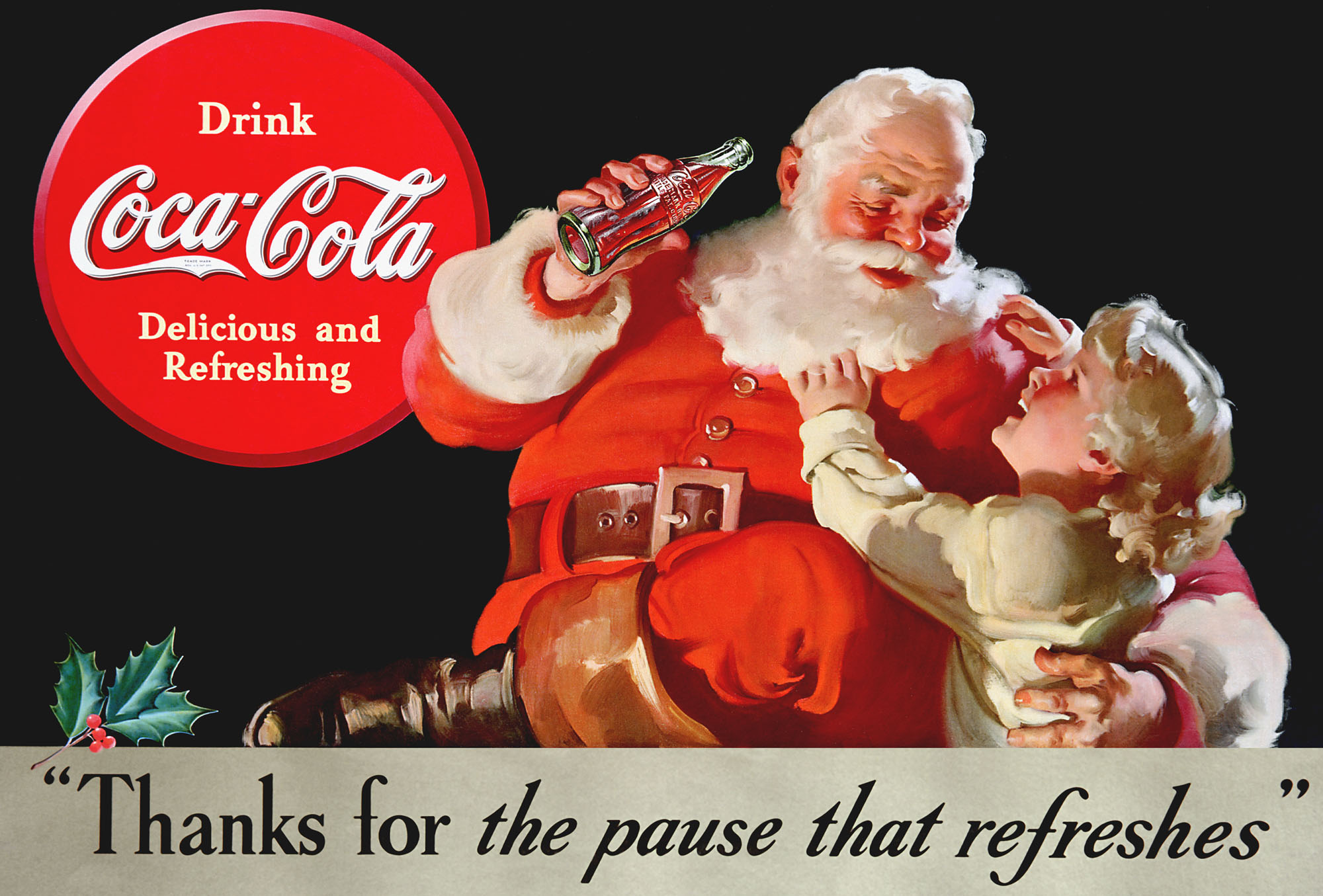
It hasn't gone over very well - companies like Coca Cola have done a magnificent job baiting and switching, presenting the issue as more one of government taking away free choice from the people.

Do you really want government determining what your kids can eat and drink in school?  How totalitarian!  How Dickensian!

No, corporations would much rather government keep its nose out of the consumption of the masses, meaning they're free to sell whatever they want, using whatever persuasive techniques they want.

"Momma, Johnny gets to have Coke for lunch and dinner, why can't I?"

"But honey, Johnny is obese and is going to end up diabetic, having a heart attack and needing knee and hip replacements by the time he's 40."

"Johnny's momma loves him, that's why he gets Coke.  Why don't you love me?"

Coke doesn't care if little Johnny is hospitalized and removed from the workforce by 40 - they're not paying for healthcare.  In a global economy, they don't even need to have anything other than storage facilities in Canada.

But I digress.

Ontario wanted to address Diabetes Type II without going the ban route - instead, they opted for education.  Funding was provided through the Ministry of Health to municipal government agencies, like Toronto Public Health, to develop programming and train community groups to teach their folk about diabetes.  

The training consisted of a three-day course provided to whoever was sent by groups that received money.  Those groups would then be responsible for passing the training along, resulting in the communities most likely to get Diabetes Type II becoming more informed about prevention.

Sounds great, but.

The NFPs that signed up for these classes were by-and-large not focused on health.  In fact, many of them were simply so desperate for operational dollars that they were signing up for whatever program handed out cash and considering themselves clever for doing so.  After all, the way public funding of Not-For-Profits has been going, these folk can't afford to hire organizers, fundraisers or lobbyists able to get them the support they need.

Their work is important, even vital - but nobody's selling it well and nobody's funding that work.  So they're championing Diabetes Type II instead.  They send people to the training with little-to-no understanding of what their mandate is.  They get some information and a couple of toys over three days, and then are sent off into their communities to train their peers.

There was no evaluation of the knowledge absorbed.  No evaluation of the efficacy of the program.  

There are no metrics to ensure consistency of training, absorption or behaviour changes by communities and the most important stats of all, changes in Diabetes Type II rates by community.  Without these metrics, there's no telling if the process worked, who's got best practices, what approaches work best in individual communities, etc. 

The entire program was a waste of dollars, essentially serving as a band-aid to keep completely unrelated services afloat because sustainability has been leached out of the system.

This was a Liberal program.  Under the Tories, it would be gone.  Score one for efficient use of public dollars!  Yet the problem would remain - in fact, it would get worse.


The same holds true for any program cut, any regulation decrease or policy shift that places more emphasis on individual, corporate success at the expense of the structural whole.  

Think the duplication, gaps and overlaps we have now are bad?  Just imagine what they'd be like with no process in place at all.

Again, across the board we're trying to solve the wrong problem - it's not more money or less money or more regulation or less regulation attempting to nudge individual behaviours that's required - real efficiencies are found through better structure from top to bottom.

Last I heard, there were efforts underway - finally - to at least map out services provided to youth in Ontario.  I argued that, to be effective, that map should look like a flow-chart; what money tagged for what purposes was being sent to where, between and across Ministries.  

It's like doing a leak-test on a house; if we don't know how the money is being distributed on the front line, we can't know where the holes are or where individual sectors have simply gotten better at demanding more.

When it's all about individual success, after all, it's he who manipulates best who comes out on top.  

Just ask Coca Cola.

The options on the table seem to be: we can collectively subject ourselves to the whims of government, through regulations, or we can put ourselves at the mercy of well-funded private sector interests with all the latest science on how to manipulate our "free" choices so that they win.

Of course, there is an alternative - one that would see a restructured government doing a better job coordinating its efforts, working with private sector and not-for-profit sector partners under the supervision of an engaged public.

It is time for a change in Ontario, and across the board, but it's not one we can demand of others unless we're willing to step up ourselves.

We can have an Open Government, but not without active participation on our part.

The only catch is this - the only way to have ownership over your future is to be a responsible member of society. 

Thursday, 6 March 2014

Neither Left Nor Right


The political right likes to say they would/do run government like a business.

They must make poor businessmen - or at best, antiquated ones.  Their "hard" approach has been proven to be maladaptive to the needs of today's complexity.  

Of course, so too has the "everybody be friends" approach generally equated with the political left.

Which is why it would be a step backwards to polarize our system into a unified left vs. unified right dichotomy, as they have in the States.

The goal isn't to beat the other guys, to force them to be like you or to give in and be just like them.

Integrated operations, like a social nervous system.  That's the way forward.

But you don't have to take it from me - it's what all the actual management consultants are saying.

Too bad we have economists for leaders - they seem maladapted to committing the sociology required by the times.

When we stop vacillating left and right, we can get back to moving onwards and upwards.  That's where the future is.


Tuesday, 3 December 2013

Social Entrepreneurs or Change Catalysts?


I think Mitchell Kutney is missing something.

He's bang on with most of his commentary, though.  All sorts of players have latched on to the notion of social enterprise: to put a fresh coat of paint on outdated brands, justify a reduction in charitable investments (there's people who do that for money now) and where government is concerned as justification to reduce crippling levels of social service spending.

Then again, it's becoming increasingly clear that there is a lot of duplication, gaps and overlaps within existing NFPs and fewer metrics to prove what is and isn't working than you'd think.  We're not moving forward, we're treading water.  Government, meanwhile, is looking down the road at fiscal deficits, infrastructure deficits and a rising tide of health and social service costs and realizing it is in no way up to the challenges that lay before us.

The system we have now isn't working.  Continuing to do things the same way is not a viable option.

So what do we do now? 

It's all very daunting.  Perhaps counter-intuitively, the recognition of this reality is partly behind the growth of the Open Government movement.  Stated or not, the theory is that if you create more opportunity for common folk to get engaged and have their say - broaden the conversation, if you will - there will be new ideas, yes, but more people on the hook when things go wrong.

The people in charge, however, either feel confident or realize they need to look confident so as not rattle investors/voters; after all that's in no small part how they got to be leaders.  These folk aren't going to come out and say "I have no idea what to do next" even if they realize that's the case - and far too many of them don't.  They figure what worked before will work again, we just need to return to a romanticized, simpler past.


The concept of social enterprise as it's understood now might have led to a moving of the accountability deck chairs, but the problem is fundamentally the same as it was prior to 2008 - our societal model is completely inadequate to manage today's realities in sustainable fashion.  


We live on a burning platform; some of us are even adding fuel to the flames.


Enter the people I think of when my minds turn towards social entrepreneurship.  

These folk are more than just the why - there are lots of people in various fields who actually do care about the public good in one aspect or another.  Money's not a motivator for them, but a necessity to be managed, like food or sleep.

What gets these people up in the morning is the burning desire to fix the structural problems they see in the world.  It drives them nuts seeing should-be leaders constantly driving society into the ditch, not planning ahead and not employing practices like behavioural economics or design thinking to make the system work better.  These entrepreneurs aren't disillusioned with today's institutions so much as they're disappointed more people aren't proactively trying to reconfigure them.

The folk I have in mind are literally frightening in their cognitive capacity; they're the trained athletes at a charity run, processing information and aligning different fields and churning out meta-solutions at a super-human rate.  To talk with them is exhausting; they think in maps, not symbols - they're outside The Cave.

They are this generations Polymaths or Renaissance Men (and women) - call them Multi-Disciplinary Specialists, because they are experts in several fields all at once.  Increasingly, they're realizing that today's leaders simply aren't up to the structural challenges we face; as such, they're organizing to tackle the solutions themselves.  

According to the accepted definition, these people are social entrepreneurs, though the ones I know don't really care about the label.  Sorting out who should be responsible for fixing the system is a waste of time; they're just going to do it.

As is the case with any organism, external challenges don't spark adaptation - they cull those who don't fit an evolving world.  

It takes something else to catalyze change.

We have to stop looking for some kind of external cure-all, a panacea; it doesn't exist.  We also need to take a fresh look at the lateral thinkers, the social disrupters in our midst.  To paraphrase one change agent - we keep trying to cure them, but perhaps they are the cure.

Thursday, 21 November 2013

A Healthy Society is a Conscious Society


This, fundamentally, is what open government and open data is about.  It's the purpose behind redesigning user-friendly services, changing the way information is accesses and training is received, how we do human resources, how we do work - everything.

It's a massive, structural challenge that no one leader nor organization can fathom, let alone address, on it's own.

We can go fast alone, but we can't take the world with us.  Sustainability is a shared endeavour; we can only get there by tearing down the walls and glass ceilings between us and consciously building together.

Wednesday, 16 October 2013

Truth Vs. The Political Position


Or confabulating, as it were.

Of course, politics-as-usual is all about the half-truth thing; in the biz, it's called "spin."  Spin isn't about lying, technically - it's about presenting elements of the truth in a way that is A) favourable to one's side or one's objectives or B) unfavourable to one's opponents or one's opponent's position.  

Those who play the game have a hard time seeing it as anything but a game, a struggle between your side and the other side - it's a Plato's Cave kind of thing, I think.  

In this great game, the people aren't constituents whose trust is to be earned, but blocs of influence to be manipulated.  The non-partisan, the mushy middle, stand in for the Third World, less players than pieces to be jockeyed over by the Powers.  In a survival-of-the-fittest contest, the big picture doesn't matter - only winning does.

When your sole focus is the win (and by extension, engineering the field of combat with the goal of fostering perpetual winning conditions) and you make your living telling half-truths, you forget what the whole truth looks like.  

Which is why in politics, instead of statements of fact, you have "positions."  


That kind of thing.  It creates a vicious circle of halves that don't fit together to present a whole.  

Those doing the spinning can't see this, as everything not in their immediate field of view becomes blurred.  Again, the Big Picture doesn't matter - only one's position does.


It's why we don't trust politicians, nor the people who inform their choices; we know they're not telling us the whole story.  In fact, we're not even sure they know the whole story.  Would you trust someone you knew was withholding or ignoring important information to pick up your kids from school or to keep your extra front door key?  I'm thinking not.

Here's the great, tragic irony; we may not trust politicians to look at the Big Picture, nor even trust them to recognize it - but they don't trust us, either.  Why should they?  We're just as selfish as they are.  

They are our representatives, after all.  

The politicians are actually doing exactly what they're supposed to - representing the narrow bandwidths on which they are elected.  Part of the democratic contract implies responsibility on the part of the citizen to proactively become informed themselves; we're supposed to review the whole suite of positions and, from an informed, rational perspective, determine the whole picture for ourselves.

We are choosing not to.  We want what we want, regardless of context, regardless of consequence - that's our position.

Pick your contentious issue:

Subways?  How many average citizens are actively looking at the big picture - what does a system that works equitably for everyone look like?  How many are cherry-picking political soundbites to validate their own positions?

Bike lanes?  Who out there is proactively looking for shared solutions, vs. lining up into competitive camps in some fictitious zero-sum game?


Back to those gas plants; Oakville is one of the wealthiest, most powerful communities in Canada.  Their massive pay cheques buy massive homes, pay for lavish golf courses and enough free time to play on them; those cheques are also available to pay for well-organized advocacy campaigns and to punish Political Parties who don't heed their NIMBYist positions.

But Ontario does have increased energy needs.  That energy capacity has to come from somewhere, meaning generating plants, and those plants have to be located somewhere.  The residents of Oakville could have spend their prodigious dollars on a consumption reduction campaign, setting the example themselves and perhaps targeting corporate entities to invest in energy efficiencies.  But that wasn't their position, was it?

Politicians know what their job is - to win enough public support (not all of it) to gain power.  Money plays a big part in that.  If they have to fight off well-organized and well-financed campaigns against them if they do what is right for all Ontario, not part of Ontario, they lose.  Which is why every Party found it in their hearts to commit to moving the gas plants.  The Liberals were in power, and bungled the job - just look at the 407 mess to see how the PCs would have fared.

Now, all sides are telling us half-truths, but then we were only ever prepared to listen to half-truths in the first place.


Downtown Toronto has a massive gridlock problem; the infrastructure in place simply isn't designed to handle the capacity it's facing.  As a result, you have line-ups backing into suburbs of cars trying to get on the Allen at rush hour; impatient people are tailgating through intersections, blocking traffic and exacerbating the problem.

There's no either/or solution to this problem, but getting some kind of capacity relief is essential.  If more "Downtown People" rode bikes to work, there would be less downtown bodies on subways or in cars, reducing the pressure.  A relief line would ease congestion for everyone commuting into the downtown core.  Employers showing a bit of flexibility on at-desk hours, or even empowering more employees to work from home would equally add to the solution.  

Subways for everyone would be great - so would a million dollars in everyone's pocket.  That's not realistic, so we have to live and build within our means.

But that requires change and accommodation, and nobody wants to give up their position.  Rob Ford, populist that he is, intentionally avoids looking at context and consequence and instead, applies pressure to get what he wants - just as Oakville did.

Like a dopamine surge, this quick hit might make people feel good in the short term, but it does nothing to further their long-term interests.  In fact, it will only cause everyone pain.

Sometimes, the truth hurts.  We don't want to hear it - we might vilify the messenger, in fact - but it has to be told.  It takes guts to tell the whole truth to an unwilling audience; guts, and a willingness to sacrifice one's own standing for the greater good.  Whatever his reasoning, Paul Ainslie has decided to walk this path.

He's not the first.  In fact, he's but the latest in a slowly emerging trend of people willing to speak truth to power, even when they are in positions of power themselves.  

It began with Kai Nagata.  By quitting his job as a reporter of half-truths, he blazed a trail for others to follow.  It continued through the ranks of Goldman Sachs and through the halls of Davos as people began to see the structural dissonance of living the lie that each man for himself can work.

The idea that we've been living in a dream world of siloed positions is catching on; businesses, politicians, even planners are beginning to recognize that we are all lying to ourselves through omission; the whole is more than the sum of its parts.  Altruism isn't enabling the weak, it's planning ahead; for the whole to function, its functions must be coordinated.

Society's simply gotten too big, too dense and too complex for fiefdoms to work anymore.  If we can't find it in ourselves to look at the big picture, together, we will all burn as our silo walls crumble down around us.

If that's not the truth, what is?

Wednesday, 24 July 2013

Now that we can do anything, what will we do? (Massive Change)

I hate the term manifesto - it's too talk-oriented instead of being about action.  Instead, I see this as an invitation to board a train that's already leaving the station to a destination that's more about perspective than destination.
 
Below is the introduction to Massive Change (bold is mine mine):

 
The twentieth century will be chiefly remembered by future generations not as an era of political conflicts or technical inventions, but as an age in which human society dared to think of the welfare of the whole human race as a practical objective.
 
  - Arnold J. Toynbee, English historian (1889 - 1975)
 
In his Nobel Prize acceptance speech on December 11, 1957, former Prime Minister of Canada Lester B Pearson quoted historian Arnold Toynbee, well known for his monumental A Study of History.  The main thesis of Toynbee's work is that the well being of a civilization depends on its ability to respond creatively to challenges, human and environmental.  He was optimistic about the twentieth century.  He believe that the cycle of rise and decline was not inevitable, that the future is not determined by the past, and that a civilization could choose and act wisely in the face of recurring hardships.  His prediction posed a challenge - and an opportunity - during the post WWII ear; it was significant enough for Pearson to reference it in the context of international peacekeeping during the Cold War era; it continues to challenge us today, into the twenty-first century.
 
Our world now faces profound challenges, many brought on by innovation itself.  Although optimism runs counter to the mood of the times, there are extraordinary new forces aligning around these great challenges, around the world.  If you put together all that's going on at the edges of culture and technology, you get a wildly unexpected view of the future.  Massive Change charts this terrain.
 
We will explore design economies
 
Not since the age of invention have so many new products, processes, and services become available to the public.  What we see over the last hundred and fifty years, and in a dramatically accelerated pace over the last fifty, is that design is changing its place in the order of things.  Design is evolving from its position of relative insignificance within business (and the larger envelope of nature), to become the biggest project of all.  Even life itself has fallen (or is falling) to the power and possibility of design.  Empowered as such, we have a responsibility to address the new set of questions that go along with that power.  At the same time, we acknowledge the hubris and inherent paradox of the new position we find ourselves in: We are designing nature and we are subject to her laws and powers.  This new condition demands that design discourse not be limited to boardrooms or kept inside tidy disciplines. 
 
As a first step to achieving this, we abandoned the classical design disciplines in our research and, instead, began to explore systems of exchange, or design "economies."  Instead of looking at product design, we looked at the economies of movement.  Instead of isolating graphic design, we considered the economies of information, and so on.  The patters that emerged reveal complexity, integrated thinking across disciplines, and unprecedented interconnectivity.
 
We will tap into the global commons
 
Massive Change is about the power and promise of design.  Design success equals global success.  What makes this possible is the radical change in scale in the capacity of design to meet human needs the world over.  Extraordinary projects are underway that are changing our world for the greater good.  Many of the people we include in Massive Change do not consider themselves designers.  But, if you listen carefully, they (and others like them) use the word design to describe their work; they speak about designing systems, designing organizations, designing organisms, designing programs.  We must applaud and participate in the efforts of these thought leaders (and doers) - or risk losing them.  There is an incredible story t o be told about human ingenuity!
 
The first step to its unfolding is to reject the binary notion of client/designer.  The next step is to look to what is going on, right now.  The old-fashioned notion of an individual with a dream of perfection is being replaced by distributed problem solving and team-based multi-disciplinary practice.  The reality for advanced design today is dominated by three ideas: distributed, plural, collaborative.  It is no longer about one designer, one client, one solution, one place.  Problems are taken up everywhere, solutions are developed and tested and contributed to the global commons, and those ideas are tested against other solutions.  The effect of this is to imagine a future for design that is both more modest and more ambitious.  More modest in the sense that we take our place in what our studio's chief scientist Bill Buxton calls the renaissance team, a group that collectively develops the capacity to deal with the demands of the  given project.  More ambitious in that we take our place in society, wiling to implicate ourselves in the consequences of our imagination.
 
We will distribute capacity
 
One thing is certain: We don't need a thought police.  We need discussion.  We need thinking.  We need critical faculties.  We need to embrace the dilemmas and conflicts in design, take responsibility for the outcomes of our work.  When we use the term "we," we don't mean designers as separate from clients, or as some extra-ordinary class of powerful overseers.  We mean "we" as citizens collectively imagining our futures.  It is critical that the discussions go beyond the design field themselves and reach out to the broadest audience, to the people directly affected by the work of designers.  The effect of the new conditions is to distribute potential, or capacity, worldwide and allow contribution by anyone, anywhere.  The future of global design is fundamentally collaborative.  In this condition there is no room for censorship.
 
We will embrace paradox
 
Massive Change calls for greater public discourse and personal responsibility for designers and their projects; at the same time, it is thrilled by the open-source effect of the cultural project of design.  The moment we came upon Toynbee's quote in Pearson's lecture, we knew we had our project because it included the phrase "practical objective"; it shifted the objective of the welfare of the human race from a utopian ambition - one that is by definition out of reach and will remain the realm of art - to a design project, a practical objective.
 
There is a proposal integrated into Massive Change for a right-angle shift in the axis of discourse defined by right and left, socialism and capitalism.  The new axis is defined by advanced retrograde, forward and reverse.  Plainly, Massive Change is a project that embraces the potential of advanced capitalism, advanced socialism, and advanced globalization.  In that sense, Massive Change is obviously ambitiously positive, and might be misunderstood as utopian at first glance.  But it is not futuristic.  It is about what is already happening.
 
We will reshape our future
 
Between 1965 and 1975,  r. Buckminster Fuller conducted five two-year "advanced design science" intensives and pulled together the results of the participants' research and analysis into several volumes of what he called the World Resources Inventory.  In Phase I of the work, "Inventory of World Resources Human Trend and Needs," he wrote, "There are very few men today who are disciplined to comprehend the totally integrating significance of the 99 percent invisible activity which is coalescing to reshape our future.  There are approximately no warnings being given to society regarding the great changes ahead.  There is only the ominous general apprehension that man may be about to annihilate himself.  To the very few who are disciplined to deal with the invisibly integrating trends it is increasingly readable in the trends that man is about to become almost 100 percent successful as an occupant of the universe."
 
This book is dedicated to all those with the discipline to comprehend the total integrating significance of the 99 percent invisible activity which is coalescing to reshape our future.  This is a beginning.
 

Friday, 5 July 2013

Waiting For the Light


Marketing gurus have learned that closing the wedge by providing countdowns "only 10 days left to get Product X!" stimulates people, makes them feel the risk of not getting a thing outweighs the risk of not having it - making countdown sales an effective tool to instigate reactive behaviour.
 
GOTV works the same way - when you're trying to get identified votes out, you apply pressure and time constraint as a tool to motivate action, not inaction.  It works; that's why we do it.
Yet when it comes to timers, we're blaming people for rushing when they see a countdown clock?  We're telling people that it's their choices, not polling methodology, that's flawed?    Bikes on road designed for cars are simply not supposed to be part of the system, so get 'em out of there?  Telling people from marginalized communities they just need to get jobs, telling employers they just need to hire, telling the average bear voting is important and wondering why they don't - given the bigger picture, is it really that mysterious?
 
We aren't designing tools or systems for people, we're trying to train people to be functionaries.  You can do that under some circumstances - widget building, military training - but it doesn't work in general.  In fact, when you try to design counter-intuitive social structures, it's those best able to subvert that structure who succeed (or is that just spin) while those less-able fall behind, resulting in an imbalanced, tragedy of the commons scenario.
 
If we want to address the systematic social issues that are weighing down our system, we have to think differently about these problems.  It's the systems themselves that need to be more organic, more fluid, more grounded in the principles of design thinking.
 
The trick to making practical infrastructure isn't to aggressively force everyone to think your way - instead, commit a little sociology, expand your horizons, learn to build structures that bridge usage gaps and create something that works for everyone.
 
Sound field systems in classrooms, for instance.
 
Instead of a countdown, just flash the words DON'T START CROSSING or if you can think how to infographic that concept, even better.
 
The solutions to structural problems won't be found in one box, but across many. 
 
For some, that concept is an absolute revelation.