Search This Blog

CCE in brief

My photo
Recovering backpacker, Cornwallite at heart, political enthusiast, catalyst, writer, husband, father, community volunteer, unabashedly proud Canadian. Every hyperlink connects to something related directly or thematically to that which is highlighted.
Showing posts with label Vic Toews. Show all posts

Sunday, 19 July 2015

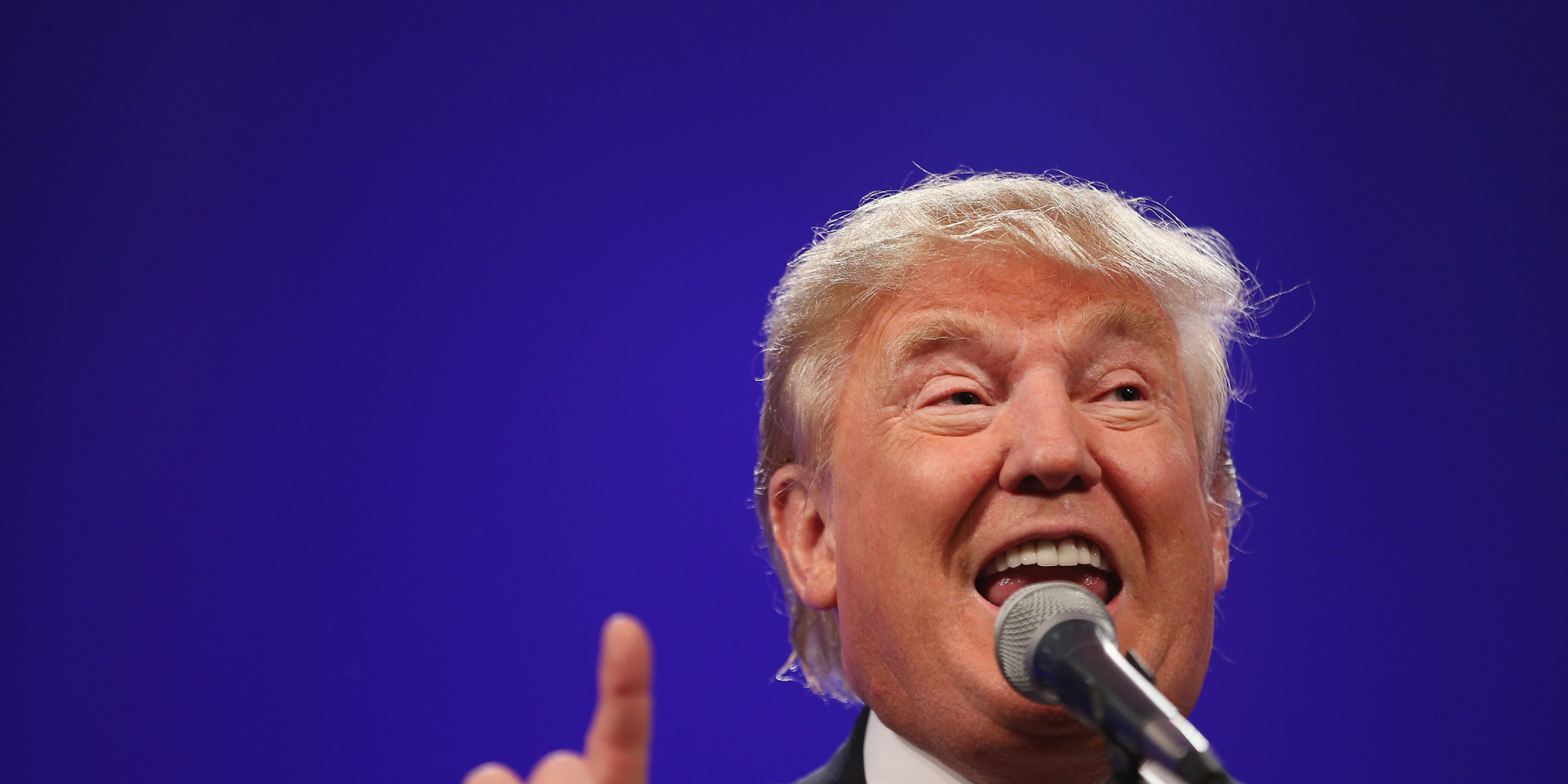
Donald Trump pulls a Vic Toews: Limbic Limbic Laissez-Faire UPDATED


That's what Trump said first.  Then he said this:


Sound at all familiar?  Say something belligerent while talking tough, then forcefully deny having said what you're on record as saying.

Vic Toews did that this one time.

What was said first is what was emotionally true for the individual; what was second was a forceful defence of character through an attach on someone else's facts.
Now, go back to Trump's original comment.  He got captured, i.e. he got defeated.  How can losing make you a hero?  It's a bit like giving money to the poor - why would you want to reward failure?

#1: I never give money to homeless people. I can't reward failure in good conscience.

Or how about this one?

#1: You don't feed wild animals b/c they become dependent and can't fend for themselves. How's it different for poor people?

Both quotes taken from here.  It's worth reading through the list just to see the pattern of thought behind it.

If life is a race, then only the first one across the line is the winner.  After a couple runner-ups, nobody cares any more and there's no reward, so you want to be at the front.
And if you aren't, your nothing.


That's the mentality of people like Donald Trump - it's psychopathic, true, but it's worked out pretty well for them.  

Why?  Because not everyone is a psychopath.  Most people aren't willing to steal ideas or money from others, belittle their peers or employees so as to weaken their self-esteem and make credit-taking easier.  Most people don't undercut good ideas out of spite or dedicate massive amounts of money for character assassinations, either.  


It takes a special kind of person to be willing to burn down the nation if they can be king of the ashes.

Of course the Donald Trumps of the world aren't successful because of their individual merit; they're successful largely because of their comfort and ability at abusing others.  

We have a habit of rewarding confidence.  In times past, this made sense; whoever was strongest was best able to fight off wild animals or competing tribes.  What strengths does not help with, mind you, is policy.  Policy is about collective understanding of the needs of all people within a system so as to design sustainable programs, services and infrastructure. 

If you are incapable of empathy - as psychopaths aren't - then you can't do any of this.

To Donald Trump, John McCain is a failure because he got caught.  Tough guys don't get caught, and they don't lose.

Which means Trump will have some significant cognitive dissonance to deal with when he gets his ass handed to him.

In democracy, don't you know, it's the people who are always right.

UPDATE 19/7/15:

But in seeking to downplay that exemption as "minor" and "short-term," Trump's campaign raises more questions than it answers as to how he sidestepped military service during the war.

You could almost see it coming.

War, of course, is a risky proposition.  Smart people don't take risks themselves - they offload risk to suckers dumb or weak enough (ie, not them) to pick it up.  It's like jury duty, or military service.  The only people who partake are those not smart enough to get themselves out of it - right?

Trump is successfully positioning himself as the poster-boy for laissez-faire capitalist success - and at the same time, demonstrating painfully how it is contributing to societal collapse.  And causing the need for something different.

So naturally, I'm really starting to enjoy his campaign.

Wednesday, 28 May 2014

Spin-Based Community: Tim Hudak Cribs Dick Cheney


There's this thing about being focused on the win to the exclusion of all else - the closer you get to it, the more likely you are to dismiss all else.
 
Perhaps this makes sense if you're running a race and are trying to channel your energy towards a finite point in time - but it isn't leadership.
 
Leaders realize the landscape changes and that the people you're at odds with are still going to be there when the race is over. 
 
Tim Hudak, however, is not a leader.  He sees himself as the boss.
 
When you're the boss, you make the rules and write the history books.  You're history's actor; you shoot from the lip.
 
That's how Dick Cheney did it for George W Bush and you know what?  It worked out brilliantly for all concerned, especially the GOP.  It's what Harper is doing with Canada at large, as evidenced by his attacks on facts that disagree with his view of the world.
 
At least now we know why Hudak's such a fan of the manufactured economy.

Monday, 16 December 2013

A Filmed Life: James Moore Does A Vic Toews


  1. @Carolyn_Bennett @JamesMoore_org well that says it all. The conservatives see no such thing as moral responsibility
@newbetweeter @Carolyn_Bennett The headline is neither a quote, nor accurate of anything I've ever said. Quite ridiculous in fact


That is, he was denying he said it - fighting back on Twitter while deleting his own trails - until such time as it became clear that there was, surprise surprise in this day of recorded everything, evidence to the contrary.  

Does this sound familiar?  Well, if you live in Toronto, you hear regular variations on this "I didn't say what you're saying I said, but I apologize if you heard it the wrong way" theme all the time from our Mayor.  But then again, Rob Ford's a special case.

No, I'm looking back to Vic Toews who point-blank told Don Martin that he never said "you're with us or with the child pornographers" - until he couldn't get away with his back-peddling any more.

Of course we also have the ongoing Senate Scandals with our Prime Minister finding his current statements increasingly in contradictory conflict with what he's said in the past.  He's getting snippier with his message points, getting mad at the people who dare to question him.  

Why?  Why do these tough-talking leaders keep painting themselves into corners they can't tough-talk or spin their way out of?  Do they even realize how ridiculous and cynical they come across?  Yes, you can always turn to your base for defense, but your base cares less about you and more about attacking opponents - they could really care less what you do, so long as they see you as a validating champion.

It's a Plato's Desktop thing - tough, aggressive, message-and-attack oriented political people are counting one what worked before to work again.  They're assuming that the "admit to being human but always learning" approach Justin Trudeau is taking will fall flat, because people will see his occasional bit of bafflegab as creating a pattern of poor choices. 

But we're also seeing a pattern of poor choices coming out of the message-people; when they get called on it and rhyme off talking points, they sound like they're completely out of touch with reality.  Which is more disconcerting? 

Here's the modern reality - everything you say can and will be used against you in the court of public opinion.  What's more, your conflicting statements will be parodied.  If you don't take open and transparent communication seriously, people aren't going to take you seriously. 

You can opt to say nothing or stick to soundbites, but then you just look silly and unable to adapt.  You can say whatever pops into your head and then double-down when called on it - that's what Rob Ford is doing.

Or, you can actually think before you speak and be aware of what comes out of your mouth.  You can think about what other people say to you and how it makes you feel/want to respond.  You can even ask what was meant by something someone else said to establish clarity.

It's tiring and tough, I know, to be consciously in control all the time.  Consideration is not inauthentic, though - it's simply good planning.

'Cause there's this other thing about dancing like everyone is watching - when you're doing something right, it gets recognized, too.  And when you're willing to give others the benefit of the doubt, compliment others when they do well and do your best to be pro-social all the time, people will respond in kind.


Do unto others as you'd have them to do, etc.

You never know when disease or accidents may take you, or when disaster may strike.  You never know when it is that you'll need your neighbour's help.  But should you expect it to be there in lean times if you weren't willing to make an effort in times of plenty?

Altruism is selfishness that plans ahead - which, of course, is what committing sociology is all about.

Friday, 4 October 2013

Does Garry Breitkreuz Fit the Vic Toews Profile?


Isn't that more or less what Vic Toews said to Don Martin over the "with us or with the child pornographers" line?

The facts aren't all in yet, but they will be in time; Breitkreuz spoke to an entire class, meaning every student in the room, their parents and of course, the teacher will all have their take on what was said.  I hate to break it to Breitkreuz, but in he said/they said competition over the facts, the politician ain't likely to win.

Which brings us back to the question we should be constantly asking - what on earth drives folk like Toews, Breitkreuz and Gilmour to say such ridiculous things and then try to cover up (miserably) after the fact?

Racial profiling is so yesterday.  The future of behavioural forecasting is in cognitive profiling.

And there's a set profile emerging of reactionary, threat-centric and bombastic individuals who have a hard time committing sociology, i.e. understanding the perspectives of unlike-minded peers.

Unlike their with-us-or-against-us approach, the rest of us can focus on empowering them to think differently.  They, too, have maximum potentials to contribute - they just need to get over themselves to get there.

After all:


Wednesday, 25 September 2013

The Peter Principle: What Vic Toews and David Gilmour Have In Common (Updated)


Doesn't emotionally connect.  How right you are, sir!

In a recent case study of Vic Toews, I discussed a certain personality profile; the tough-minded, aggressive, limited-capacity-for-empathy limbic thinker.  I have also previously discussed how Vic Toews' penchant of shooting from the lip and confabulating justification later is symptomatic of the same cognitive hard-wiring.  The tendency of saying things like "I'm surprised at the reaction people took from my words" instead of "I apologize, what I said was insensitive and inappropriate" equally fits the bill - if you don't see others as people - if you don't emotionally connect with them - it makes no sense to have to debase oneself in apologizing to them.
 
David Gilmour has now provided another example of how this hard-wired (but malleable, thanks to neuroplasticity - we'll get back to that later) reactionary world view plays out and has significant impact within society.

Think about it; he can sell anything to anyone.  There's a thing about sales - a certain personality profile that excels at it, that breathes deep the concept of ABC - always be closing.  Tough, aggressive, confident, dismissive, manipulative - able to force anyone into anything by sheer strength of will.  They're sitting out there waiting to give you their money.  Are you gonna take it?  Are you man enough to take it?

Yet he only feels comfortable teaching what he's passionate about - and he teaches passionately.  He doesn't feel comfortable with other literary folk (too introspective) or other teachers (not as passionate).  He can sell anything to anyone, yes, but, cognitive dissonance caveat, he only sells what he's passionate about - i.e., he understands.  He doesn't understand women, doesn't understand Chinese authors and he doesn't see himself as capable of expanding his perspective, so it's only that which resonates in his gut, that which is familiar that he's able to articulate.  Despite is assertion that he can sell anything to anyone, in the same breath he admits that he can't.   It's a sad delusion, really, but a common one for aggressively confident people.

I've recently delved into two other professors that are passionate, aggressive and have difficulty viewing the world from perspectives beyond their own.  My recent deconstruction of The John Robson hints at someone who is dismissive of youth for not fitting into his world view, although his thoughts on labour and the workforce are outdated.  At a recent Why Should I Care, Economics Prof Michael Hlinka went out of his way to antagonize and condescend those in the audience who didn't hold his fiscally conservative viewpoint.  I'm pretty sure that his goal was to get them riled up to incite an "honest" debate focused on emotional, gut-feelings - just like Alec Baldwin.  At the same time, he did not hesitate to put a talent recruiter on the spot in front of the crowd, pushing her to meet with his students and help them find jobs.  Always be closing, indeed.

Vic Toews, David Gilmour, John Robson, Michael Hlinka - you could add to this mix the Ford brothers, Mike Duffy and a host of others - even my-way-or-the-highway Unionists like Sam Hammond.  Tough-minded, limited in their ability and desire to expand their perspective, antagonistic, sales-oriented, competition-oriented.  What else do they have in common?  These are the kinds of people that force their way to the top and don't believe anything they do in their own self-interest could possibly be wrong.  Therefore, they're the sorts of people driving the policy agenda these days.  Is it any wonder we have so much political heat without much policy light?

What happens when you have a group of competitive, aggressive, dismissive people setting an agenda and figuring they have the tough sales skills to force everyone else in line (the bums need to get jobs) or if not, label them as threats to be removed (tough on crime)?  These folk don't believe in committing sociology and in fact see social programs as impediments to aggressive, competitive success.  That would be fine, if the whole world had the same limbic-driven cognitive makeup as they did - but it doesn't. 

Gilmour is right, though - he doesn't have a racist or sexist bone in his body.  Stigma and bias aren't osteocentric - they're neurological in nature.  The emotional, passionate lens through which Gilmour sees the world is the reason he is dismissive of (and unable to understand) people with different perspectives.  Just as he probably couldn't do a gymnastic routine because he doesn't have the physical flexibility, Gilmour can't walk a mile in the shoes of a female Chinese author because of his functional fixedness.

Here's the rub - the kind of success that's fueling growth in the Knowledge Economy is driven by the exact opposite approach to the one they insist is the only one that ever works.  They're behind the Roger's Curve on this evolved reality.  This isn't to say there isn't a role for these sorts of singular-focused, personally-dismissive and sales-oriented people; whatever Knowledge products and services we come up with still need to be pitched to prospective buyers.  With a bit of social-emotional learning, they could even learn how to really sell to people who don't view the world as they do - a particularly useful skill to have in a globally competitive market where understanding cultural protocols is as important as knowing your product.

But the kinds of behaviours we're rewarding with management positions - competitive, confident and sales-oriented - are victims of the Peter Principle.  The abilities which get them to the top are the same reason they both fail to adapt to the times and yet find ways to blame others (like youth who just aren't tough or realistic enough, urbanites who drink lates, foreign workers and welfare bums) for ensuing problems.

Don't give up on these folk yet, though - we are always too quick to ape their approach and demand someone throw the bums out.  That selection of the socially fittest model doesn't really work in society; see Syria for an example of how it can go spectacularly wrong.  There's a better way.

As a lover of literature, I'm sure Gilmour will be familiar with the traditional heroic journey of the penultimate man of strength, ego and arrogance brought low, forced to redeem their position through acts of altruism and the development of empathy and humility.  If not, they should go watch Thor to see how that journey plays out.

Here's where the neuroplasticity comes in.  You actually can teach old dogs new tricks; old bones can learn to flex in new ways.  These A-type players can strengthen their overall mental fitness if they're motivated the right way by their peers.  With a better sense of how their aggressive sales acumen fits in the bigger picture, these folk can find all the things they want (affluence and influence) by playing the specialized roles they excel at - reacting to threats and identifying and exploiting opportunities for the good of the whole. 

We truly do need emotionally-driven people like Gilmour in our society; it's the healthy tension between emotion and reason that propels society forward.  But just as we teach our kids to think before they act, you want to ensure its Executive Function, not Reactive Function that's in the driver's seat.  In a diverse society with disparate needs and perspective to be mined, we want leaders with the ability to understand, build consensus and drive collaboration in charge.

So you see, Gilmour does make a valid point, if we're willing to apply it broadly.  We shouldn't expect everyone to be all things to all people; just as he's incapable of teaching that which is beyond his comprehension but perfectly capable of representing the macho writers he prefers (like Ernest Hemingway), we shouldn't expect A-type personalities with a "with us or against us" approach to be capable of leading diverse, complex societies.

After all, if you can't emotionally connect with people, you'll have a hell of a time leading them.


"The day soldiers stop bringing you their problems is the day you have stopped leading them.  They have either lost confidence that you can help them or concluded that you do not care.  Either case is a failure of leadership."

 - Colin Powell

Thursday, 19 September 2013

Vic Toews: A Case Study


I don't mean to pick on Toews, really - he just provides such great fodder for analysis.
 
 
Despite how we've framed politics - a left/right battle between isms - the truth is that the political positions we take are more about cognition than anything else.  Political people can tell themselves that really, they're clever, Machiavellian manipulators of public opinion, but truth be told that's really a delusion, like a drunk driver who convinces themselves they're okay to drive.
 
 
The Conservatives do have a hidden agenda, as do all Parties - agendas so deeply engrained that they're hidden even from the pols themselves.  Depending on how we're hard-wired, what our upbringing was like and what pressures we're under at any given time, we human animals will gravitate between survival-of-the-fittest behaviours that are either selfish/deferential to like-minded confidence or pro-social behaviours that are more altruistic but also willing to question authority and common wisdom.
 
 
Toews provides a classic example of a limbic, reactive, aggressive, hyper-confident and externally-dismissive person.
 
 
Without delving into his personal life, which can be mined elsewhere, there's enough material from his political performance to create a clear profile.
 
 
Toews speaks before he thinks.  It gets him into trouble, but he seemingly can't help himself.
 
 
Toews views the world as black and white.  You're either with us, against us or you don't matter.
 
 
Along the same lines, if you're on the black side of the spectrum, you don't get to be a victim.  In his mind, Ashley Smith is like a bike-rider; whatever happens to her, she had it comin'.  You swim with the sharks, you're gonna get bitten.
 
 
Toews doesn't do contrition well - it'd be too much like admitting fault, which as any blue-blooded limbic thinker can tell you is tantamount to admitting weakness among competitors dying to take you down.
 
 
Toews does do attacks well - in fact, it's his default form of communication with anyone he doesn't understand (i.e. doesn't think like him).
 
 
Toews sees threats around every corner.  Seas of troubles, etc.; we gotta hit hard, hit first and build tall walls to keep The Other at bay, both from without and within.
 
 
None of this is to say Toews is a bad man - he isn't.  There will be people who praise his hardened stance on sex offenders just as there are those who will condemn his increased criminalization of marginalized groups and disregard for the rights of prisoners.  At the end of the day, though, Toews' legacy is nothing more than a series of decisions and the things that informed them.
 
 
From a neuro-anthropological perspective, Toews is threat-oriented, aggressive and dismissive of people he saw as useless or risks as non-humans, not worthy of those who rested in his plus column.  He's a chest-thumper, a shoot-from-the-hip gun advocate and someone who is unquestionably authentic, if not well-thought out.  In a different time or place, he would have been calling for aggressive strikes on Cuba or filling of Gulags in Soviet Russia with enemies of the state. 
 
 
Which is to say that he's a classic selection-of-the-fittest, limbic-oriented thinker. 
 
 
The other day I went for a walk in the woods, at night and without a flashlight - I could barely see a few feet in front of me, the brush closed in and the ominous sound of creatures going bump in the night got my heart racing.  Although I was alone, my gut kept telling me that I was being pursued; every shadowy object felt like an obstacle before my senses made me fully aware that it was just a grouping of leaves that only seemed solid from a distance.  At the same time, I felt alert and ready for anything; adrenaline and cortisol flowed through my system, extending my situational awareness and increasing my response time.  It was fight-or-flight mode.
 
 
I imagine this is the sort of mind frame someone like Toews is in the majority of the time.
 
 
Not that there's anything egregiously wrong with his position; in fact, it's quite appropriate for the sort of smaller and less socially complex groupings humans lived in for the majority of our existence.  Again, Toews isn't a bad mad - he's simply maladapted to living in a diverse, complex society where an increasing number of factors beyond mom-and-pop parenting and tribal codes of ethics shape both pro- and anti-social behaviours (like crime and over-simplifying discrimination).
 
 
Evolution isn't a homogenous process, nor does it travel in a set direction; instead, it's simply the process by which life adapts to changing conditions or, failing that, dies off.  The evolution of society has put some controls on this process; much as feats of engineering have allowed us to redirect the flow of rivers and move entire mountains, the act of committing sociology allows us to control our own trajectory as well.
 
 
As social evolution is mapped on top of biological evolution and actual cognitive adaptation lags behind, we often find ourselves in positions of cognitive dissonance where our instincts are at odds with the decisions that would be in our own long-term best interests.  Toews, reactive, aggressive and exclusionary fella that he is rests further on the limbic, biological-evolutionary end of the spectrum.
 
 
Toews thinks he's doing a service in locking away the bad people and throwing away the key, without realizing that the cognitive mechanisms through which he's determining who's a victim vs. whose an animal are leading him to exacerbate the problem. 
 
 
There's no point in hating people like him - that simply fuels in-kind thinking and reciprocative, aggressive behaviours.  That gets us nowhere in a social context where we can't make opponents go away.  It's better to forgive them, for they know not what they do; folk like Toews are equally victims of their own behaviour and prisoners of their own limitations.
 
 
Instead of responding in kind, it's better to model right thought and right action and show 'em the light.  Progress isn't easy, after all - it's something we can only achieve together.

Thursday, 11 October 2012

What Has Happened Before...


There are so many trends pointing to how this can all go terribly wrong.  The Harper government is erroding democracy.  The people who don't care aren't the ones that are finding themselves in dire straits or in prison.  Those folk believe the government doesn't recognize them as citizens anyway.
 
Prison is increasingly becoming a place of revenge, not justice, setting the fuse on a cycle we have seen many, many times before.
 
This is what happens when you think you can make the rules up as you go.  Those who ignore history, etc...

Tuesday, 2 October 2012

Partisans say the darndest things (By Dan Gardner)


Kids say the darndest things. So do partisans.
 
Take Vic Toews. The release of 2011 crime statistics this week prompted the public safety minister to say something positively adorable.
 
“Crime rate down 6 per cent,” Toews tweeted. “Shows CPC tough on crime is working.”
 
I cracked up when I heard that one. How delightful.
 
You see, many of the major Conservative crime policies only became law in March, 2012, so it’s cute to suggest they had something to do with the crime rate in 2011. And in any event the crime decline in 2011 was only the continuation of a trend that has been underway for decades.
 
But what really had me rolling on the floor laughing — or ROTFL, as the kids say — is that in 2011 the homicide rate bucked the long downward trend it has been on since the 1970s and went up. In the past, Stephen Harper has pointed to one year jumps like that as proof that the justice system is broken. But now? Poof! It just disappears. And the decline in the overal crime rate proves the government’s policies are working!
 
Like I said, adorable.
 
Now, cynics won’t find this nearly as charming as I do. They’ll say the minister — or rather, the staffer who wrote the tweet — was simply being as cynical as they are. The minister knows all the facts. He knows how nonsensical his claim is. But he made the claim anyway because that’s what cynical politicians do.
 
That may be. I don’t know. But I doubt it because there really wasn’t much to gain, aside from the scorn of critics like me. I also doubt it because there is another explanation for why the minister made that claim that is at least as plausible.
 
He said it because he believes it.
 
Yes, really. He believes it. Even though it’s clearly absurd. He believes it.
 
Think that’s impossible? Then you don’t know the partisan mind.
 
For decades, political scientists argued about the role that partisan identification plays in how people perceive facts and form judgments. The view dominant in the 1960s and 1970s was that people identified with a tribe early on in life and this identity became a filter that kept out or distorted information that made the tribe look bad while freely admitting anything that made the tribe look wise and wonderful. The partisan voter thus became “more of a rationalizing voter than a rational one,” as one writer put it.
 
But with the increasing prominence of rational choice theory — which sees people as rational optimizers of whatever it is they value — scholars developed a very different model of how party identification worked.
 
People aren’t so biased, they said. They keep a running tally of what a party promises and what it does and they judge that tally according to their own values and beliefs. If they like what they see, they support the party. If they don’t, they don’t.
 
The newer model was much more flattering to our species. But in 2002, Princeton political scientist Larry Bartels published an influential paper that suggested it was quite wrong.
 
“Far from being a mere summary of more specific political opinions,” Bartels wrote, “partisanship is a powerful and pervasive influence on perceptions of political events.”
 
Bartels produced a wide array of evidence, but one set was particularly revealing.
 
As Bartels noted, simply showing that partisans have very different views on issues doesn’t mean much because those disparities may simply reflect underlying differences in values. But what about facts? If partisan identification is simply a “running tally” it shouldn’t skew how people perceive facts. Facts are facts. Conservative, Liberal, or New Democrat. Republican or Democrat. They should all agree on the facts.
 
But they don’t. Not even close.
 
The American National Election Studies (ANES) is a series of scholarly voter surveys conducted during and after each presidential election. Bartels found that the 1988 surveys asked a number of factual questions about the 1980 to 1988 period — the Reagan era.
 
“Would you say that compared to 1980, the level of unemployment in the country has gotten better, stayed about the same, or gotten worse?” read one. “Would you say that compared to 1980, inflation has gotten better, stayed about the same, or gotten worse?” read another.
 
The correct answers to these questions were unequivocal: In 1980, unemployment and inflation were both high; in 1988, both were much lower. But Americans were far from unanimous in agreeing to these facts, which might simply demonstrate ignorance except for one critical fact: The disagreement broke sharply along partisan lines.
 
Most self-identified moderate Republicans said unemployment and inflation had declined. Even more strong Republicans agreed.
 
But only a minority of moderate Democrats agreed that unemployment and inflation were down. Only a small minority of “strong Democrats” agreed. In fact, roughly half of strong Democrats actually said that unemployment and inflation had gotten worse during the eight years in which a Republican they loathed had been president.
 
It was a stunning demonstration that partisan identification distorted even the perception of basic facts. And it wasn’t the only one. Bartels found the same partisan divide in the 2000 ANES survey — except this time it was Republicans who denied basic facts that reflected well on an outgoing Democratic president.
 
For psychologists, it was sweet vindication since Bartels’ findings fit perfectly with cognitive dissonance theory — which holds that the stronger someone’s commitment to a belief is the greater the mental contortions he will undergo to protect that belief from contrary information. Ignore. Rationalize. Even turn upside down. The strongly committed person will do whatever it takes — and wind up saying something goofy as a result.
 
Of course that isn’t inevitable. People can and do maintain a critical distance, examine their perceptions and beliefs, ask if they really make sense or not, and even overturn them when necessary. But that’s hard mental work under any circumstances. When committment is extreme — as it is with any fierce partisan — it’s exhausting.
 
It’s so much easier to go with the psychological flow and say the darndest things.
 
Dan Gardner’s column appears Wednesday and Friday. E-mail: dgardner@ottawacitizen.com


Read more: http://www.ottawacitizen.com/news/Partisans+darndest+things/6994823/story.html#ixzz289xamNEG

Saturday, 29 September 2012

It's Never The Crime, But the Coverup That Condemns Us


There's not a lot of sympathy for Khadr here at home.  The general impression is that he's a bad kid, a soldier-killer from a bad family.  A psychologist has even suggested Khadr is "evil."  All of this, of course, is based on the impressions we have been given by governments, the military and the media.  None of us really know Omar Khadr as a person, not at all.  He hasn't been allowed to be one since 2002, when he was fifteen years old.
 
Once back in Canada, though, all of that landed perception is going to be challenged.  Looking at the evidence, there's already a pretty compelling case to be made that the handling of Khadr was a complete bungle in which many were complicit.  Sadly, this isn't a story without precedent - remember Maher Arar?

It could very well turn out that Khadr didn't kill Christopher Speer, was tortured into admitting he committed the crime while he himself was severely wounded and all this happening while he was 15 years old - a child in the eyes of the law.
 
Of course, the facts won't matter to some.  They've already made up their minds; anything else will be interpreted as spin by sympathizers or the whine of bleeding hearts.  There's a word for this confabulated justification of emotional responses - bigotry.
 
We keep telling ourselves that we are fighting against those who seek to destroy Western Civilization as embodied by freedom of person, freedom of speech and blind justice - yet we're narrowing that definition to exclude those we don't like.

Maybe it's time we start re-evaluating whether the greatest threat comes from troubles lapping at our shores, or from willful ignorance within our borders.

Sunday, 19 February 2012

When You Fight Fire With Fire...


Following the back-and-forth in Canadian media and social media over all things Vic Toews, there’s been a sharp polarization of views.  Everyone is leaning into a posture that, in short, amounts to “what goes around, comes around.”

For those on both sides who think this is a good strategy, I ask you to consider just two examples from history of why this is a dead-end approach;


When you fight fire with fire, everyone gets burned.

Wednesday, 15 February 2012

Did Vic Toews Think Before He Spoke?


Think fastis Vic Toews anti-privacy or pro-safety?

There’s been a lot of discussion about Toews’ lawful access bill, well represented (in my opinion) by John Ibbitson.  I won’t try to retread ground already well-covered – especially when there’s something more interesting to consider.
Above, I asked you to make a snap judgment – for or against.  This is, essentially, a repeat of the “with us or against us” argument Toews himself used to defend his bill and attack its detractors.  An argument he denied making in an interview with Don Martin.
Toews’ second statement is clearly a misrepresentation of the first; the words he suggests are a “far cry” from what he actually said are, in fact, the exact words he did use.  Did he tell the truth?  No – but I don’t think he consciously lied, either.
Say what now?
There was no pause between Martin’s question and Toews’ response.  I’m willing to bet that Toews didn’t sit down and rehearse answers to questions like this beforehand (and for his sake, I hope I’m right); he therefore didn't have the answer ready prior to the question being asked.  His false statement wasn’t a response to the question, but rather, a reaction to it.  It’s like a reflex test at the doctor’s – the response is autonomic, happens without your even thinking.  Except in this case, Toew’s response was verbal.
Is that not a facetious thing to say?  How can you speak without your conscious being involved?  The answer is counterintuitive – as discomforting a notion as it is, consciousness is not as big a determinant of thought as we give it credit for.  If you’re not convinced, take a couple minutes and read this.
South of the border, Barack Obama has often been criticized for pausing before he answers questions.  Some have even suggested it’s indicative of shiftiness, or a lack of intelligence on his part.  Even his supporters have urged him to get angrier – be more reactive – on certain issues.  Issues like Iran, which one would think deserve more careful consideration than others.  Logic tells us to think before you speak, but how often have we felt that thinking before an answer is disingenuous?
What Obama does when he pauses is think.  He absorbs the question, considers its implications, draws from his experience and positions then answers.  He doesn’t shoot first, ask questions later – he makes sure he understands and addresses the question, rather than focus on what the question says about who is asking.
Obama, you see, isn’t selling a message – he’s communicating.  There’s a big difference between the two – when you’re selling a message, you react to anything you feel challenges it and embrace anything you feel is for it.  We can all relate to this – we’ve all had to back down from positions we’ve taken in high emotion.  It’s not easy; our pride, our sense of self, is at stake. 
Communication, on the other hand, isn’t about selling a message; it’s about creating mutual understanding and finding common solutions.  It’s a tough process, but ultimately, it’s often the only way forward in a social setting.  Even Toews and the Tories are now expressing willingness to budge from their previous “with us or against us” stance.
Politics isn’t about communicating – it’s about selling a message.  Political science is all about developing tools to get your message across at the expense of your opponents.  Policy, on the other hand, is about finding common solutions to social challenges.  The two spheres have different objectives, yet are joined at the hip.
Toews isn’t the only one with a communication problem to resolve.  At least, that’s my perspective.
What do you think?

UPDATE DEC 1 2014:
 
 
But Levant believes what he says because it feels right to him.  Interesting, is all.