Search This Blog

CCE in brief

My photo
Recovering backpacker, Cornwallite at heart, political enthusiast, catalyst, writer, husband, father, community volunteer, unabashedly proud Canadian. Every hyperlink connects to something related directly or thematically to that which is highlighted.
Showing posts with label Competition. Show all posts

Thursday, 24 July 2014

Superman vs. Lex Luthor: Kathleen Wynne, Max Landis and The Adult in the Room


Let's be clear from the outset - Kathleen Wynne is no Superwoman.  She is a mortal human being with strengths and weaknesses, abilities and limitations like the rest of us.  It's as naive to assume she can single-handedly solve Ontario's problems as it is to blame her for them.

So why the Superman analogy?  We'll get to that in a bit.

First, Wynne.  What sets her apart as a leader is that she has never tried to portray herself as the Woman of Steel.  She has never suggested she's got all the answers, nor has her team ever said only she can prevent forest fires.  In fact, this "I'm not the answer, but I will be a conduit" narrative has been part of her identity her entire career.

When Wynne says "move forward together", she means it.


This is not common in politics.  There's a reason for this, of course - in any electoral race, only one person can win a nomination, a seat, a leadership or the responsibility of being Premier.  Winning is all about beating the other folk, which in politics tends to translate into "I'm the path to salvation/they are the path to damnation" framing.  If you turn the other cheek to your opponents, they'll smile as they step on your throat.

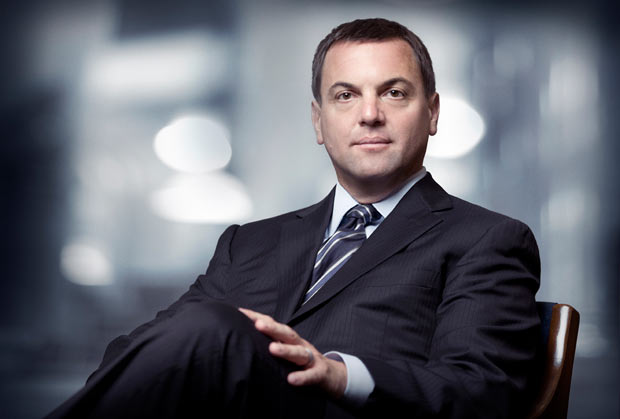
Tim Hudak was a great example of this kind of politicking; he constantly protrayed himself as Stern Father, the man with the plan, the Master of Political Kung Fu, the only one who could fix everything if we'd just give him the keys to the Premier's Office. Hudak relished a good fight, as did his team - as do most political operatives.  

For them, politics is a bloodsport, the grand arena; they love epic contests, battles of skill and fortitude. There's nothing they relish more than dining on the ashes of their opponents on the field of victory.

Which brings us back to Superman.

Faced with some public criticism of the massive devastation Metropolis faces in the Man of Steel movie, direct Zack Snyder has said:


For Synder, Superman is an American stand-in for a Ronin or a demi-God like Heracles or Perseus.  The wanton destruction of property and loss of live was necessary to give Superman the scope and scale of a mythological hero.

That's fine, I guess, for a movie, but it's really not a constructive way to build brand in the real world.  Yet that is what the political fighters out there subconsciously are trying to do.

I've argued before that a great number of War Room operatives see themselves as modern superheroes (like a James Bond), all that stands between us and oblivion.  This is in no small part a narrative that feeds their ego; the more important you are, the greater the stakes are in your actions - and as such, the more of everything you deserve to have for being the superhero.

There are psychological underpinnings to this mentality that are hard-wired into our species; think Alpha Male getting all the best food and the best pick of mates for being the guy who keeps threats at bay.  Of course there are other males that want that privilege, so are constantly looking for ways to bring down the Top Dog, leading to internal competitions.  


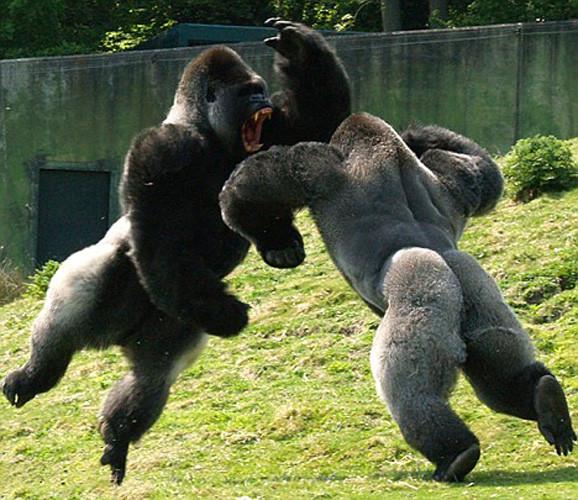
Chest-thumping gorillas, deer antlers, peacock's tails and narcissistic personalities are all genetic variances on the same theme.  Our cognitive capacity has simply allowed us to blow up this narrative to epic, god-like proportions, with some casting themselves in the role of the Alpha and doing what it takes to get there.


Thing is, Superman has never been the Alpha male - he's never sought power, prestige or fame.  As such he's never felt the need to be at the centre of glorious, epic battles the way a samurai, demi-gods or super-spies have.

Superman has never been about himself - he has been a symbol for the better angels of our nature.  He is more often portrayed as a mythical equivalent to a Jesus rather than a Heracles.  As an outsider, he has been distinct, therefore not tied to the same drives as the rest of us.  As a being of unmatched power, he's never needed to fight for title or dive into epic, destructive battle to prove his superiority.

In the words of Chronicle scribe Max Landis, Superman has always been the the adult in the room.


Landis has a great rant in which he articulates why he has no problem with Superman killing one person, if that's what it takes to save many, but takes issue with the fact that Supes allowed his epic battle to ravage his home town and the entire city of Metropolis.  

Instead, Superman should have drawn the fight away from populated areas, away from earth even to ensure the minimum amount of damage to others.

Superman isn't interested in the win; he's interested in the public good.  That's his difference; that's what makes him special.  It's also why a guy like Lex Luthor, who strives to be the Alpha, loathes the Man of Steel as he does.

Lex Luthor may become the wealthiest business man, the master of the criminal underworld, even the President of the United States, but he can never beat Superman, and that's what fuels his hatred of his nemesis.

So how does a guy like Superman defeat an implacable foe like Lex Luthor? 

We go back to Kathleen Wynne.


Wynne, again, is no demi-god, no superhero, no saviour.  What she is, though, is a leader.  Leaders differ from Alphas in that they put the people before themselves, always.  

When she won the Liberal Leadership, Wynne immediately reached out to her former rivals to find ways they could move forward together.  Others may have gloated, kicked Wynne loyalists out of the Party and claimed victory; Wynne immediately started to go back to work.  

Even as her "defeated foes" continued to pick at her, trying to demonize and bring her down, force her to play at their level, Wynne has always remained the leader.  She works with everyone who's willing and always leaves the door open for those who aren't.

Faced with an implacable foe, Wynne does what the best of leaders do - put the people first.  If a "foe" of hers has a success, she recognizes it.  When she herself makes a mistake, she recognizes that, too.  The focus is never on bringing others down or making oneself bullet-proof - it's always, always on moving forward together.


In a Legislature that is often fractious and full of over-the-top personalities trying to portray themselves as super champions in epic combat, Wynne continues to be the adult in the room.  Does she slip sometimes?  Of course she does - she's human.  But she never gives up, never stays down - and she's winning converts as a result.

Instead of trying to bring her down or demonize her, Wynne's "foes" would do well to learn from her example and start leading themselves.  

If our politicians can pull together and focus on fixing the province, just think what kind of message that would send to the rest of us.

Monday, 3 February 2014

John Tory: Competition vs Accomplishment

Patrick Swayze - Nobody Puts baby in a corner


If you're maybe kinda sorta contemplating a bid for higher office, this was about as clever as thing to say as that time Mitt Romney talked about having binders full of women.

From a behavioural perspective, however, there's something really interesting to be mined in this.


Tory makes a point; men do tend to be more selfishly aggressive than women (in that the average man is more aggressive than the average woman, not that selfish aggressiveness or passiveness are unique to each gender).


It's not a uniquely human thing; across mammalian species, males tend to be flashier in their appearance and more likely to fight with each other for status and dominance (which largely reads as increased access to women).  

Physical features like the peacock's tail and the deer's antlers are biological testament to this. 

Now think about this in a social context for a second.  We automatically assume that aggressively standing up for one's interests is a good thing, be it the better cut of meat or the corner office.   Competitive men are more likely to get what they want, therefore making them better investments.  

Right?

In nature, the more competitive male gets the resources, gets the female and passes on its genes.  In theory, the socially more aggressive male will make more sales and be of greater value to their employer; this aggression gets rewarded through higher wages and corner offices.  Eventually, they and the companies that employ them become too big to fail, right? 

Not really, no.  Aggressive, alpha salesmen are selling brand more than they are product, ignoring or downloading risk to people less important or competitive than they are.  They fail all the time - the higher up they get, the more people there are carrying the risk for them.


Aggressive sales isn't always a good thing, especially when the product or service isn't that great.  The focus shifts from being about the quality of a product and more about tearing down competitors - kinda like political attack ads. 


The other thing about an aggressive focus on winning is that, by the very nature of competition, success of one comes at the expense of someone else.  What happens when your competitors don't cave so easily?  Syria provides a great example of how badly this approach can turn out.

War has traditionally been the province of men not because they're tough enough to fight, but because on the whole, fighting comes more naturally to them. 

The ability to sell products/services of lower quality, the drive to push down competitors and aggression as a default - these might be great skills to have in a sales environment, but they're also a recipe for stagnation and failure.  Feudalism, Wall Street collapses and the hollowing out of democratic politics are all examples of where elbows-up aggression gets us.  

How many brutal women dictators can you name?  Exactly.


History is the story of humankind moving in the opposite direction, towards increased social-emotional fluency, collaboration and a focus on results rather than sales pitches.  It should come as no surprise that, as women have become more fully empowered and integrated into society, we've become less violent, more sophisticated, more balanced and even more innovative.

The last is key, especially in fields like politics.  If you think that policy development is a social equivalent to natural selection, with the best ideas already in existence needing only tough salesmen to ensure the best policy genes are carried on, fine.  But what if the solutions at hand aren't up to the challenges of the day?

Reproduction isn't about carrying one person's genes forward - it's about getting the best blend of each. 

Smart policy (admittedly, a rare commodity) works the same way.  It blends perspectives and approaches to create the best adapted and flexible end product.


If you're so focused on winning and selling what you have that you can't view alternative perspectives as anything but competition, you're losing the ability to incorporate, grow and build partnerships.  You may grow big and strong, but as a result you lose the ability to adapt and, as the world change, you become as irrelevant as horses and bayonets (or for that matter, coal plants).

Smart companies have recognized that it pays to be adaptable and to work with employees to ensure they have the tools, accommodation and compensation they need to succeed rather than wait for their workers to come to them.  

That way it's the best talent, not the most aggressive negotiators, who rise up the ranks and keep the organization competitive in an evolving landscape.

It doesn't sound to me like John Tory spent much time seeking out, understanding and supporting the best talent in his teams.  Like far too many bosses, he played the laissez-faire game, hoarding his money until someone came and aggressively convinced him to part with it.

As such, he represents traditional models of leadership that are proven less effective, especially in economies that are heavily dependent on innovation.  It's a shame, really, because he understands how destructive a winner-take-all approach can be to sound decisions getting made.


It's probably true that women are less likely to spend their time demanding more from their bosses; by the same token, it's equally likely that women leaders are more likely to do the right thing and empower their employees so they can spend more time working than negotiating.


Something I think John Tory should be familiar with.

Monday, 15 April 2013

Rape Culture and Manufactured Consent: Hustling Success vs The Public Good


   - Ayn Rand

Being alone in a crowd, for instance.  Surely, that's an impossibility.

The rape and death of Rehtaeh Parsons has horrified and angered a nation.  Yet the reactive horror and anger is coming long after the fatal blow was struck.  There are calls for justice for the family, which is necessary - but where were these voices before justice was necessary?  The boys that raped and re-victimized Rehtaeh must face justice, but unless we plan to kill them off or merely just rape them back, that justice must be of the restorative variety.

While we focus on response to the tragedy, there's a bigger question that needs to be addressed.  How is it that these boys came to act in such an inhumane fashion in the first place?  While the RCMP is rightfully being criticized for their failure to act and the school is being chastised for a failure to recognize the problem earlier, no one else was there earlier, either.  Is justice something we consume from providers only, or something we are supposed to embody in our own daily behaviour?

And what are we doing to understand how this happened - and how similar tragedies can be avoided?

If we're serious about addressing this question, we have to get past bullet-point explanations and starfish-throwing solutions.  We need to wrap our heads around content, context and consequence of everyone's behaviour by engaging in a lot of talkfests with evidence-based experts whose opinions might rub us the wrong way and whose research might need more funding for sufficient bandwidth. 

To start, though, we have to admit to ourselves that we're coming at the big problem from the wrong angle.  Rape culture is just that - a pervasive culture that enables and forgives individuals who push the limits of what is acceptable.  Cultural problems aren't individual - they belong to all of us.  Of course, nobody teaches courses about how to rape effectively; that would be criminal.  What we do do, however, is encourage people to look out for number one and to be willing to hustle to get what they want.  The emphasis is on efficiency, not ethics.  That's not about rape - that's about free market capitalism.

What does this have to do with Ayn Rand?

While Karl Marx and Communism have gotten plenty of attention, there's been less public dialogue about Rand and her philosophy of Objectivism.  This is a shame, because a great deal of Western political thought, particularly in the US and more recently in Canada relies on the concepts of Rand's philosophy.


Rand built this system of thought on Nietzsche's contempt for systems; in her world, society is a false concept imposed on moral individuals by immoral ones.  Selfish pursuit is the way to get ahead - greed is good.  In a non-system where individual actors pursue the fulfilment of their own greed to attain happiness, balance is achieved (though balance would seem to imply middle ground - and Rand was convinced there are only two sides to every issue - one right and one wrong - and the middle was invariably evil).

So there are no such things as contradictions, middle-ground doesn't exist and pursuing one's own happiness is the only moral purpose in life. So how do we achieve happiness, according to Rand?


One would surmise from this that individual actors acting in their own interests to achieve their full market share of happiness will express their morality by letting nobody stop them from getting what they want - and that's all you need to know.

Ironically enough, Rand's most famous work, Atlas Shrugged, was published in 1957 - the same year Leon Festinger's A Theory of Cognitive Dissonance hit bookshelves.
 
The assumption of Objectivism (and for that matter, the free market) is that when buyers and sellers are able to transact freely, they'll come to a mutually agreeable trade value - the market price.  The problem is, not everyone wants to buy what's being sold or sell what's being sought. 

Rand was a believer in laissez-faire capitalism, but she also expressed the belief that you should go out and get what you want.  The art of "closing the deal" is anything but laissez-faire; anyone who works in sales can relate to the need to aggressively nudge a potential buyer into signing on the line which is dotted. 

Now, there are many ways you can push for the deal to be closed - you can follow the aggressive advice of Alec Baldwin; you can employ neuropsychology; you can even design products which produce uncontrolled behaviours in a potential client.  The point is, if people aren't willingly playing along in giving you what you want, don't let that stop you - there are other ways to seal the deal.  Playing the push-game works; through aggressive sales, Apple increased its sales in India by 400 per cent.  As I hear all the time, people don't care about process, so long as the end result is great.  The implication is that they don't care what else you do in life with that aggressive, go-get-'em attitude so long as their piece is delivered, cleanly.

The concept of your happiness coming as a result of harm to someone else doesn't come in to Rand's world, because she refused to recognize the notion of society.  Laissez-faire capitalism is the exact opposite of going out and aggressively getting what you want, but Rand didn't deal with that, either; instead, she positioned herself to be able to say "I'm right and you're wrong", thereby refusing to accept the contradictions of her own position.  By refusing to accept this cognitive dissonance, she was confabulating (making up a self-validating story to paper over the conflict) excuses to avoid addressing the problem.

If you're still with me, it means you're willing to accept there are such things as contradictions and that the devil is in the details.  If you were Ayn Rand (or Rob Ford, for that matter), by now you'd be upset, feel reading this was a stupid waste of time and that I'm unnecessarily complicating a simple issue of good-guy/bad-guy and the state as evil.

But you are with me, so here's where the background starts to pay off.


To put it in a slightly different way: All it takes for evil to succeed is for a few good people to do nothing.

We know this, but do nothing anyway - we're too busy, it's not really our thing, etc.  Someone else should get to that.

At least, that's what we tell ourselves.

AGGRESSIVE SUCCESS

ie - gunning the engine to catch the light
 
Success is seen as a road to happiness.  Success comes through hustling - nobody's going to hand you fistfuls of money, you have to go out and take it.  The success stories we admire are anything but laissez-faire.  We admire people like Steve Jobs or Stephen Harper who had the persistence and "moral toughness" to get what they wanted at any cost.  They may have had to step on a few heads to get there, but you know what they say about eggs and omelets.

By and large, we feel that it's socially acceptable to nudge people in favour of our own interests.  In fact, that's what sales is all about. We can convince ourselves we're just trying to help people obtain something they want, but the very implication of that sentiment is that vendors know what's best for the buyer. I can try to guilt you into buying a product, threaten you into buying a product or trick you into buying a product, but at the end of the day, I'm gonna make that sale. Success, after all, is what makes me happy.

Socially, we reward the hustlers with jobs, fortune, privilege and power - yet somehow don't expect that behaviour to spill over outside their field of work.  A-type personalities dominate executive positions, yet we still express shock when they get caught behaving in vile ways.  We decry bullying but in politics, sports and business, we admire and respect bullies for their success.

Stephen Harper is a bully. Steve Jobs was a bully. Michael Bay is a bully, but we don't care - if his movies make us happy. 

PASSIVE SUCCESS
 
ie - not breaking when you see the light turn yellow.
 
Just as it is seen as socially acceptable to push people to get the results we want, it's also acceptable to be passive about things that benefit our own interests.  This is as true of ignoring where our eggs come from as not caring how cheap foreign imports end up on our shelves or what labour goes in to the success of our companies.  So long as you get a solid return on your investment, who cares?  Process matters less than results - the ends justify the means.  Wading into the details is something you do only when there's clearly a problem to be addressed.

There's a corollary to this, though - just like the aggressive salesfolk, there are trade offs in our own wins.  Cheap, abusive labour might be behind our imports.  The folk managing our investment portfolios might not be so scrupulous about their efforts.  The same could be could be true of other service providers.

Arthur Porter was successful, until he got caught. Adam Carroll was pretty pleased with himself, until he got caught. Chris Mazza was totally going out and taking what he wanted, until he got caught. Some aggressive ladder-climbers have behaved badly and been caught. But not all of them.

Each of these entrepreneurial folks was hustling, making money, buying goods, contributing to the economy, living happy. In short, they were doing exactly what society asks them to.  There was some benefit in what they did for those they sold their services, too - so long as the accumulated risks could be ignored.  That laissez-faire approach led to massive losses, public humiliation and the cracking of investor confidence. 

These aggressive, individually successful individuals were left to their own devices, resulting in steep and avoidable costs to the whole.

PASSIVE AVOIDANCE
 
ie - tisking someone who runs a light, but nothing more; after all, it doesn't impact you.
 
"The opposite of love is not hate, it's indifference. The opposite of beauty is not ugliness, it's indifference. The opposite of faith is not heresy, it's indifference. And the opposite of life is not death, but indifference between life and death."
     - Elie Wiesel

Ayn Rand believed there was no such thing as a social system; that individual self-interest was the primary mover of success and that the world was black-and-white.

Here's what she missed - when you split the world up into "right" and "wrong" you invariably end up with an unspoken third category - irrelevant.

Horrific tragedies in faraway countries?  Not our issue, unless we're threatened.  Terrible plights of people in remote First Nations communities in our own country?  Until we're shamed, we remain unresponsive and even then, our attention is fleeting.  Homelessness?  Poverty? Mental health?  The best social program is a job - and it's the job of the individual to get out there, hustle their stuff and make employment happen.  Individuals are their own best advocates; they just need to get up and advocate.  It'll be nice to see it when it happens, but it's not our place to nudge anyone into protecting their self-interests.

Passive avoidance works the same way passive success does - through inaction.  We don't act in someone else's favour and find reasons to justify why.  If, for instance, a passive person is on the receiving end of someone else's aggression, they probably have it coming.  It's certainly got nothing to do with us.

We definitely find it hard to act when a negative to someone else results in a positive for us - at least, if we don't fear the consequences of that negative behaviour coming home to roost.

What about when the risk we face of ignoring the bad behaviour of a provider is recognizable, but not enough to make us feel threatened - or lands so close to home we're sure to be impacted?


AGGRESSIVE AVOIDANCE
 
ie - hammering the horn when someone runs a light and nearly hits your car; or giving the finger to someone who beeps at you after you've run the light.
 
Despite the fact that he killed his girlfriend, Oscar Pistorius still has legions of fans.  People who like him as a performer or admire his embodiment of competitive success will protect him by blaming his girlfriend for her own death.

You'll see the exact same things in politics; Ford Nation will attack anyone who criticizes the Mayor and, oddly enough, will say that the only thing that matters is the results the Mayor achieves.  Pierre Penashue is using this same "the ends justify the means" approach with his constituents - so long as you get the goods, what do you care about what else I do with my time?

Offense is the best defense, even in those incidents where something you have done is the thing most offensive.

Of course, aggressive hustlers are looking to defend themselves, too, at the exact same time they're viewing others as marks.  For all the aggressive posturing and ego you get from Wall Street suits, you also get this:


But this girl, clearly, is a paid whore.  You can't take what she says seriously.  She's probably pissed that she didn't get tipped well, but that says more about her than it does about the client - right?

REHTAEH PARSONS

Let's apply all of this to the death of Rehtaeh Parsons.  The boys who raped her would probably have never faced justice were it not for the picture they took.  After all, sex is a transaction between two parties; if one's complaining after the fact, it must mean they weren't happy with the deal they got, right?  That's how transactions work.  It's why we have a social habit of blaming the victim. 
 
This leaning towards whatever stance lets us be passive is made worse by the urge to protect our own self-interests; when it becomes clear a wrong was committed, we're more likely to double-down on our positions and absolve ourselves of anything resembling responsibility.  If it gets so bad that the consequences can't be ignored - like the suicide of a 17 year-old - we will recognize fault only as long as its fashionable (unless you empathize with the victim, maybe because you've got a teenage daughter yourself) and assuredly not point the finger of blame at the mirror.

The rapists themselves were probably pleased with their actions, at first - they hustled, seized an opportunity and took what they wanted, with maybe a bit of risk of getting caught.  They see this behaviour all the time, in different contexts, so even if they knew it wasn't right they wouldn't be dwelling on the risk of repercussion.  This is a crime we will see repeated; maybe the boys were wear masks next time, but that will only feed into the power-trip of the crime.

If Rehtaeh had been physically brutalized, then people would have taken action - but as it was, the wounds were internal and easy to avoid.

Which is what peers did.  They kinda knew about it or definitively knew all about it but easier than taking on the boys who came out on top was piling on the girl at the bottom.  It happens all the time.

My grandfather tells stories of Buchenwald Concentration Camp; inmates would become so numb, so mentally walled off that if someone fell over dead on the grounds from disease or starvation, you'd simply go check them for useful gear and then move on.  The ones who got the shoes or the bread were the toughest and they did so at the expense of the weak.  There was no mental space to grieve death.  
 
The RCMP and school triaged the rape case by focusing on why it wouldn't be relevant to them, not the reverse.  That's how business works, right?  Empathy has no place in rational decision making, it's a bad motivator.  Passively or aggressively, you want to avoid expenditures of any kind.  If an issue is severe enough, the process will make that clear all on its own.
 
And that's indeed what happened; the police and system did their triage, let things go and the system course-corrected.  I'm sure I'm not alone in thinking it shouldn't take social uproar to get the wheels of justice turning.
 
And there's the ultimate contradiction.  Justice isn't being done; we're throwing the starfish back in the ocean, one at a time and ignoring the structural challenges that really need addressed.  By addressing the wrong problems and ignoring the very real connections between process and outcome, we're not recognizing that social challenges take social solutions.
 
L'etat, c'est nous.  If we really want a world where things like the rape of Rethaeh don't happen, it's not isolated individuals who need to change - it's all of us.
 
Here's a place to start:

9. Teach children that their behaviors affect others.

10. Teach kids to look for opportunities to help.


Wednesday, 2 May 2012

Don't Get Smug: Competition and Success


Hence, the brogrammer phenomena.  This is not a new thing, though - success has always bred overconfidence, a shift in focus from work to trappings and, eventually, collapse.  Look at the world banking industry (or troll through @GSElevator for a short sugar-dose of testosterone).  Look at politics; any Party over time, or a whole host of candidates. 

Smart people tell me there is all kinds of in-depth strategy in the antics of, say, a Tim Hudak.  I think that the reality is, there's a strong element of walking circles in the woods to this; the longer you keep at it with a righteous attitude, the more you're "strategy" becomes a reflection of your personal inclinations.  Planks become so much confabulation, justifying smug positions.  The kind of positions that, if you're very lucky, might work out for you, but are by no means a recipe for success.

Standard business logic tells us you have to exude confidence to win.  Practical experience tells us that overconfidence leads to failures.

My solution is easy - your only competitor should be yourself.  If you constantly push yourself to do better, to reach further, to strain for the next level, it doesn't matter whether the other players are competitive or not - you will never cease to excel. 

Reach higher - and deliver.


UPDATED: I never do this intentionally, but it happens none-the-less.  Here is an article I read after this post which also builds on the risk of personality impeding success.  Tonya Surman, the visionary behind the Centre for Social Innovation, said essentially the same thing I believe during a recent chat: never make it about yourself - everything you do should be about the vision.

In the words of Lao tzu:

“When the Master governs, the people
are hardly aware that he exists.
Next best is a leader who is loved.
Next, one who is feared.
The worst is one who is despised.

If you don't trust people,
you make them untrustworthy.

The Master doesn't talk, he acts.
When his work is done,
the people say, "Amazing:
we did it, all by ourselves!”