Search This Blog

CCE in brief

My photo
Recovering backpacker, Cornwallite at heart, political enthusiast, catalyst, writer, husband, father, community volunteer, unabashedly proud Canadian. Every hyperlink connects to something related directly or thematically to that which is highlighted.
Showing posts with label war. Show all posts

Monday, 8 September 2014

Fire and Water: Storm Front Coming


And in that bright October sun
We knew our childhood days were done
And I watched my friends go off to war
What do they keep on fighting for?


War is fire.

It has a voracious appetite that will consume everything in its path - land, cities, people, even children.  It doesn't matter that we didn't start the fire.

It doesn't discriminate.

War is sparked by the friction of politics, rubbing moods raw, wearing ethics down until the very fibre of our dark hearts is laid bare.

Sticks rubbed together with enough force can start the fire of war.

Sticks brought together with a lil' bit of tape and vision can create a bed, or a building, or a community. We can even keep the darkness at bay, when we learn to tame that spark for light rather than heat.

But you can built naught with ashes but tombs.


As the weather changes, there are a growing number of brushfires emerging, growing hotter, spreading.


Will the world burn?  I think not.  But our saving grace won't come at our hands.

There are other forces at work besides fire; as the weather changes, we're seeing storms of increasing ferocity dashing against aged infrastructure ill-equipped to keep the force of nature at bay.

The last man standing cannot hold back the tide; he will have no one to turn to for aid.  

It is the folly of man that we recognize our place only after we've overestimated our power.

It's the wisdom of humanity that we plan ahead.  

What gives us the grace to look beyond our immediate selves to temporal realities?

I think you know the answer.


Saturday, 6 September 2014

The Demise of Civil Canada


Or saying nothing at all, while paid spokespeople or dropped ads become the only vehicle for message to be sent, with no equivalent existing for input to be received.

This not to say it's a shift unique to the Conservatives; the "contact sport" that is politics has become increasingly aggressive and mean-tactic heavy.  Contact, by the way, refers to hitting opponents, not engaging with constituents.

Of course there are no apologies; apologies are for the weak.  Real men, or mannish women, hit hard, take no quarter, and as they are always in the right, are justified in doing whatever it takes to beat back the heathens at the gate.

If anyone calls into question their tactics, it's simply an indication that those self-same tactics are effective.  


Call Team Harper Nixonian all you want - they'll think of you as sore losers.  Nixon didn't get away with it, they'll say, but we did.  Clearly, we're better than he was.


This is not a democratic approach.  This is not about "exposing true feelings" or even about policy.  What's pushing these increasingly aggressive political players is the desire for power, not love of the leader.


Leaders look to their own self-interest, collect teams that do the same, and so on down the chain it goes. That's what a sociology-free government looks like; Sun News in the House of Commons.

Lest you think that's a universal condemnation, there are many who see that as a positive.  It's only in angry reaction, don't you know, that true selves are revealed, right?

Here is the heart-breaking, maddening irony.  When anything you do is right, and any attack that comes from opposition is only evidence of how powerful you truly are, you lose sight of the big picture and your place in it.  The tactics you use become increasingly shocking, simply because that's the nature of escalation.

It's the exact same spectrum that ISIS is on - they too are about power, instilling fear in their foes through harsh tactics and taking what they want simply because they can.

What happens when powers equally focused on destroying their foes and with no introspection about their purpose and the social impact of their action come head-to-head?  

Massive amounts of money gets spent on the weapons of war, ranging from robocalls, troll armies and attack ads to real troops throwing real grenades.  The severity of collateral damage follows suit.  The basics of italicization fall away, because they are all matters of sociology.


War is the worst time to commit sociology, right?  Your opponent isn't to be understood, but eliminated by brutal force, full stop.  This is the mind-set of the people wielding power who can't be bothered to understand their enemy and are so trapped by their egos they are incapable of understanding themselves. 


And so the only option they know and embrace is escalation.

That's where we're at, internationally.  That's what we're creeping towards, domestically.

These folk haven't won.  They've set fire to our common ground without realizing that wherever their heads are at, their feet stand on the same earth.

Hope exists in unlikely places, but there's a creeping darkness overtaking our politics.

Fall's coming and, as always, winter isn't far behind.


Saturday, 3 May 2014

Political Gardening: The End of War, The Death of the Selfie


Today, between bouts of rain, I was out in the garden, overturning soil and clearing out weeds.  While I was doing this my eldest son was playing a make-believe game about keeping an eye out for manufactured bad guys.  

As I dug and churned, I quizzed him about his strategy for dealing with these bad guys, what he knew about them; their objectives, strength, location, and so on.  Then we gamed out strategies to gain intel, disrupt their internal operations and build coalitions with third-party groups to help outflank our foe.

Play time gets pretty involved at the C-E household.


I told all of this jokingly to my wife, later, who rolled her eyes and tsked her disapproval.  "Can't a game just be a game", she asked?

It made me wonder - could a democracy ever just be a democracy, or is politics invariably a competitive sport?  Will it always draw and reward the bare-knuckle brawlers, sociopaths and narcissists?  Can good people not get drawn in to the petty, pseudo-war qualities of partisanship?

Politics has always been a game of dominance, borrowing tools from other sectors for success.  Politicians get media training, like a weak-tea actor's class; much of the pomp and circumstance around political campaigns and announcements borrows heavily from the entertainment sector.

On the war room side, well - the name tells you everything.  Listen to a political speech or even better, a rally speech to a loyal audience.  It's all about us vs them, with them being out to destroy everything we hold dear.  The strategies and tactics pull heavily from military thinking; spies, offensives, counter-attacks, messaging superiority, so on and so forth.

The Art of Politics has become the science of dehumanization.  After all, you couldn't do to someone you saw as like you what you do to an opponent in war.


It's a fascinating question, this - are partisans fundamentally different from each other, down the neurological hard-wiring?  Are political people made of a different fibre than everyone else?

Of course not.  People are people and, as we know, individuals are capable of some extreme behaviour both positive and negative under adverse conditions.
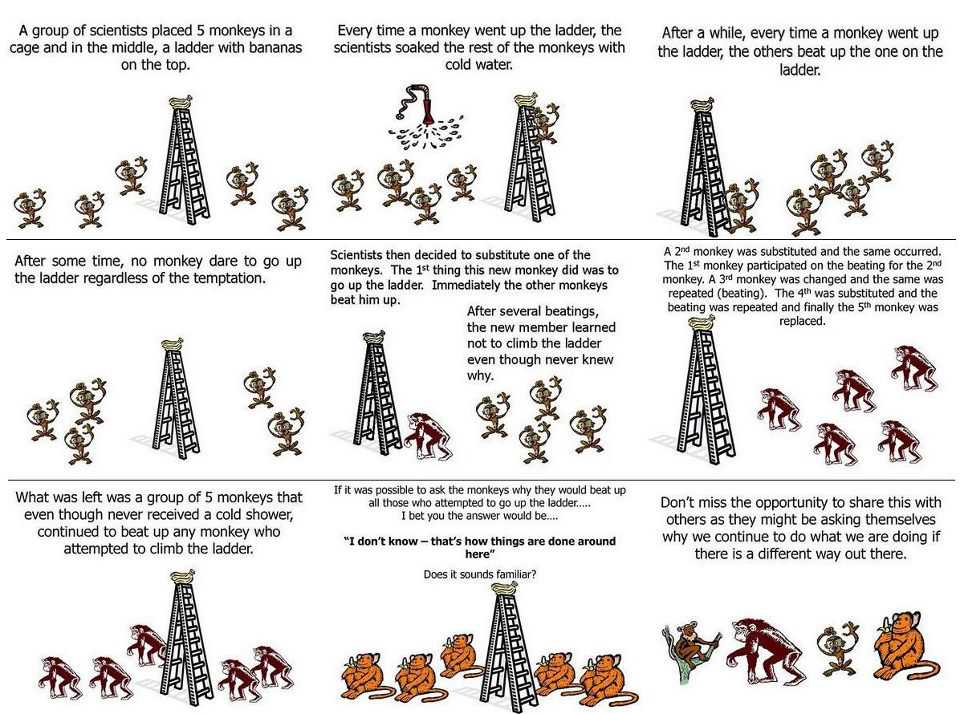

What makes politics so fascinating is that it serves as its own cause and effect.  It's the series of small choices that nudge the overarching tone in one narrative.  

Wars, after all, are borne out of choices made by individuals, but when new individuals are brought into an already tense environment and are taught by those who've caused the friction in the first place, what happens then?  

You might say that tribal warfare is inevitable and that competitive relationships always, always evolve into zero-sum games.

If you thought that, though, you'd be wrong.

History is replete with second chances, honour in the heat of battle and friendships forged on the battleground.  My personal favourite story is about how a German Airforce officer took a risk and pulled rank to free some Allied Airmen from Buchenwald.  These lucky ones may have been enemies of war, but they were colleagues in arms as well.

If anything, the history of humanity is away from small, simple tribes in perpetual competition to larger, more complex systems with greater latitude for specialization, collaboration and quality of life.

So I find it all too telling when political people muse about the differences they feel must exist between themselves and someone else.  I'm sure Rob Ford has had similar moments of self-pity as he's considered what he's done with his life.

As Ford (hopefully) begins his long, hard journey towards self-recovery, he's going to be learning a lesson that many who've positioned themselves as "different" and therefore, subjected to a different set of standards have learned.

yin yang
Within each of us is the potential for both rage and serenity, great deeds and great horrors.  When we think competitively, strive to get ahead by all means, we try to make ourselves into something that we aren't.  

By so doing, we internally limit our choices.  Our underlying ethics, however, remain the same.

When we justify doing things we know to be unkind, it's a choice that has consequences - but always, a choice.

Ultimately, it's a choice to die alone, cut off from others both physically and emotionally.

When we wash ourselves clean of the manufactured identities we create for ourselves - especially in politics - we recognize what part of us has grappled with all along; that we aren't made of different stuff, aren't subject to different moral codes and have simply made a choice to dehumanize ourselves so that we may do the same to others.  

It was convenient at the time - and in politics, timing is everything.  

But a series of bitterly-fought victories that simply lead to the next battle isn't a life.  The world doesn't flow by the four-year cycle, the Legislative calendar or even the business calendar.  Births, deaths, losses, challenges and opportunities come at any moment, in unscheduled ways.  

Our lives are framed by the choices we make about what happens around us - not just to us, or what we do to others, but between us.  Life isn't meant to be convenient, but it is a journey of discovery.

Over these weeks, if he is like others who have walked this road, he will come - as the ancient oracle at Delphi instructs - to know himself, perhaps for the first time.

When we choose to live our lives this way - as an experience we engage in together rather than a battle to be won - we truly live.

Life isn't a game, but it can be a dream.

The rain has stopped - it's back to the garden for my boy and I.


Friday, 6 December 2013

You Can Only Fall: Rob Ford and Chlöe Howl


There's been this silly notion floating around to varying degrees of prominence over the past half-century or so (and of course, even worse before then) that rights and freedom imply a lack of responsibility.  

Government is The Man, the villain, oppressive of individual rights with its rules and regulations.  The 1% are oppressors with their stingy control of resources and unwillingness to let people be.  Of course, the reverse is true, too - it's those damned voters not turning out who are mucking with democracy, it's those welfare bums who refuse to get out and work for themselves that are killing the economy.

Someone else is to blame for our woes and if they'd just piss off, all would be well.  Well, if everyone did piss off, we'd be on our own, wouldn't we?  But we're not - we live in a dense, increasingly urban environment where inactions have as many consequences as actions; laissez-faire isn't an option, because choosing not to choose still impacts results.  

Besides, those people you want to piss off provide something of value to you - those bumpkins rural folk produce food; those urban elitists stimulate the economy and permit for things like risk management programs.  The inter-dependencies are alarming, or encouraging - either way they're there.

So, what happens when we opt not to care for the people we don't like/challenge us and refuse to accept anything resembling responsibility for our own choices?

The culmination of this "it's someone else's fault, piss on them" attitude is a familiar picture, actually.  You've got Golden Dawn in Greece, supported by people who have abdicated responsibility in favour of blame and hatred.  You've got extreme tyrants and potential war-criminals like Bashar al-Assad at the worst end of the spectrum, but in less egregious cases you have mirco-managers like Stephen Harper who abjectly refuse, even to themselves, to accept the accountability that comes with their roles.


More famously, we have Toronto's "I made mistakes, I can't but move on, I'm only human" crack-smoking mayor Rob Ford.  Who cares if he consorted with people who have committed crimes, if he has put the lives of innocents at risk through driving drunk, who has exposed himself to extortion and possibly threatened to use City resources for private vendettas?  So long as my taxes are low, what's it got to me?  


Of course we've had variants on the theme for ages now - I'm entitled, you're to blame, that's the whole story.  When no one is accountable for the common good, though, we know what happens - tragedy ensues.  

The angrier people are, the more likely they are to vote for hateful people that appeal to their baser instincts.  It's a vicious spiral that we've witnessed before.  It doesn't end until a lot of people have lost their heads.

How many of the world's problems are related to neo-colonial, objectivist, short-sighted approaches to engagement with others?  How many of the world's great conflicts have been fueled on the kindling of self-interest?  World War II was catalyzed by Hitler, but the only reason Hitler found an audience was because Germany had been so disadvantged by the winners post-World War I.  It could have been avoided.

War Room politics may polarize constituencies and generate ink (er... 0s and 1s?) but it also disillusions voters and fuels revolutionary sentiment.  Put simply - War Room politics is one step on the road towards war.

The all rights, no responsibility approach is a dismal flop.  Not having agency, not feeling accountable for something sucks rocks.  It's decidedly unpleasant blaming everyone else for blaming you for not doing something.   Leaders who refuse to lead are a farce.  It may have been endearing once and funny for a while, but we've seen this movie too many times - nobody's bothering to digitize it.

And so the pendulum starts to swing again.  The tip of the Roger's Curve is all about accountability, responsibility and long-term, pro-social planning.  Whatever their demographic, wherever they come from, the sorts of folk that embody this new mentality simply don't have time for self-serving, delusional bullshit.  They want metrics, they want clarity and above all they want to be part of change.


We'll see what kind of staying power Chlöe Howl has, but she may just be this accountability shift's answer to Johnny Rotten, giving a finger to the prevailing elites not by excusing herself from the system but opting to pick up the torch and run with it.

It's early days yet, and we still have the vast majority of society landing on the burning the platform, not tending the garden side of the equation.  Whether it's this crop of young leaders or the next, though, you can count on this - there will come a point in the near future when our children realize how far previous generations have fallen and pulled society down with them - and will decide it's up to them to pull us collectively back up.

Greatest Generations are a bit like Christmas trees, that way - you don't get them often, but they always seem to be better than the last.

UPDATE 18/12/13: When you look at the data, every time you sincerely try to help someone else without strings attached, you enhance the probability that somebody else at some point is going to do something for you. 


Sunday, 10 November 2013

Lest We Forget: The Causes and Consequences of War


First published November 11, 2011.


 Duty.  Honour.  Noble sacrifice.  Defending our shores, protecting freedom, ending tyranny abroad.  War has represented all of these things in some form or other since the dawn of history.  Martial conflict is a quintessential human activity; combat is the true first profession.  Statues commemorating those who have battled gloriously, even if not victoriously, are found scattered among towns, cities and the countryside of nations the world over.  Borders themselves are monuments to battles fought and won by aggressors, yet are equally badges of shame for the defeated.   Entire civilizations have risen and fallen at the point of a sword.  The names of warriors like Alexander the Great, William the Conqueror and Rumiñahui will echo down the halls of history long after those of mere politicians fade to a whisper.  Then again, so will names like Adolf Hitler.

Given that war is fundamental to the human condition and the legendary status that great warriors can achieve, it’s no surprise that society has glamourized conflict.  There’s something undeniably epic about grim soldiers testing their strength and skills against evil foes in a theatre of war, with the clashing of shields or the roar of gunfire in the background.  Add a loving spouse holding a young child at home and you’ve got the makings of a blockbuster Michael Bay movie.  People pay big bucks on war – at the theatre, the toy store and at the arms show. 

If the glory of war doesn’t sell you, the patriotism might.  Nothing stirs the heart quite like the sight of valiant soldiers hosting a nation’s flag on the field of battle.  We’re proud to know our loved ones are protecting our shores and values, following the banner into fire while we keep the home fires burning.  For some, the call to duty by King and Country or an Uncle Sam is an irresistible siren song beckoning them to be part of something larger than themselves, something that matters.  Who doesn’t want to do their part in crushing the bad guys?

This leads into another reason for taking up the sword; the dire need to stop bad things from happening.  I’ve already mentioned Hitler – he was the reason my grandfather signed up for service during World War II.  Ed Carter-Edwards became a Canadian airman to stop the Nazi threat.  The adventure implied in war also appealed to him, as did the sense of duty to answer when his nation calls.  Believe it or not, there was a time when it was readily accepted that patriotism implied action, which people took willingly. 

Ed flew bombing runs over Occupied Europe.  His team took their Halifax deep behind enemy lines, smashing Nazi weapon depots and train stations, disrupting their supply lines to The Front.  While these airmen knew they risked death with each mission, it always felt like a deflected threat – someone else would get it, never them.  With each run, though, there were fewer fellow airmen coming home; the more you toss the dice, the greater becomes the chance of your number coming up.

Which, for Ed and company, happened in the early hours of June 8th, 1944.  They had been deployed to take out a railway yard near Paris – a relatively light assignment, given some of their past engagements deep into Germany itself.  They didn’t expect any surprises.  Somehow, it’s always when your guard is down that things go horribly wrong.  A German Focke-Wulf 190 crept up on them out of the darkness, tore one of the Halifax’s wing to shreds and sent the plane to a fiery grave on the French countryside below. 

All hands escaped, parachuting out of the frying pan and into the fire – for below lay hostile territory.  The Nazis had engaged in a divide-and-conquer strategy, turning communities against themselves and for the most part keeping the occupied in line.  Worse – they had begun sending their own men to towns dressed as Allied soldiers, an attempt to both discover resistance cells and build local mistrust of would-be saviours.  To the Nazis, tactics like this were fair game.  After all, anything goes in love, war and politics – to them, victory was the only justification that mattered.

Despite the psychological stress and risk my grandfather had faced up to this point, he’d escaped the brutal violence that met those Allied soldiers who fought the ground war, pushing through bullets, bombs, bloody gore and a devastated countryside for every foot of turf they wrested from the Nazis.  For all the mythic power of war as a concept, the real-world truth is anything but glamorous.  There is nothing glorious about watching life bleed out of a body in wretched spasms, be it friend, foe or perhaps your very own.  Whatever honour gets bestowed upon our veterans is small reward for the horrors they endure in the field.   

War is a dirty, destructive, dangerous game in which there are no victories, only relief for those that endure it. 

While my grandfather Ed escaped the ground war, he fell by tragic accident into the worst atrocity that war and man have ever afflicted upon humanity – the Nazi Concentration Camps.  If you’ve heard of his story before, you know he and 167 other Allied Airmen were betrayed in Paris by a Nazi collaborator who had infiltrated the local resistance.  These airmen were handed over to the Gestapo and incarcerated in Fresnes Prison.  When the Allies moved in on Paris, the whole prison was loaded onto cattle cars and shipped to Buchenwald.

Buchenwald, like all Concentration Camps, was hell on earth.  Horrific, dehumanizing death was endemic.  You cannot hear the stories of survivors without feeling some shame at being part of a species that can inflict such atrocity on its own members.  For people like my grandfather, the horror of the Camps is compounded by a survivor’s guilt that forever imprisons part of their souls to private torment.  To this day, the sound of a German Sheppard barking or even a few phrases spoken in German is enough to send shivers up Ed’s spine.  Not quite the adventure he signed up for.

It would be very easy for Ed to hate all Germans – given the severity of his experience, you could even say it’s justified.  But he doesn’t.  There’s a good reason for this – my grandfather understands very clearly that hate is a trap that sets us on a slow march to suffering and war.  After World War I, Germany was dealt a harsh hand by the victors; this led to a burning resentment among a frustrated populace that fuelled the rise of nationalist sentiment and ethnocentrism, best embodied by rabid anti-Semitism.  You could argue that Iran today is starting to feel the same way. 

It was this angry stew that birthed the systematic hate that was Nazism; not socialist sentiment, as the Political Right likes to claim, nor a rightist desire for dominance, as suggests the Left.   Hate.

There is a swell of hate rising across the world today, with foes on many divides agitating for a fight.  People that have no experience of combat are calling for revolutions as responses to democratic election results they don’t like.   The kindling pile that is the Middle East has already caught fire; the flames look likely to spread.  Neo-Nazism is gaining a foothold in European Parliaments, with some leaders telling us the time for fear has come.”  As always, the canary in the coalmine is the rise of anti-Semitism abroad and even here at home.  This too has precedent.   

War is an unfortunate but occasionally necessary tool in the box for political decision makers.  There will always be fights that need to be fought, as World War II was, and threats that need to be suppressed – but the decision to engage must never be made lightly.  While combat might be a policy option to elected officials and a mythic narrative for civilians far from the battlefield, it’s a lived experience for our veterans.  No voice is more qualified to remind us of the consequences of war than those who have seen it first-hand. 

Today, on Remembrance Day, we pay tribute to the veterans and soldiers in the field of combat for sacrifices made on our behalf in places far from home.  I will be thinking of my grandfather when The Last Post sounds, quietly expressing my gratitude and regret for the burden he carries to this day.  I’ll also be thinking about the men and women in uniform protecting Canadian interests somewhere out there out now. 

The further removed from conflict we become through geography and time, the less we realize just how horrific it is.  We condemn ourselves to repeat history when we forget the lessons it teaches us.  Honouring our veterans and recognizing the value and nobility of their sacrifices on our behalf gives us reason to think about the causes and consequences of war.  To me, they are embodied by the policy of hate represented by Buchenwald and the toll World War II took on my grandfather. 

Ed’s not a warrior, grim or grand; he never set out to make a name for himself.  He’s a man who sacrificed more than anyone should have right to ask for because he felt it was his duty.  It says a great deal to me that not in spite of his experience but because of it, he has committed his life to finding common ground with his fellow man no matter how much they differ from him. 

That’s the kind of adventure we should all be looking for.

Wednesday, 4 September 2013

War is Sacrifice


Steve Rogers: I know guys with none of that worth ten of you. I've seen the footage. The only thing you really fight for is yourself. You're not the guy to make the sacrifice play, to lay down on a wire and let the other guy crawl over you.
Tony Stark: I think I would just cut the wire.
Steve Rogers: Always a way out... You know, you may not be a threat, but you better stop pretending to be a hero.
 
 
War is the most wasteful of human activities.  It's designed to do one thing - destroy.  That destruction comes in the form of lives lost, property damaged and societies fractured.  It's all so very wasteful.
 
It also requires an utter level of conviction; you must completely overcome your enemy, reduce them to a quivering mass afraid to ever lift a finger in your presence again or you must "...plant your foot on his neck, and keep him that way forever, lest he spring up and slit your white throat."
 
There is, in my mind, only one valid justification for war - and that's to stop the fatal suffering of other human beings at the hands of oppressors.  Up to that point you have many, many tools for coercion; legislative, advocacy, civil disobedience, million person marches, more nuanced tactics of persuasion.  When the guns start picking off the people, that is when you must recognize all other efforts have, in exclusion, failed - and that's when you supplement them with extreme prejudice.
 
The conflict in Syria is one of those times.  It is incumbent on world leaders (yes, many of whom have blood of some kind or other on their own hands) to do something to protect the innocent.  That's the whole point of being a leader.
 
Now here's where I stand apart from many.  I am not in favour of armchair military tactics that keep the aggressor out of harm's way.  There is, in fact, a rule for that - do unto others as you'd have them do unto you.  If you are prepared to put a bullet into another human being because you believe it is necessary, you must be prepared to take one back.
 
To declare war on someone and expect them not to retaliate if folly.  To try and take the risk out of war for yourself is equally short-sighted - it tends to involve harsh measures like landmines, chemical weapons and drones, escalating the inhumanity of combat.  When you keep your skin out of the game, you keep your enemy at a distance, making  it easier to dehumanize them.  The person you can't see can be an animal, a beast, a sub-human creature that needs to be put down at all costs - meaning, the ends justify the means.  That's the approach Assad has taken, as have so many dictators before him. 
 
When you look 'em in the eye, they are simple another soldier following orders on behalf of a cause that's been sold to them in the most flattering terms possible.  They have families just as you do; they are as frustrated, tired and questioning as you are.  If you have to kill them - and you may have to - recognize that killing for what it is and remember.
 
This is the same reason I believe he who passes judgement should wield the sword.  Leaders calling for war from the comforts of plush offices are playing testosterone-fuelled games using the lives of others as their pawns.  Assad feels like the Big Man on the Syrian campus; he'd feel a little bit differently if the carnage being done on his orders landed directly on his doorstep.
 
There are all kinds of reasons why modern leaders don't lead from the front - bigger theatres of war require broader line-of-sight to manage multiple engagements in an effective, coordinated way.  When the people calling those shots, however, have never experienced war in person, then there's a good chance that all they see are hills on maps.  The Bloody Great War I is full of such stories of lives destroyed because leaders didn't bother to get the lay of the land.
 
Politics is this kind of warfare writ large - leaders try to remove themselves from the consequences of their direction, fostering a chain of unaccountability.  You can always spin your way out of any crisis you have brought on yourself.  Everyone that gets hurt along the way is simply collateral damage.  By enabling leaders because we think that will serve our own best interests, we fuel the problem.  The role of a leader's team isn't to protect their leader but to empower them and provide them with the best counsel possible, whether it's palatable or not.  Leaders should wear the weight of their decisions personally - it's not a privilege, being in charge, but a responsibility.
 
War is sacrifice; in situations like Syria a necessary one, but a sacrifice none-the-less.  If you're going to commit to combat - if you're going to commit your own forces to combat - have the guts to internalize what you are doing and do it properly.  That means boots on the ground, preparations at home and a never-ending commitment to try and make non-violent alternatives work.  Destruction of the enemy is never the goal - you can't do that without becoming a war criminal yourself.  Keeping your foot on the throat of your enemy isn't sustainable, either - revolutions are born that way. 
 
If a leader is to commit to war, they should do so not in a bid for self-preservation; in fact, they should do so from a mindset of never asking their troops to do that which they would not.  That means being ready to put your own life on the line as well.  That kind of conviction discourages sloppy and wasteful planning, but it is also powerful beyond recognition - there is nothing more terrifying on the field of combat than an entire force that, from the top down, is prepared to put the mission before all else, including themselves. 
 
At the end of the day it's not a matter of us vs. them; it's one world, and we all live in it together, or we can die alone.  There is nothing heroic about killing someone else; the true heroes are those ready to die themselves so that others may live.
 

Wednesday, 28 August 2013

Fit For Conscription?


Thinking this morning about Syria - and the various alliances lining up on either side of the Syria equation - reminds me more than a bit of the state of Europe pre-World War I.  If supporters like the US, Great Britain and Germany are steadfast committed to siding against the Assad regime and Iran and Russia decide to support him in force things could get pretty nasty, pretty quick.  Add to that the volatility across the Middle East and in economically challenged countries with heightened ethnic tensions like Greece and Hungary and ongoing violence in hotspots ranging from Somalia to Western China, there's a potential scenario which sees the world on fire.


All worst-case scenario stuff, of course.  One would like to think we've learned from the past and won't repeat the mistakes of our forefathers.

If, though, countries like Canada find themselves further engaged in fighting for a new world of law where the strong are just, the weak secure and the peace preserved - would we have the military resources to do so?  Sure, there's lots of talk about procuring physical assets like f35s, but a story less told is how poorly we've been doing in supporting our troops, particularly where it comes to PTSD.  One must question whether we have the human resources required to sustain heavy combat in multiple theatres, simultaneously.

If we don't?  If the demands of world security (and our allies) grows more burdensome than our military can bear, would Canada ever re-introduce conscription, giving yet another generation of young men (and now, women) the opportunity to serve their country on the front lines?  Again, unlikely.  As Randian Objectivism has become today's Marxism, I don't see their being a lot of appetite for that against a backdrop of austerity, but not yet widespread desperation.

If we do, though - how prepared are Canadians to go to war?  How fit are we?  I know of a whole host of young Canadians, highly trained and extremely motivated who have spent months or years looking, unsuccessfully, for steady work.  They're becoming more psychologically fragile the longer uncertain futures loom over them.  Frankly, I wonder what sort of training supports they would need to develop the sort of emotional discipline required to run into opposing gunfire.

Then, there's the physical fitness.  Society-wide, we've gotten into a bad habit of off-loading our healthcare to healthcare providers; without the physiotherapy, the drugs and the personal trainers (if you can afford any of those things), how fit are we?  A generation of desk-workers could find themselves dying more of strain-induced heart attacks than actual combat.  

Of course, this is all speculative.  It's at the extreme end of strategic planning to consider such eventualities, but guaranteed that somewhere, military gamers are running scenarios, just as they are around water insecurity.

If it does happen though, I'd argue we aren't ready.  It would take several years of committed government intervention to get new soldiers fit and trained for combat.  More than that it would take a massive propaganda war (far more invasive than even the Economic Action Plan one) to get Canadians committed to the idea of putting skin in the game in the name of Harper's New Canada.


After a decade of "stop expecting government to hold your hand" leadership, it would be very interesting to see our current federal government turn around, commit sociology and ask Canadians to put their lives on the line for others in their name.  It'd be a bit rich for the political class to tell Canadians to ask what they can do for their country when they have visibly failed to set that standard.

I think our political leaders need to do some serious soul-searching about what they want Canada to be ready for down the road.  I think it's even more important for Canadians to have open conversations about these big questions.

War is the ultimate game-changer; Canada's identity was shaped by global conflicts past, as well as conflict solutions like peacekeeping.  War could very well change who we are and what we stand for again.

None of us can make informed choices that will impact the young feet that may fill tomorrow's boots on the ground if we don't take the time to get informed.

What's happening in Syria is a great place to start.

Friday, 26 July 2013

You Can't Take the Risk Out of War


It never ceases to amaze me how entitlement so often leads to ethical atrophy.  Whenever you offload both repercussions and consequences to others - whenever you take your skin out of the game - you stop thinking about the impact of your choices.  It's easy to employ drones when you never have to see the whites of your opponents' eyes.

This is why I'm not fond of any weapon that creates the illusion of distance - guns, missiles, drones, etc.  Not being present dulls your senses, erodes your situational awareness and mitigates your ability to size up your opponents directly.

The least you can do is make sure you understand who your opponent is.  When you don't, you'll find that your worst enemy tends to be yourself.


You Can’t Take the Risk Out of War
by Craig Carter Edwards – September 29, 2012


CFNUnmanned, remotely operated drones are the new craze in military toys.  They are excellent for both intelligence gathering and combat; they also remove any direct human risk for their operators.  Unlike the bomber planes used in World War II, drone pilots never have to put themselves in the line of fire.  In fact, they can operate their drones from computers a continent away, moving their weapon-system avatars around like characters in a video game.

I like video games. My son and I will occasionally play the WII Lego games where you get to run around exotic digital landscapes gathering clues to solve puzzles and killing bad guys. There’s something inherently appealing about smashing neutral environments and getting points for doing so.  It’s funny watching how these games shape my boy’s imaginary play, too – when he makes up adventures with his toys, he now tells me how many “hearts” his different characters have.

I also like swords. This I blame on my own youthful influences, including the Star Wars merchandising phenomenon and an ongoing fascination with historical knights and samurai. My boy has picked up this interest in all things involving pointy weapons; he’ll run around the yard waving sticks and describing in detail the epic battles he’s fighting.

One of our “fitness” WII games is a sword-fight simulator that let’s us combine these passions.  Players use their controllers as swords and wave them at the screen, trying to knock the other player down. It’s all fun and games with no chance of anyone losing an eye. Except for the bad guys, but then they aren’t real people anyway.

Of course, in real one-on-one combat, there’s a definite risk for competitors of losing more than just an eye.  Unlike Hollywood depictions, true sword-fights don’t last very long, nor are they glamorous. When you’re staring down the sharp edge of a blade, your sole objective becomes cutting or killing your opponent before they do the same to you.  Duelists can’t afford to waste an ounce of energy on looking cool or verbalizing a lot of clashing sounds. Not when their life is on the line.

In this way, swordplay is like any martial art; there is an immediacy and intimacy to every move and countermove.  This reality encourages the development of discipline, vigilance and an understanding of consequence.  The first time my son and I squared off with toy swords, he was focused on the show; wild swings and dramatic sound effects.  He told me to stand still so that he could hit me, like in a game or a movie.  The moment he moved, I got my own blade (foam, so don’t call CAS quite yet) in and caught him on the arm.  

“You hit me!” said he in shocked surprise.  Yup!  That’s the way combat works.  His takeaway was that if you’re going to fight, you have to accept the risk of getting hit - to be mindful so that you don't.

War isn’t a game, video or otherwise. When a person gets shot, stabbed or blown up, it’s not “hearts” they risk losing – it’s their limbs, lives and ongoing quality of life.  Winning is no tonic against injury, either; soldiers who come home still bear the physical and psychological scars of combat.  

If the war happens on a soldier’s home turf, there’s every risk that they won’t have a physical home to return to, either.  I will never forget walking around a bombed-out downtown Sarajevo still littered in rubble and “beware of landmines” signs in 2001, six years after the Bosnian War was supposed to be over.  The spoils may go to the victor, but when the spoils are in ruins, what has really been won?  


This is why military strategists from Sun-Tzu on keep developing new ways to mitigate personnel and infrastructure risks at the same time as increasing chances of meaningful victory.  The evolution of warfare has seen the development of increasingly complex offensive and defensive technology and tactics, but it has also included the nurturing of warrior codes of conduct like bushidochivalry or the Geneva conventions.  At its core, diplomacy is really a military strategy designed to mitigate the risk of destructive combat and avoid losses on both sides.

Of course, we wouldn’t fight in the first place if there weren’t rewards to be had.  Land and resources are of definitive value to expanding populations, which is why so many wars are fought over them.  A balance of power might encourage a military code of conduct, but when the balance shifts, we can always find wiggle room.  

Hawaiian Chief Kamehameha seized on the arrival of European weapons and tactics as an opportunity to tip the balance in his favour and conquer all the Hawaiian islands; Spanish conquistadors might have honestly thought they were doing God’s work in bringing Christianity to native heathens, but this noble quest didn’t stop them from slaughtering innocents and stealing their land and gold.   


The invasion of the New World provides a great example of how this process works.  European powers wanted to shift the balance of power in their favour; the Americas presented the opportunity for more land and resources to accomplish this.  Soldiers of fortune like Cortes and Pizarro could gain treasure and glory without any risk to their home turf.  With superior weapons, tactics and confabulated justifications, these conquerors were able to skirt their own ethics and rape, pillage and murder Native Americans with impunity.

Now, here’s the other side of that equation – people have a bad habit of not knowing when they’ve been conquered.  Realizing they couldn’t win a direct conflict with Spain, the Inca did what resistance fighters have always done – they changed the rules and took to the hills to wage a no-holds-barred guerilla campaign.  It’s no small irony that the Spanish cried foul when two of their diplomats were killed by Inca troops; as always, the rules only seem to apply when they work in an aggressor’s favour.  Of course, there has never been a balance of power in South America; despite the occasional uprising the descendants of the Inca remain a conquered people.

Of course, the Americas’ indigenous empires never had a chance; the odds of success against European guns, germs and steel were impossibly stacked against them.  Europeans themselves weren’t quite so badly handicapped when Moorish armies were using canons in their conquest of Iberia.  They used indirect military tactics to gain access to canon technology themselves and equal the playing field.  Looked at through the lens of history, Iran’s bid for nuclear weapons is simply a continuation of the Red Queen-like global arms race.

The progression of defensive and offensive technological development isn’t the only trend that has influenced military combat.  The evolution of communications technology has facilitated coordinated, large-scale warfare as well.  As it has become easier for generals to get situation reports in shorter time frames and from broader theatres of war, they have been able to create more all-encompassing strategies and run larger, more complex operations. 

As a sidebar, these generals and commanders-in-chief have been able to put greater distance between themselves and combat zones.  After all, it takes a bit of distance if you want to gauge the whole picture.  The further you are from harm, however, the less immediate becomes the risk of consequence.  What happens when the orchestrators of war throw new weapons onto the battlefield without having their own skin bared in the game?  World War I provides a good example.

The two World Wars were also accompanied by a terrible loss of civilian life and the devastation of social infrastructure, best exemplified by Hiroshima and Nagasaki.  The Holocaust was equally revolting, taking the brutality leveled against Native Americans by European powers to new levels of systematic atrocity.  It was the Nazis’ attempted genocide of Jews that finally saw the establishment of the state of Israel, which brings us to a third major cause of warfare – security.

Israel has every right to fear attack by foreign parties.  There are thousands of years of precedent for violent anti-Semitism and regular expressions of hatred from their neighbours.  Israelis tend to pay a lot more attention to the news and foreign affairs than, say, the average Canadian or American, because they are constantly in the line of fire.  We, on the other hand, have no concept of what it’s like to live onstage in the theatre of war; we’re always the spectator, never the player.

Iran, for its part, has plenty of historical precedent for wanting to have nukes of their own.  They are also surrounded by weapons of mass destruction in the hands of hostile powers.  The people of Iran have access to the internet – whether they agree with every policy decision of Ahmadinejad or not, they can see the number of foreign headlines that present their nation as a global evil that needs to be stamped out.  Given the threat of conflict landing on your shores, you’d probably also feel safer knowing you had a big stick to fend off aggressors with.

Naturally, the US wants to defend itself and its interests, too.  9/11 was a real wake-up call to a nation unaccustomed to war on their own soil; it was the first time in a long time they could see the pointy end of their enemy’s sword up close and personal.  The War on Terror started by George W. and continued by Barrack Obama is the American response to this threat.  Although they took time, the deaths of Saddam Hussein and Osama bin Laden have reinforced the message that in warfare, try as you might to avoid consequence, you eventually reap what you sow.

While the War on Terror has arguably had some success – there have, after all, been no successful attacks (unless you accept school shootings and such by white Americans as terrorist attacks) on North American soil since 2001 – it has still cost us a high price.  Both Canada and the US have lost troops in Afghanistan.  We have engaged in practices that bend our own proclaimed morality to the breaking point. Governments can have a hard time justifying the death of soldiers to populaces not directly touched by the horrors of war, but they equally have a responsibility to safeguard their people.  It’s the age-old challenge of risk reduction – how do you maximize offensive capacity and defensive capability, ideally through keeping conflict at a distance?

Which brings us back to the drones, that marvellous military invention that takes this stepping-back process to new distances.  Now, not only can generals orchestrate war from the comforts of home, but soldiers can fight them without having to leave the office, either.  In addition to reducing risk to domestic assets and human resources, this innovation of war does something else – it removes any direct risk from the operators controlling them.  There’s no tangible consequence of any kind; just like a videogame, you can kill the bad guys, smash exotic environments and then go grab a Timmy’s when you’re done.

Without personal risk, there’s no reason to develop shared rules of combat.  When you don’t need to focus every ounce of attention to defending yourself or your family against an enemy, there’s no incentive to employ precision strikes.  That’s on your end of the game.  In the places where drones are dropping bombs, however, the consequences of war are still very real.  The people being hit aren’t just militants, but civilians in the wrong place – their home – all the time.  Were you in the shoes of these non-combatants, who would you label as the bad guy?

The Geneva Conventions are designed with state actors in mind and are built around a simple notion; that in war, when one nation loses, they admit defeat and the war is over.  Al-Qaeda is a non-state actor engaged in a no-fail mission to remake the world in their image.  They have no nation to be beaten and, as such, can plop themselves down anywhere, even among non-combatants.  Every strike made by their opponents against innocents plays into their objective. 

In using old-school military rules but employing modern military weapons, national actors like the US are causing unnecessary deaths and inciting their opponents to use increasingly unconventional tactics to try and regain the security that comes from a balance of power.  We’ve seen suicide bombers, anthrax mailings, planes flown into buildings and cyber-attacks.  When one opponent already bears all the risk, there’s no limit to the horrendously unorthodox tactics they can develop to even the playing field. 

Which is a big part of the reason why I prefer swords; it’s much harder to get lost in the Fog of War when you are personally staring down the sharp edge of combat.