

Today, between bouts of rain, I was out in the garden, overturning soil and clearing out weeds. While I was doing this my eldest son was playing a make-believe game about keeping an eye out for manufactured bad guys.
As I dug and churned, I quizzed him about his strategy for dealing with these bad guys, what he knew about them; their objectives, strength, location, and so on. Then we gamed out strategies to gain intel, disrupt their internal operations and build coalitions with third-party groups to help outflank our foe.
Play time gets pretty involved at the C-E household.

I told all of this jokingly to my wife, later, who rolled her eyes and tsked her disapproval. "Can't a game just be a game", she asked?
It made me wonder - could a democracy ever just be a democracy, or is politics invariably a competitive sport? Will it always draw and reward the bare-knuckle brawlers, sociopaths and narcissists? Can good people not get drawn in to the petty, pseudo-war qualities of partisanship?
Politics has always been a game of dominance, borrowing tools from other sectors for success. Politicians get media training, like a weak-tea actor's class; much of the pomp and circumstance around political campaigns and announcements borrows heavily from the entertainment sector.
On the war room side, well - the name tells you everything. Listen to a political speech or even better, a rally speech to a loyal audience. It's all about us vs them, with them being out to destroy everything we hold dear. The strategies and tactics pull heavily from military thinking; spies, offensives, counter-attacks, messaging superiority, so on and so forth.
The Art of Politics has become the science of dehumanization. After all, you couldn't do to someone you saw as like you what you do to an opponent in war.
It's a fascinating question, this - are partisans fundamentally different from each other, down the neurological hard-wiring? Are political people made of a different fibre than everyone else?
Of course not. People are people and, as we know, individuals are capable of some extreme behaviour both positive and negative under adverse conditions.
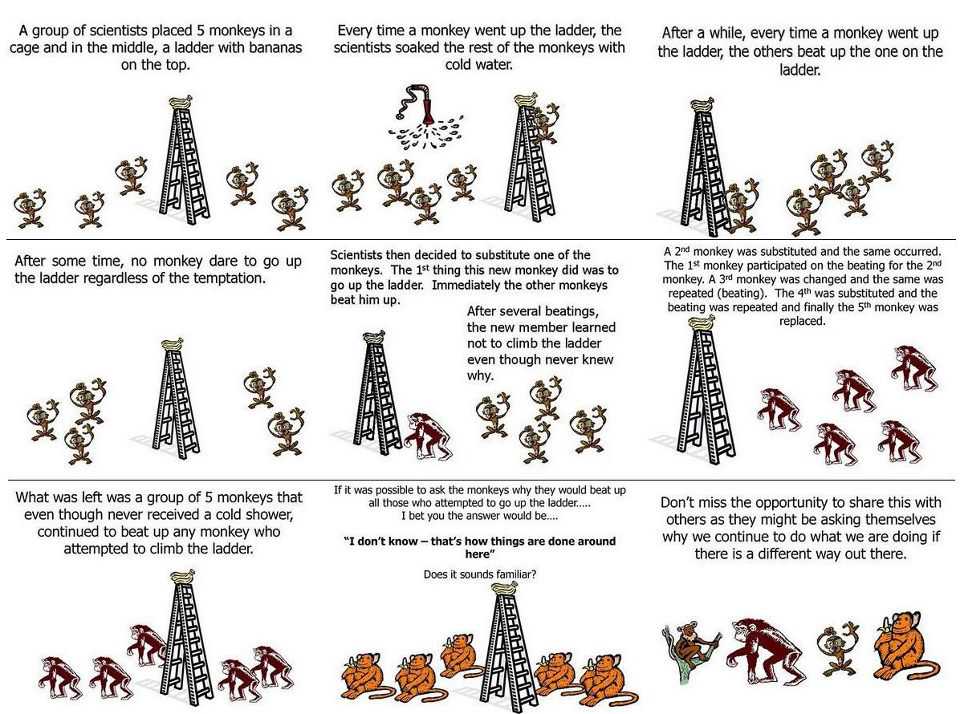
What makes politics so fascinating is that it serves as its own cause and effect. It's the series of small choices that nudge the overarching tone in one narrative.
Wars, after all, are borne out of choices made by individuals, but when new individuals are brought into an already tense environment and are taught by those who've caused the friction in the first place, what happens then?
You might say that tribal warfare is inevitable and that competitive relationships always, always evolve into zero-sum games.
If you thought that, though, you'd be wrong.
History is replete with second chances, honour in the heat of battle and friendships forged on the battleground. My personal favourite story is about how a German Airforce officer took a risk and pulled rank to free some Allied Airmen from Buchenwald. These lucky ones may have been enemies of war, but they were colleagues in arms as well.
If anything, the history of humanity is away from small, simple tribes in perpetual competition to larger, more complex systems with greater latitude for specialization, collaboration and quality of life.
If anything, the history of humanity is away from small, simple tribes in perpetual competition to larger, more complex systems with greater latitude for specialization, collaboration and quality of life.
So I find it all too telling when political people muse about the differences they feel must exist between themselves and someone else. I'm sure Rob Ford has had similar moments of self-pity as he's considered what he's done with his life.
As Ford (hopefully) begins his long, hard journey towards self-recovery, he's going to be learning a lesson that many who've positioned themselves as "different" and therefore, subjected to a different set of standards have learned.

Within each of us is the potential for both rage and serenity, great deeds and great horrors. When we think competitively, strive to get ahead by all means, we try to make ourselves into something that we aren't.
By so doing, we internally limit our choices. Our underlying ethics, however, remain the same.
When we justify doing things we know to be unkind, it's a choice that has consequences - but always, a choice.
Ultimately, it's a choice to die alone, cut off from others both physically and emotionally.
When we wash ourselves clean of the manufactured identities we create for ourselves - especially in politics - we recognize what part of us has grappled with all along; that we aren't made of different stuff, aren't subject to different moral codes and have simply made a choice to dehumanize ourselves so that we may do the same to others.
It was convenient at the time - and in politics, timing is everything.
But a series of bitterly-fought victories that simply lead to the next battle isn't a life. The world doesn't flow by the four-year cycle, the Legislative calendar or even the business calendar. Births, deaths, losses, challenges and opportunities come at any moment, in unscheduled ways.
Our lives are framed by the choices we make about what happens around us - not just to us, or what we do to others, but between us. Life isn't meant to be convenient, but it is a journey of discovery.
Over these weeks, if he is like others who have walked this road, he will come - as the ancient oracle at Delphi instructs - to know himself, perhaps for the first time.
Over these weeks, if he is like others who have walked this road, he will come - as the ancient oracle at Delphi instructs - to know himself, perhaps for the first time.
When we choose to live our lives this way - as an experience we engage in together rather than a battle to be won - we truly live.
Life isn't a game, but it can be a dream.
The rain has stopped - it's back to the garden for my boy and I.


