Search This Blog

CCE in brief

My photo
Recovering backpacker, Cornwallite at heart, political enthusiast, catalyst, writer, husband, father, community volunteer, unabashedly proud Canadian. Every hyperlink connects to something related directly or thematically to that which is highlighted.
Showing posts with label consequence. Show all posts

Sunday, 1 February 2015

ISIL Hypocrites


Really?  How do the folks pulling the strings at ISIL define "our women and children" - considering the fact that they're killing and raping women and children themselves?  Who's paying to house, clothe, feed and arm the militants doing such atrocious deeds?  Who's paying to recruit Westerners to move to the Middle East to rape and kill local women and children? 
 
ISIL's message to Japan isn't "leave our women and children alone."  It's "don't piss in our sandbox."
 
If you mess with their authority, after all, you pay the price.  And they've got an army of brainwashed converts who will do whatever their told and actually think it's in the name of Allah.
 
They're acting like they think they're an empire.  Who would they have picked up that idea from?
 
 
Jut a little reminder to all the Empire-builders out there.  History is not a morality play; we're not actors, nor playwrights.  To assume otherwise, well - that always ends in tragedy.


Monday, 10 February 2014

Winning the Leadership Deficit


Why indeed?  For her to do anything other, in fact, would be detrimental to her cause - i.e. winning.

Winning is what politics is all about.  In theory, you need to win so that you can implement some kind of plan (or as is more often the case, stop some other Party from implementing theirs); in practice, however, it ends up being about stacking the deck to facilitate future wins.

This, you see, is the lesson that political operators have been learning over the years as they look at the playing field and see who's scoring wins and how.  Attack ads, robocalls, false insinuations, bald-faced lies, emotional button-pushing, muzzling bureaucrats, opposition groups and even your own staff fit into this bill.

Speaking of Bills - how about that oddly-named Fair Elections Act?  The Tories have said they're all about hyper-competitiveness in the House and across the Commons; government and anything that fosters equity gets in the way of that.  Anyone that speaks against this clearly isn't using their big-girl voice.


When smug, entitled hacks who've never had to fight for democracy start deciding who the enemies of the state are and doing everything within their increasingly centralized powers to bring them down, we have a problem.

The sad part is that those win-centric elites have no idea just how big that problem is becoming.  While they decry the authoritarian way Vladimir Putin is peering into the bedrooms of his nation - as well as those of all its guests - we're seeing the same sort of thing happen to an increasing degree here.

It's like a switch was flipped somewhere in the recent past - we've gone from "the voters are always right" with leaders needing to respect results to "the leaders are always right" and therefore skewing the process so that voters deliver the results those leaders want.

Rob Ford is up for re-election as Mayor soon - anyone want to hazard a guess what examples his campaign team is looking to borrow from?

When moderates like Andrea Horwath are willing to check their beliefs (and integrity) at the door if they feel that's the price of getting in, they validate and reinforce the worst offenses committed by their peers.  

The bottom line is this - you govern how you win.  If you break some rules or ignore some issues to get through the door, it is next to impossible to change your playbook once you get the corner office.  Why would you want to break what's clearly worked?  If anything, history shows that leaders increasingly fall into the trap of questionable tactics the longer they're in charge.

The people up top have an increasingly narrow focus as they put the win before absolutely everything else.  This is dangerous, not just because of the choices (or refusal to make choices) it leads them to make, but for all the other concerning trends out there they're not paying attention to.


Thank god we are starting to see true leadership emerge from within.

Friday, 4 October 2013

The Illusion of No Consequence


Just imagine a world where everyone felt the weight of their actions and accept the concept of opposite and equal reaction.

That's the way the world is, of course - the trick is to be conscious of our space in it.


Thursday, 25 July 2013

Loyalty in Business and Politics


What is loyalty?  Is it partisan - my country right or wrong? Or is it through dedication to the mission and conscious support of decision makers?  When I think about loyalty, I always come back to this quote from Crimson Tide:
 
Be careful there, Mr Hunter. It's all I've got to rely on, being a simple-minded son of a bitch. Rickover gave me my command, a checklist, a target and a button to push. All I gotta know is how to push it, they tell me when. They seem to want you to know why.  


7 Qualities Of A Truly Loyal Employee

Dharmesh ShahDharmesh Shah

Founder and CTO at HubSpot


First things first: Where employees are concerned, loyalty has nothing to do with blind obedience, or unthinking devotion, or length of tenure.
 
Surprised? Think of it this way. Which employee displays greater loyalty?
 
1. The employee who has been with you for ten years and in that time has learned to do just enough to fly, unseen, under the performance issues radar, or
 
2. The employee who has been with you for 18 months and believes in where you’re going, how you want to get there – and proves it every day by her actions
 
Of course experience is important, but given the choice I'll take the employee behind door #2 every time.
 
At HubSpot we’re fortunate to have hundreds of extremely loyal employees. We're working hard to create a culture that recognizes and rewards true loyalty. We still have a long ways to go, but you can see our "work in progress" in our Culture Code slide deck.
 
Truly loyal employees are not just committed to helping their companies succeed; their loyalty is also displayed in other ways, some of them surprising.
 
1. They display loyalty through integrity.
Many people assume loyalty is proven through obedience: Often unthinking and unquestioning, even when a request or directive falls into a gray area or, worse, is unethical or illegal.
 
An employee who consistently seeks to do the right thing is not just following a personal credo – she’s also looking out for your long-term interests. You may see her as disloyal today… but in time you’ll realize that she displayed the highest form of loyalty by helping you avoid missing the “do the right thing” forest for the “do it right now” trees.
 
2. They generate discussions others will not.
Many employees hesitate to voice their opinions or feelings in a group setting. Some even hesitate to voice their opinions in private.
 
An employee once asked me a question about a new initiative. After the meeting I pulled him aside and said, “Why did you ask about our new pricing strategy? You know what we’re doing – you were part of the planning.” He said, “I do, but a lot of other people don't, and they’re hesitant to ask since they aren’t directly affected. I thought it would help if they could hear what you’re thinking and what we’re planning.”
 
Loyal employees have a great feel for the issues and concerns of the people around them, and they ask the questions or raise the important issues when others won’t. They know, for the company to succeed, that you need to know what employees are thinking… and that employees need to know what you are thinking.
 
3. They praise their peers.
Truly loyal employees care: About the company, about its customers, about its mission… they feel they’re working for something greater than just themselves. So they appreciate when another employee does something great because that means the company is fulfilling its mission.
Employees that praise and recognize others, especially when it’s not their job to do so, don’t just display great interpersonal skills. (When you do something well, praise from your boss feels great… but it’s also, at least generally speaking, expected. At least it should be. Praise from a peer feels awesome, especially when you respect that person.)
 
By praising others, they show they care.
 
Caring forms the basis of loyalty.
 
4. They dissent and disagree
Every great company fosters debate and disagreement. Every great leader wants employees to question, to deliberate, and to push back. Weighing the positives and negatives of a decision, sharing conflicting opinions, playing devil's advocate… disagreement is healthy. It’s stimulating. It leads to better decisions.
 
Loyal employees share their opinions, even when they know you may not initially appreciate those opinions, because they want the company to be better tomorrow than it is today. And they’ll occasionally take stands against a point of view or decision.
 
5. They support in public.
After a decision is made, loyal employees get behind that decision even if they privately disagree. And they don’t just pay the decision lip service; they support the decision as if it were their own – because when you’re loyal, every decision is, ultimately, your own.
 
When they disagree, some employees (the not so loyal ones), whether passively or actively, try to show that a decision they disagreed with was in fact wrong.
 
A truly loyal employee puts aside his feelings and actively tries to make every decision the right decision – instead of willing it to fail so they can prove themselves right.
 
6. They tell you what you least want to hear.
The Inverse Rule of Candor states that the greater the difference in “rank,” the less likely an employee will be to openly take a different position: An entry-level employee is fairly likely to tell his direct supervisor that he disagrees with that supervisor’s decision, but he is almost totally unlikely to tell his boss’s boss’s boss that he disagrees with his decision.
If you’re the CEO, that means your direct reports may pull you aside for an open, forthright chat… but few other employees ever will.
 
Truly loyal employees know that what you least want to hear may be what you – and by extension your company – most need to hear: That an initiative won’t work, that a decision-making process is flawed, that a mistake has been made… truly loyal employees realize that while you may not like what you hear, ultimately you want to hear it because what matters most is doing what is best for your employees, your customers, and your company.
 
Well-intended silence can be a good sign of loyalty; speaking up, especially when it’s awkward or even painful to do so, can be the best sign.
 
7. They leave when they need to leave.
If you can’t tell by now, a truly loyal employee is almost always a sensational employee. Often, they’re your best employees – so the last thing you want is for them to leave.
Yet sometimes they do: For a different lifestyle, for a better opportunity, for a chance to move to a different industry, or simply to take what they’ve learned and start their own company.
When it’s time, they tell you it’s time to leave – and they help you prepare to fill the hole they create.
You? You’re disappointed but you wish them well. For a time, even if only for a few years, they put your company’s interests ahead of their own…
 
…and now it’s your turn to do the same for them. Of course, you can always make your most convincing arguments to encourage them to stay (hey, you’re loyal too!) – but if it doesn’t work out, the right thing to do is to return their loyalty, wish them well and help them continue to stay awesome.
 
Dharmesh Shah is founder/CTO at HubSpot and blogs somewhat regularly at OnStartups.com. You can get new updates by clicking "Follow" at the top of this page.

Friday, 3 May 2013

The Root Cause of Terrorism, Paedophilia, Ass-Grabbing and Politics


We're not as in control as we confidently tell ourselves, which is the great irony.  It is possible for the alpha-dogs to understand this concept and do something proactive about it, but that's like trying to teach a kid to read - they feel they have better things to do with their time.  He who has the gold makes the rules, etc; it's a limbic thing.
 

Getting frisky: We’d rather not admit that we’re ‘clever apes’, but we are

 
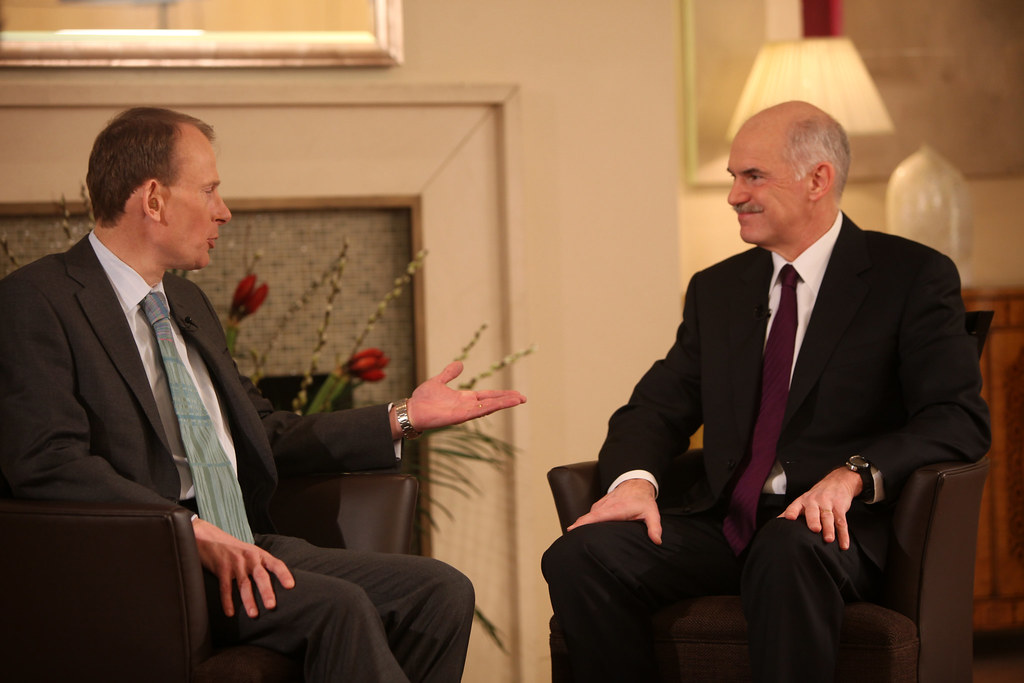
Caught last month with his hand down the back of a colleauge’s trousers, Andrew Marr, lanky journalist and political commentator, has illustrated himself as a clever ape in a spot of bother. This alcohol fuelled ass-grabbing seems to be a timely misdemeanor amid a series of surfacing BBC groping allegations. Is Marr’s reasoning that “we are homo sapiens” enough to excuse him from his adulterous actions? Does it justify the on-air gropings that Sandi Toksvig and DJ Liz Kershaw brought to light last week? What, to push this to its natural conclusion, about the late Jimmy Saville and the recent accusations of paedophilia?
 
Like it or not, the truth is that humans are ‘clever apes’. Humans are clever; we discovered how to use tools to our advantagen and make fire, we developed money and commerce, discovered chemistry, industralised our world, invented the atomic bomb and computers. As Andrew Marr says, indtroducing his new BBC documentary, Andrew Marr’s History of the World, “we have been brilliantly clever at reshaping the world around us, almost as clever as we think we are, though not perhaps as wise.”
 
Even if our world is unrecognizable from 70,000 years ago, humanity’s animal instincts (primarily our sexual ones) have remained firmly embedded within our nature. The fact that we are evolved from apes by no means justifies the legality or morality of Jimmy Saville’s pedophilia or of other celebrities unwanted gropings, but it sure does explain their cause.
 
A recent response to Andrew Marr’s southerly stretching arm on the Daily Mail unwittingly reaffirms Marr’s ‘we’re only human’ defence: “‘The BBC’s standards are slipping……Wasn’t Janet Ellis thrown off Blue Peter because she was an unmarried mother !! Yet this MARRIED man has been caught playing away, yet still holds a prime time slot on a Sunday morning……How times are a changing.”
 
Times are changing; exactly. Coming to terms with our human nature has been a battle with the British stiff upper lip since the fall of the Roman Empire and Christianity became the accepted religion. Sex was suddenly for procreation – what a way to suck the fun out of it. The liberal ‘no strings attached’ Roman attitude dissolved until the cultural revolution in the 1960s. The Daily Mail commenter illuminates how, in the 21st century, a cheeky, drunk ass-grabbing does not undermine personal achievements. For the BBC even to bother commenting on Marr’s actions would highlight an outdated attitude to sexual liberation, and being as PC as they come, the BBC are unlikely to be dubbed as sexually backward if they were to condemn Marr’s mistake.
 
When celebrities like Marr slip up, the media has a field day. Everyone goes around on their moral high-horse asking ‘Why oh why would they do such a thing?’ What we fail to admit is that everyone knows why these people make mistakes; our ape like nature takes over our modern way of thinking and our wisdom fails us in favour of instinct. It’s easier to berate public icons and put them beneath the public’s morality, than admit they are our mistake-making equals. Marr’s ‘clever ape’ statement is intelligent and insightful. It is exactly what the media and public do not want to hear; they want an apology and acknowledgment of his irresponsible and terrible behaviour in order to denounce him as a pathetic adulterer. Instead his excuse is ultimately savvy and witty.
 
One up to Andrew Marr.
 
Main photo: Fashionbyhe
Marr photo: Πρωθυπουργός της Ελλάδας

Friday, 15 June 2012

Time To Renew


Politics is about more than just governance - it's about competition, being oneself at the expense of someone else.  This is as true between political Parties vying for dominance and control as it is between nations fighting over land, resources or economic supremacy.  

Partisanship is as much about tribalism as it is ideology.  In fact, when all ideologies are taken to extremes, they tend to bleed in to each other.

Brand is the flag we veil our tribalism in (my country right or wrong, etc.) that allows us to identify competitors as Other, thereby skirting around the Golden Rule.

Policy, on the other hand, must be inclusive and balanced to be effective.  This cannot be achieved if policy makers - partisan politicians - are putting tribal interests ahead of the common good. 

There is not a single political institution in history that has continuously overcome the temptation to skew the public good here or there for partisan gain.  Of course, no government in history has been held to the mass scrutiny that is possible today.  The politics of the present is projected in HD; every blemish is magnified a hundred fold.  Increasingly, we don't like what we're seeing reflected - and increasingly, there's no where to hide from the truth.

There is an undeniable reality emerging.  I'm going to one-up Andrew Coyne and say it's not just Political Parties or even our political system that needs a revamp to meet the needs of the time.  The changes happening out there are too vast for that; society as a whole is chafing under the skin of outdated institutions

It's us that needs to change. 

Identity is about the trickiest form of governance - over oneself and the face one presents to the world.  Our selves don't exist in isolation; we are surrounded by id.  Of course, we have always been more than islands; human beings have a deep yearning to belong, to be part of something greater than ourselves, to know and be known. Which is why we became tribal, or partisan, in the first place.

To make space for ourselves in an increasingly interwoven social landscape, we must become conscious of who we are, as individuals, and where we fit in the broader social organism.  The process of doing so will redefine how we see ourselves and, frighentingly, remove some of the barriers of perception that have made us feel safe, like a garden wall.  It's as those walls come down and we are forced to define ourselves as individuals whose actions have broader, social  consequences that we will begin to experience true freedom - not of body in space, but of mind in body.

For some, this process will be too much and seem too cataclysmic, almost sinful.  Those who cling to the comforts of tradition in the face of progression will fight against change, as they do every generation.  That is their choice, but they will inevitably get washed away in the tide of social transformation. 

After all, there are some laws that transcend short-term societal conventions: first among them, adapt to survive.


Thursday, 31 May 2012

Murder, Mind and the Social Matrix


First, a thanks to Warren Kinsella for posting this story (not gonna lie, I mine a lot of interesting stuff from his site).


This story speaks to a theme I have raised here time and again; people are not instinctively in control of their actions and more often than they realize, confabulate explanations for things they have done.

Is it logical to kick a police car when a camera is filming you?  Is it logical to deny saying something that has previously been recorded?  Is it logical to think you can hide behind an online pseudonym in this day and age where you can peel back layers to find pretty much anything you want?  Does it make sense to blab about breaking the law in an age of information sharing?

None of these things are logical, yet each one has been done and exposed on the grand stage.  And they’re still being done.  Some of the brightest strategic minds in the country are still painting themselves into corners, confabulating to themselves that it doesn’t matter, memories are short and they can spin themselves out of anything.

Why?

Why would police officers, charged with keeping the peace and serving the interests of justice, automatically assume a horrific story was just that and not pursue the matter further?  Why would our immigration minister suggest violence against minorities in Europe can’t be as bad as all that, despite the evidence and history that say otherwise?  Why would micromanagers continue to stifle employees despite the evidence that doing so negatively impacts the bottom line and encourages turnover?  Why would an organization committed to ending discrimination hyper-target a specific group and marginalize them?  From the other end of the spectrum – what causes people to confabulate delusions of conspiracy theories?

You might feel that none of these scenarios are connected; they are.  In each and every case, you have individuals making choices.  Each individual makes decisions using variations on the same hardware – their brains – that are impacted by genetic, biological and environmental factors.

Our brains are complex machines, wired into other complex machines (our bodies) which in turn are gears in an even grander machine – society.  Internal and external factors have significant impact on how our brains function cognitively; a lack of sleep or food impacts thought, external stress or joy can impact emotional content in thought, substances like caffeine or alcohol, or anti-depressants or stimulants, can equally impact what goes on in our noggins. 

Think of your car – what happens if you don’t wash it?  Rust.  What happens if you get your suspension out of alignment and don’t get it fixed?  What if the battery dies out, or you run out of gas?  What happens if a car that hasn’t been kept in good shape loses control on a busy highway?  The function of the machine and of the system of which it is a part is thrown out of equilibrium.  Better yet, think of the body; if you hurt one leg and are limping, that can impact your other leg, your spine and as such, your whole physical well-being  Our brains are part of that body.  Who we self-identify as; unique individuals, personalities, souls – are all products of this machine. 

If you think I’m stretching here, you’re in the same place as the police officers that didn’t take Renville seriously.  They were tired, they get lots of crank calls – they had established mental models that triggered a Pavolovian response when they registered an unfathomable possibility.  It doesn’t make sense to me, they said, so it can’t have happened.  Despite the ongoing reality of murder and the established reality of narcissists recording themselves performing criminal acts, the one officer decided to follow the cognitive path of least resistance – we can fake death, ergo this must be a faked death.

But it wasn’t fake, was it?   

I could go on and on with examples of limbic, reactive, defiant or protective behaviour that goes contrary to the facts.  I don’t need to, though, because you see them in the headlines every day.

Society is facing multiple challenges – the economy, jobs, healthcare costs, growing public resentment, an erosion of democracy and the rise of militant ethnocentrism.  Each one of these problems can be traced back to individuals who are unconsciously responding to stimuli and then confabulating justifications for their behaviour.  Which brings us back that fringe issue people talk about wanting to solve but really have no idea how to approach – the very reason that they aren’t treating it seriously, just like the officer who took Renville’s call.

That issue is cognitive function, reactive vs proactive thinkingmental health.  When we truly get what mental health, cognitive function and innovation are about, we can nurture the balance between thoughtfulness and action – but we can only get there if we’re doing it consciously.