Search This Blog

CCE in brief

My photo
Recovering backpacker, Cornwallite at heart, political enthusiast, catalyst, writer, husband, father, community volunteer, unabashedly proud Canadian. Every hyperlink connects to something related directly or thematically to that which is highlighted.
Showing posts with label Value-Add. Show all posts

Monday, 11 November 2013

Are You a Brandlord or a Leader?


The feudal system was simple - lords were masters over plots of land that they would defend through the employments of soldiers.   The people who lived on that land did so at the whim of the lord, but the right to space and the relative security from brigands the lords' knights came at a price.

The peasants privileged enough to live on the lord's land had to give something in return - a portion of crops grown for instance, or a certain number of hours working directly on the lord's work.  Peasants rarely had to do things they would not have done regardless for their own survival - they simply had to produce more.  


So long as the lord provided space an relative security, his job was done.  Soldiers served not only as guardians of the realm, but also enforcers of production.

That was the arrangement - space and security for labour, which was supervised by a middle class of managers.  There was no cause for the peasants to collaborate on anything except the lord's work, and then under tight supervision.  It was not in the lord's interest to let his peasants fraternize, lest they get ideas (which happened anyway).


Feudal societies tend not to be very innovative ones, as you can imagine.  That's not to say innovation never happened, it simply wasn't nurtured.

This basic laissez-faire model - lord (or boss), enforcers (or middle management) and at the bottom, the labourers has been repeated across time and geography.  The rules are the same - stay in line, or you'll be punished.  Produce more, you'll be rewarded.  Do things differently, well, there's not much place for that.  It's the model that sustained the Industrial Age, Tokugawa Japan and arguably, many an organized religion.  It's become the de-facto model of the Knowledge Economy as well.

How many employers today believe that, by providing their employees with a desk, computer and phone, plus the right to slap the company name on their card, they have lived up to the fullness of their responsibility   How many of these brandlords believe it's up to their employees to self-motivate, create content, satiate clients and do the ever-demanding job of sales?  How many mangers feel their role is about driving activity, not coordinating success?

We have entered a new world of neo-feudalism where the it's the job of the bottom to sustain the top rather than the top to empower and propel forward the whole.  Adding value, at least in  Canada, isn't of interest - simply more of the same is.

Which is why, in a pandemic of youth unemployment, the message being conveyed is that kids these days have unrealistic expectations when they think that higher education in promoted programs will translate into higher starting salaries.  It's a privilege to be able to hold a job and earn any kind of salary - to expect more from those with capital is unrealistic.

It's not that the bar is being set higher so much as it is the floor has been raised.  Is it any wonder that the middle class is shrinking?  In a society that promotes management over motivation, how many middlemen do you really need?

While nations the world over are evolving their economies, Canada remains frozen.  We don't care, though - instead of nurturing collaboration and new ideas, we're pushing competition over natural resources.

There's a big difference between harvesting the fruit of someone else's labour and nurturing innovation and value-add.  You don't grow a garden by expecting vegetables to audition for the right to be planted in your soil; similarly, you can't expect your employees to add value unless you're providing direction, support and coordination.

Are you an employer?  If so, are you a leader or a brandlord?  

If it's the latter and you've got a simple model that just requires unchanging mass production, carry on.  

If, however, you're in a business that relies on creating new solutions, products or services for your clients, you might want to try a different approach.


Tuesday, 3 September 2013

Value Adding Teachers and the Future of Labour


I love teachers - literally,  My family is rife with them.  They are passionate, compassionate and above all, they're perfectionists.  These teachers are incredibly judgemental - not of others, though, but of themselves.  If one of "their kids" doesn't do well, they take it personally, even if there are a multitude of other mitigating factors.  Success lies in their hands and if it isn't achieved, they blame themselves.  On the other hand, when kids do well - when five years in the future, those kids and their parents come up to them and say "thank you", that's the reward they cherish the most.
 
Everything else - the money, the time off, the expectations and mandatory seminars and micromanagement or support of administration - is viewed through that lens. 
 
This is why I think both Unions and those that oppose them have it wrong - they're trying to force teachers into the labour fights of a previous generation instead of supporting teachers in the way that would really advance their labours now.
 
Teachers don't want to make money - they need to have sustainability and some breathing space and all that kind of thing - but what they really want is to add value.  They will invest more of themselves than is perhaps healthy to do, but they do it because they care.
 
More and more knowledge-sharing and project-managing employees are reacting to work the same way.  It's a changing labour (and labour compensation) paradigm smart policy-makers will start cluing into.
 
The future of labour is emerging right now - all we need to do is connect the dots to see what it looks like.

Wednesday, 3 April 2013

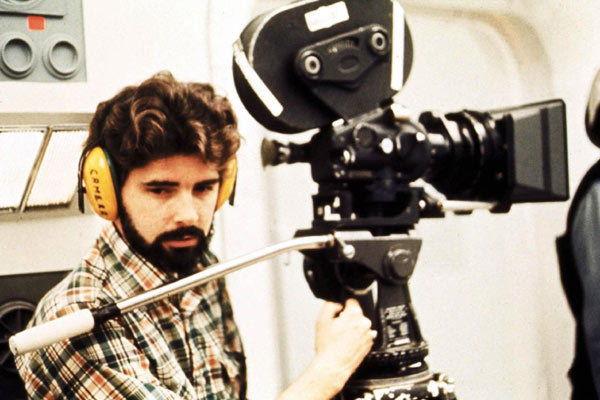
With Thunderous Applause: How George Lucas' Dream Dies


There was a time when a young George Lucas, frustrated with the monochrome, risk-adverse model of Big Studio Hollywood decided to branch out and do something different.  With substantial risk and a great deal of creativity, he gave the world Lucasfilm.  The money he made from his wickedly successful franchises went into future projects and companies including ILM, Skywalker Sound and LucasArts.
 
Under George Lucas, every employee who worked on one of his films, down to the janitor, gained something.  They were part of the team.
 
Fast-forward to now; The Disney Empire has taken over his beloved company.  No doubt they'll deliver some whiz-bang films that will make a lot of money for the studio, but everything else appears to be going out the window, including the ground-breaking Clone Wars cartoon.  Employees are being downsized, risk is being handed off to others and as a result, the innovative, daring spark that breathed life into Lucasfilm is being extinguished.  Or perhaps I should say, "their fire has gone out of the universe."
 
Naturally, this is all just good business.  Business isn't about innovation - it's about efficiency and control.  If you want innovation, you don't focus on the bottom line, you focus on the value-add, as Lucas has always done.  There's no small amount of irony in how the rise and consumption of Lucas' creative empire mirrors the narrative arc of the Star Wars films.
 
Innovation is a bit more of an adventure.  It's a dangerous business stepping out your front door; you never know where you'll be swept off to.  Bean-counters are adverse to adventure.  Thank goodness they don't rule the world.  If they did why, there'd be no innovation at all.  They can't win, though - there is always new hope out there, just waiting to be kindled.


Sunday, 31 March 2013

Show Me Your Calves: Slaves to Fashion


There is a whole science around manipulating people's drives to get them to behave in a certain way; cast their vote for or against, buy a product, ignore the man behind the curtain.  It used to just be an art - marketing, manipulation, a slight of hand. 
 
Now, with the crystallization of NLP, neuromarketing and such, it's a science.  Other people are learning how to make you think their desires are your original inception. 
 
But who pulls the puppet-masters' strings?  When they feel they're smart and everyone else is dumb, their confidence blinds them to their own motivations.

There's only one way to illuminate the shadow-world of the semi-conscious mind.  The answer's a variation on a theme we've come across time and again -

Recognize that we are imperfect, accept that we're part of something larger than ourselves and come to terms with the fundamental premise that no man nor woman is an island - together, we're a system.

Sounding a little too pseudo-religious for your liking?  You can interpret it that way, if you like - really, though, it's just science.