Search This Blog

CCE in brief

My photo
Recovering backpacker, Cornwallite at heart, political enthusiast, catalyst, writer, husband, father, community volunteer, unabashedly proud Canadian. Every hyperlink connects to something related directly or thematically to that which is highlighted.

Tuesday, 16 December 2014

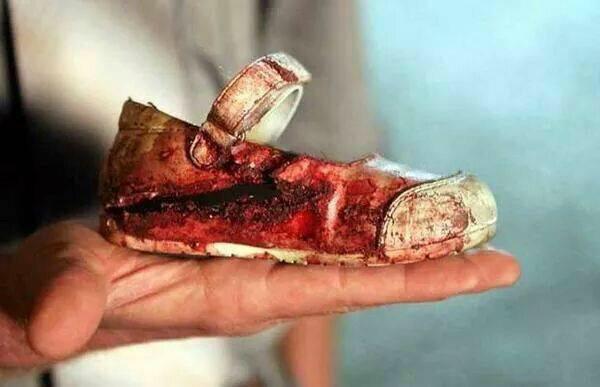
You Can't Negotiate With Terrorists

 Embedded image permalink
 
Terrorists are like zombies - they have no capacity for human empathy, they cannot be reasoned with, the only way to eliminate their kind is to exterminate them.
 
A similar thought process must surely have gone through the heads of these folks as they killed 172 children.  You can't work with these progressives, you can't convert 'em - the only way to wipe their scourge from the earth is to exterminate them.
 
Helps to start with the kids, as without kids a population will inevitably die off.
 
Which is the basic frame we're looking at here.  ISIS as an example, but not an exclusionary one, wants a clearly defined zone of influence within which they have absolute control.  Anyone who doesn't fit their prescription is a threat to be eliminated. 
 
Once a home base has been established, you can look towards expansion.
 
But saying one who terrorizes is a terrorist is like saying a corporate CEO who happens to have kids a mom - it's framing them as one thing, one simply-communicated frame of reference that doesn't provide a complete picture.
 
Are terrorists zombies?  Depends on your point of view, but I'd argue no - no more than partisans are, or followers of a religion, or any minority group.
 
They are human.  As such, they are complex creature that are part of a complex system.  They can only be understood as such. 
 
We get that conditions like asthma or cancer can have environmental causes; we're even recognizing that mental illnesses like depression and anxiety can have environmental causes.  At the same time, we recognize that those environments can be changed, that internal tools can be developed to remedy or avoid such illnesses.
 
Diabetes Type II is a massive social burden.  It's entirely avoidable.  The costs related to smoking are equally avoidable, but in both cases it's not enough to tell people "don't eat too much fat" or "stop smoking" because there are other factors involved. 
 
Through the rise of fields like behavioural economics and a deeper understanding of neurochemistry, policy makers and sales folk are finding better ways to work our internal hardwiring to produce the results they want, though invariably there's an element of design-thinking involved (designing products/services that actually work for us on a nearly intuitive level).
 
This is a bit like sociology, however, and involves a willingness to work with The Other.  That takes time.  If you feel that time is short or some threat is great, you need to get things done quickly, which leads to a my-way-or-the-highway proposition.
 
You're with us, or against us.  Pick your side and face the consequences, but we're moving ahead regardless.
 
You can't negotiate with terrorists - we don't want to negotiate with terrorists. 
 
Human beings, however, we can work with.  Heck, we can even find common ground with them.
 
But to accept others as human beings on par with yourself is to admit the atrocities they commit are ones you yourself are capable of.  And, perhaps, are already perpetrating against those you've conveniently identified as inhuman.
 
There's nothing new in this basic lesson but by God, it looks like we're going to have to learn it again.

Monday, 15 December 2014

Behavioural Economics: Why Sense is Not Common


John Tory is a smart man, one who has received political communications training.  He gets the emotional context of communication and, in theory, knows how not to walk into PR pitfalls.
 
Yet he was surprised that people took offense to his comment about women needing to golf to get ahead.
 
Stephen Harper is, supposedly, a non-nonsense kind of guy - except he gets caught up in quagmires of nonsense all the time of the sort he could and should have seen coming.  Everything from Duffygate to the Veterans file to Dean del Mastro and the like are avoidable headaches.
 
I could go on and on about the smart, successful people who apparently have common sense in abundance and yet are blind to the obvious. 
 
Pointing out hypocrisy is easy; for some, it's even a cynically enjoyable process, though it invariably comes back to haunt us.
 
What's more interesting is why.  Why do executives on the public dollar act like executives on the private dollar?  Why does "proceed until apprehended" end up having selfish connotations in a eat-what-you-kill economic environment?
 
Behaviour is math.  When you understand the variables, you can predict the outcomes.  When you know where certain paths lead you and know why and how, you stand at least a chance of doing something about it.
 
But not if you're confident in your superiority.  When you think "I am smart, they are dumb" you blind yourself to the truth - that none of us are superior.
 
When you feel superior, you feel no need for introspection, nor for empathy; you think you can reshape the landscape to suit your interests, because you're that powerful.
 
Which is a recipe for failure. 
 
Know yourself; know your opponent; know the terrain.  It's an ancient lesson, yet one that is still commonly ignored.
 

Saturday, 13 December 2014

Can you Feel It? Something is Opening


"Until we have addressed the root causes of these kinds of issues, we can expect to have to deal with these kind of issues," he said, referring to the current U.S.-led mission against the jihadist group ISIS.

Breedlove said the way to address these root causes is by focusing on bringing jobs, education, health and safety to vulnerable places, as well as figuring out how to make governments "responsive to their people."

Pandering lines for a naïve public?  Maybe.  I don't think so, though.  I fact, I know so.  The reality of terrorism is complex.  What we're witnessing is out generation's equivalent of the Crusades, with unhappy folk buying into ideologies that will allow them to be more as foreign soldiers than they can be at home.

If you say they need to get their act together, and they do not, what happens?  Do you abandon them?  Do you risk more crimes at home?

Of course not, you crack down harder.  It's being obeyed that matters most - that and people just doing as they're told.

Which leads to increased restrictions and proactive aggressive arrests, which exacerbate the problem until a eventually a blow up like Ferguson gets really ugly.

Government, or at least some parts of government, are trying to intervene before it's too late.  They have friends, some of them powerful, working in the Open Government space to address responsible and enable proactive.

In first and sprits it's happening; look for more public servants to remember who they truly serve in the growing future.
 

Temporal Photograph and Disturbing Trends


A lot of such stories coming to the fore these days.  The incidents themselves are nothing new, but the amount of airplay they are is.
 
We've also been hearing a lot about PTSD among police, the impacts of poor work culture/insufficient training/bad management on performance in all fields.
 
Which all ties into the rise of mental health as an issue of national, even international importance.
 
Individual agency, redesigned work, even digital tools are emerging as parts of the solution to this problem.  Some people don't really care, because they don't really think there's a problem.
 
When innocent people, racialized people are being unfairly and unjustly targeted for harsh treatment in the public spotlight, though, it's only a matter of time before the threat increases to the point where ignorance is no longer possible.
 
You'd think rational actors would proactively be planning ahead to turn these risks into wins, wouldn't you?

Thursday, 11 December 2014

What the TTC should learn from Ferguson


 * Does not reflect TTC Fare inspectors.


Should these situations escalate.  Hopefully they won't and all, but hey - it never hurts to be on the safe side.  Carrying a baton is like carrying an umbrella, right?
 
Wrong.  So wrong.  To plan for violent eventualities - to tell your recruits that hey, is a fight breaks out and if you get attacked, you've got this baton handy - is to frame the fare inspector's thought process in that they're looking for that situation to materialize. 
 
When you go looking for trouble, etc.

Police officers keep watch while demonstrators (not pictured) protest the death of black teenager Michael Brown in Ferguson, Missouri August 12, 2014. (Reuters)
Just look at Ferguson.
 
 
Why, indeed?  Why do local police need to be armed with the equipment used by soldiers in fields of combat? 
 
Of course they don't.  In fact, if public service is equitable and justice is blind, the role of the town policeman should be an easy, even friendly one.
To put such weapons in the hands of police, or transit "fare inspectors" is to beg for their usage.  It's the ultimate marshmallow test - tempting a child with something fun or tasty, telling them not to use it and then walking away.
 
And there's more.
 
The TTC's concern is not enough fares are getting collected.  They need more money and the pressure is to find it internally, but it's hard to keep hiking fares when service keeps faltering.  So how about paying money for fare inspectors to help the cause?
How much of this will be about TTC riders vs existing TTC fare collectors?  Anyone who's ridden the TTC knows that collectors aren't always 100% tuned in to the people passing through their turnstyles.  Sometimes, there's no person there at all.  In some cases, good customer service gets in the way of watching every set of the tens of thousands of hands that pass over deposit boxes, especially over open gates.
 
It's not too hard to picture armed fare inspectors getting it into their head that they are superior to fare collectors and waving their baton around (figuratively speaking, of course) over fare-related matters, even customer service. 
 
All this at an agency that is struggling with service disruptions, delays, etc. 
 
The citizens aren't the problem.  The employees aren't the problem.  People are people - they will react to their environment, whatever it may be.  A poorly designed environment results in poor results.
 
Batons are a terrible addition to an already poorly designed environment.
 
I would suggest Brad Ross stop his Michael Hayden act and start recognizing that if people have concerns, it's probably there's a reason for it.
 
Instead of adding weapons to a volatilte mix, how about better management practices, better training, better service?  You could even use open data and digital tools to empower TTC riders to be part of the structural solution.  Heck, you could use civic fundraising to help address specific transit issues.
 
Let's sort this out before the TTC's baton business gets out of hand, and ends up in the media.

Let's See Dick Dance


Let us be frank; the report is crap, key people weren't interviewed.  Discount the whole thing, people - Dick has spoken and spoken forcefully.
 
Perhaps former US Vice President Dick Cheney and like-minded individuals/organizations should invest in ads that reinforce their message.  When you dominate the airways and forcefully repeat one core message and focus on the flaws of what you dislike (with facts, cherry-picked if available or with heated rhetoric if not), the people will believe you, right?
 
That's how attack ads work.  It's how politics works; we hear that again and again.
 
You simply need to be in a position of great enough power that you have the clout, capacity and coin to get your message out.


Iran's Ayatollah is hardly one to point figures.  But does it matter?  He's not interested in defending his practices; that's not the point.  See the Cheney approach, above.
 
It really doesn't matter if Cheney produces a mountain of evidence that "enhanced interrogation techniques" produced information that stopped some terrorist from blowing up the White House.  Torture happened.  The US is clearly hypocritical.
 
The US declares itself a light in the dark, a beacon of civilization, a land of equal rights and equal opportunity - yet Abu Ghraib happened.  Ferguson has happened.  Eric Garner happened.  And that's all just domestically.
 
It would be simple and even fun, from a Machievellian perspective, to craft a clear, evidence-based image of the US as the embodiment of every threat they have ever claimed to stand against.  All one has to do is connect the dots.
 
Of course, those dots - cops in New York, cops in Ferguson, bombs in Iraq, CIA interrogation techniques - they're not one narrative, are they?  They're independent actors acting independently.  It's fallacious to suggest some sort of pattern or narrative from such disconnected pieces.  Just ask the rational actors being unfairly brought into the spotlight.
 
And don't listen to social media.
 
One can't but feel a bit sad for these, history's actors.  Everyone is watching; there are no more shadows to hide in.
 
If you're going to dance on the public stage, it's worth dancing like everyone's watching. 

Wednesday, 10 December 2014

Kinsella Nails It.


It's not a new lesson, this.  To think one can wall out the world, or freeze a moment in time is the folly of man. 
 
Yet, despite the massive supporting evidence of this truth, we choose to deny that which is clear as daylight.  We'd rather martyr a prophet than change our perception of ourselves.
 
Why?
 
Because low-hanging fruit feels easier.
 
Growing a garden, however - that's planning ahead.
 
Oogway: Ah!  I see that you have found the Sacred Peach Tree of Heavenly Wisdom!
Po: Oh!  Is that what this is!  I'm so sorry!  I just thought it was a regular peach tree!
 
Shifu: But a peach cannot defeat terrorism!
Oogway: Maybe it can, if you are willing to guide, to nurture, to believe in it.