Search This Blog

CCE in brief

My photo
Recovering backpacker, Cornwallite at heart, political enthusiast, catalyst, writer, husband, father, community volunteer, unabashedly proud Canadian. Every hyperlink connects to something related directly or thematically to that which is highlighted.
Showing posts with label campaigns. Show all posts

Thursday, 2 January 2014

The Cause


Political candidates, if they have smart people on their team, will be encouraged early on to clearly answer one question: "why are you running?"  There are two public answers to this question - one, because you stand against something; this was the approach that got Rob Ford elected.  Two, less populist and often harder to position is standing for something.  If you're the incumbent, that can be the status quo/your record.  If you aren't, however, it has to be something innovative.

The reason it's really hard to sell something new is because people may not get it.  You can look for precedent elsewhere, but even then it comes down to what will actually resonate with the voters (or at least, your targeted coalition thereof).


Which is why politics is rarely about ideas, it's about brand - the strength of your candidate's and the weakness of your opponent's.  This is why politics bleeds idealism and the survivors, the ones who last long enough to move through the backroom ranks tend to be cynical, manipulative and unafraid to go for the jugular of whoever they feel stands in their way.


There are a lot of people in politics who only pay lip service to public answers to "why are you running?"  For these people, it's the win that matters.  Politics is competition, like a rugby match.  You want to be known as a winner, because being a winner gets you more access, more finery, a more fearsome reputation, clout whatever.  When it's winning you believe in, you will convince yourself you believe in anything that will get you ahead.  It's a small step from there to saying or doing whatever it takes for that win, no matter the cause.

Not everyone starts off this cynical; many actually do start with something they believe in.  A surprising many carry those beliefs all the way through their careers.  It's rare, if not impossible, to find anyone who has willingly compromised a core belief because they say political advantage in doing so.  After all, you can't effect change if you don't win and you can't win unless you're willing to bend the rules a bit - after all, everyone does.  Right?

A common example of this here in Canada is paying for party memberships.  You'd be surprised how many candidates' teams do this.  You'd be saddened by how many see nothing wrong with the practise, then turn around and disparage Doug Ford for handing out cash to constituents.  It's not the principle, you see, it's how blatantly he breaks it that offends them.

Here's the rub, the uncomfortable truth that is anathema to politics.  If the cause is truly the thing you believe in, then winning isn't everything.  You don't run unless you plan to win, of course, but the cause has to come first and stay first, always.  Otherwise, you get people who will do things like commit to running for a seat whether they win leadership or not, then back away afterwards.  You'll get people making challenging, structural promises like Senate Reform or real transparency and then forget those promises when they win.

That's what leads to public cynicism in politics; it's also why so many people fail to make a lasting mark on the political landscape.

On every campaign I've played a significant role in, we changed things whether we won or not.  I can think of one where my candidate didn't win, but the one who did used some of our lines in their victory speech.  In at least a small way, we made our cause their cause.  It often sucks to see your work and ideas brought to fruition by someone else, but always remember that without you, that idea wouldn't be there in the first place.  


Some of the most politically influential people aren't politicians at all.  They have dedicated themselves, their talents and their resources to something they believe in and as such, can never lose. They only learn how to do better, making new connections, refining ideas and laying track along the way.

Political people will ask the question "why are you running" and look for an answer they can sell.  It's very rare that they stop, look in the mirror and ask themselves what they will do about that cause if they lose.  

The answer to that question is the difference between wins or losses and true accomplishment.

It's one we need to be asking more.


Wednesday, 26 September 2012

Politics Now


Speaking from my minimalist experience, I can tell you politics is a blood sport; loyalty is demanded but scarcely returned, partisan benefit regularly (and increasingly) squeezes out broadly-based good public policy and individual human value counts for nothing.
 
It's funny - for all the attention paid to developing human narratives in support of partisan ambitions, politics is ultimately a dehumanizing process.  Comparisons to warfare are spot-on except instead of your life, it's your reputation that is constantly on the line. How many front-line staff have had their names torn to shreds in the media, sometimes just for following orders?  
And that's just the external risk.  Political campaigns (which never really end, these days) are kill-or-be-killed scenarios.  When you work an election, you get to see the uglier side of our democracy under high-pressure situations with little food and sleep. Frequently, you are given ample reason to question the people and beliefs you are fighting for. In your devotion to the bigger cause, you'll sometimes even find yourself justifying lapses in your own moral standards.  Unlike war, though, you can't always count on your teammates to have your back; they're just as likely to stick a knife in it if doing so serves their interests.  Where reputations and future success are at stake, you pretty much expect to be abandoned should ever you fall.

A lot of folk in politics believe that empathy is for the weak. These are the political Bill Kilgores that talk about victory but really see nothing but the battle. They will pathologically throw colleagues, staff and even leaders under the bus or download responsibility for their actions, never thinking twice about the consequence for others. It's kill or be killed, they tell themselves. We're doing what everyone else is doing, just more effectively. This probably comes as a surprise to nobody - there's a reason why we don't trust politicians. What's more of a surprise, I'd warrant, is just how many people in politics do have a conscience.
 
These aren't the folk that are in politics primarily for prestige or position, but because they (perhaps naively) actually believe in the system.  Most of them don't last long.  Those that do invariably end up with at least some innocent blood on their hands.  If you have any shred of decency, the things that you have endured and done to stay alive or support your cause will haunt you long after the election has ended.  Operators likes this wear their political sins like a chain, unseen yet chafing.

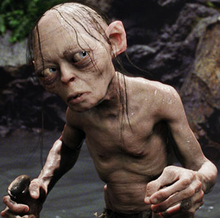
There's a reason dedicated campaign staff emerge from from the shadows of elections looking a bit like wraiths themselves, expressing PTSD-like symptoms.  Somewhere along the journey they've started to lose faith in the vision that motivated them in the first place and, therefore, are left to question just what it is they believe in and what they have sacrificed in support of that cause.
 
Why do we fall, though?  Because sometimes it takes feeling like you're in the bottom of the pit before you can really look around at the every-day people impacted by politics.  You also have to reach the bottom before you have reason to look up and see the light.  I can think of a couple high-profile people who have seen their entire lives dissected on the public stage - that kind of deconstruction invariably leads to some painful introspection as well.  One fella I recently had coffee with is in the process of re-findging himself and trying to figure out what his life should mean.  That was the key thing, though - it has to stand for something. 

Although these folk might not always have faith in themselves, it's the people who question the status quo and suffer from self-dout that give me the most hope

Why's that?

Because while things end, endings don't always mean what we expect them to.

Thursday, 23 February 2012

Strategy, Creativity and Discipline


      - Sun-tzu

They say all is fair in love, war and politics, yet in each field there are certain rules that apply, almost like social gravity.  The history of military (or political) strategy is the attempt to determine and understand these rules.  Students of strategy study the lessons of successful predecessors; they also seek to learn from the failures of others. 

A good recent example of this is Rob Ford’s winning mayoralty campaign; it has been reverse-engineered by governments across the country, looking to capitalize on Ford Nation’s best practices and avoid his pitfalls.  This isn’t a stand-alone process; Ford’s success at the polls has not translated into broader political success with council.  Why is that?  The answer to this question is relevant to strategists, too. 

A standard weakness in strategic development, particularly in light of success, is a singular focus on control.  You want to duplicate what worked previously, which means managing all the variables as closely as possible to ensure repeatable outcomes.  In politics in particular, message control is key; campaign communications are worked out far in advance, with one message-of-the-day building on the next, all timed to inflict maximum damage on one’s opponent and draw maximum focus to your own platform, vision, leader, etc.

The problem is, realities change; what worked previously isn’t guaranteed to work the next time around.  Tight control leaves little room for innovation or seizing-the-moment; look at Tim Hudak’s messaging-fatigue during the recent Ontario election as evidence of this.

On another previous Ontario campaign – the by-election that saw Rick Johnson defeat John Tory in Haliburton-Kawartha Lakes-Brock – a great campaign slogan (vote local) was the product of an innovative staffer who, seeing a “buy local” sign at a grocery store, put two-and-two together and created a winner.  It wasn’t part of the plan, but that bit of proactive creativity made a difference.

For campaign strategists, then, a rewording of Sun-tzu’s famous advice might read like this:

What’s worse:

-          To have members of your team who are unpredictable

-          To be unable to predict the actions of your opponents

-          To be predictable to your opponents

Conversely, what’s better:

-          To have members of your team be entirely scripted

-          To understand the actions and motivations of your opponents

-          To be unpredictable to your opponents

The best deployment provides troops (be they soldiers or campaign teams and candidates) with defined parameters, a definition of success and as many resources as possible.  The best resource in any campaign is creativity; how to do more with less, out-of-the-box solutions, etc. 

Every campaign I have ever been involved with, someone somewhere has said “be creative” when faced with some dilemma or opportunity.  Good campaign managers will seek out creative individuals for their teams; generally these are known or referenced commodities, though, people you can count on to be quick to respond and capable of independent idea generation, but not to the point of risking the general trajectory of the campaign.

If creativity is desired, how do you nurture it?  If self-discipline is beneficial (allowing for creativity to happen within comfortable parameters), how do you foster it?

The answer isn’t as complicated as we might think.