Search This Blog

CCE in brief

My photo
Recovering backpacker, Cornwallite at heart, political enthusiast, catalyst, writer, husband, father, community volunteer, unabashedly proud Canadian. Every hyperlink connects to something related directly or thematically to that which is highlighted.
Showing posts with label Bread and Candles. Show all posts

Sunday, 28 September 2014

It Gets Darker Before the Dawn


The best information. 
 
What would that be, exactly?  It doesn't refer to an understanding of behavioural economics and a thorough analysis of the causal conditions that lead to criminal behavior - that's too much like committing sociology.
It probably has nothing to do with geopolitics, especially the local equity imbalances that ISIS recruiters, like any gang, tap into to gain converts.
 
No, one imagine that the information provided will be of more the carding variety - suspicion by association.
 
Then there's the whole "focus on their safety" piece, which is most troubling.  "To serve and protect" puts the people's interest first, not the safety of officers.  It's inherently a risky job, but by getting in early, engaging with a community and working on initiatives like mentorship programs, active police help reduce crime in the first place.
 
A focus on safety tends to involve less interaction and when it comes, it comes with greater armament so as to reduce officer risk. 
 
Ferguson is a great example of how this plays out in practice; well-armed police with their usual suspects list caused and escalated a tragic situation one expect to hear about from the streets of Syria, not suburban USA.
 
Or think the G20 - police had information about black block plans to escalate street violence and fed right into that beast, creating a public relations nightmare and increasing tensions among citizens and the police, already high and already growing higher.
 
"I don't talk to cops," a youth told me on the streetcar the other day.  This after I interceded when hearing her say "I hate all cops," dehumanizing them in the same manner as which carding dehumanizes certain ethnic groups.  Tell us more about the youth who are choosing to join with ISIL, government: are they ethnic minorities who feel marginalized in their Canadian context, singled out by police, ignored by employers, looked at with suspicion on the subway?
 
There are a lot of good officers out there.  I hear from them, sometimes, about the struggle they have within the current police culture that focuses on strength, wins, and threats more than it does public service.  I hear the exact same thing from youth entering that culture, which is alarming.
 

Why?  Because the folk of ISIS are brutal alphas with a superiority complex.  The God they worship is not the one of Islam; if anything, they have fallen for the false god prophesied by Islamic eschatology.
 
The thuggish converts to ISIS rape, pillage, torture, abuse power and focus on destroying others in defense of "their cause" which is a create a state in which they have absolute unquestioned authority and the respect of the international community because they're such bad asses.
 
Suspicion, fear, threat of arms, abuse - those aren't the tools of enlightenment.  They are, however, increasingly the hammer of choice for security.
 
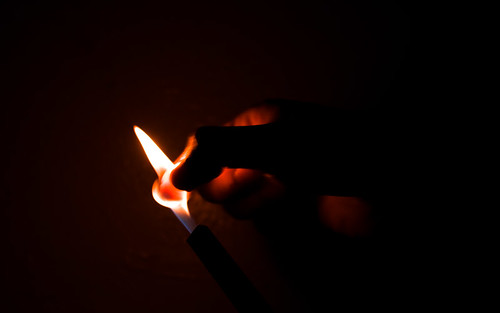
As they say, it's darkest before the dawn - but the dawn is a long way off.  It's going to get a lot, lot darker - which why now, more than ever, we need to keep the candle of enlightenment burning.


Tuesday, 5 August 2014

It's Not End Times, So How's About a Bit of Matzah?


Those of us who just want peace.

What, pray tell, is peace - and what is it for?

This is an important question to ask because - ready for it? - there are far too many people who don't want peace.  In fact, a health chunk of our leadership isn't interested in peace.

Peace is the absence of hostility.  Peace is respectful debate, empathetic communication and the ability to put the interests of the whole before one's own tribe, or one's own position and brand.  Above all, peace is patient.


Politics, as it functions in most circles of the world, is the absence of peace.  Politics is competition, forcing one's position, picking strategic fights, building coalitions and of course, about gaining and holding power.  

There's no time for deliberation in combative politics - that's all a bit too much like committing sociology. Life has winners and losers and to be the former, you have to make some of the latter.  There's no time to be nice when winning is at stake.  Every ounce of cognitive, organizational capacity has to be dedicated to beating the other guy.  That's the primary objective; when they're destroyed, you've won.

Some people are impatient, narcissistic, power-mad or just plain mean.  Others have life experience that makes them so.  Societies or community cultures can be shaped one way or the other - under threatening circumstances people of any given tribe are more likely to think "them vs us" and focus on end-states instead of pondering the dynamism of social living.

The aggressive, winner-take all types who tend to force their way into positions of leadership want it that way.  They don't want us to think, to understand, to connect - they want us to follow.  It's as simple as that.

Do political leaders and their supporters demonize their opponents and push the envelopes of acceptable conduct?  Of course they do.  They want an ideological war, because that's how they raise funds and score votes.   

Aggressive politics is on the same behavioural spectrum as flat-out war.  "Picking fights" with a union or a community group is no different than lobbing bombs at one region or another; the only difference is the severity, and the confabulation required to justify one's actions.

In all cases, collateral damage is just one of those things.  Survival of the fittest, etc.

Because really, that's what it comes down to.  War is The Heart of Darkness, the most basic instinct that evolution has developed for us.  In our ancient past, the world was always a threatening place; we weren't the dominant species, we didn't have tools or infrastructure, we would only have interacted with other human groupings in competition for resources or maybe to exchange mates.

We have lived the vast majority of our existence this way; it's more natural for us to stand against than it is to stand together.  

Back then, it mattered who the alpha was and that they were tough enough to keep the collective us safe. 
That's why we have Alphas in the first place.  It's why we will be inclined to respect tough, assertive people. We're programmed to.

That was then.  Now, everything has changed.

We don't have to live in perpetual fear any more.  The threats we face aren't lions or tigers, or shelter, or the dark.  By and large we even have enough food for everyone, if it were properly allocated; medicine has reduced illness to a pale shadow of what once it was.

What is the opposite of hunger and the dark?  What is the opposite of fear?

It's easy - bread and candles.  Community.


This is the lost lesson of religion, which isn't about end-times, isn't about supporting a deity who will punish our foes for us.  In its most basic form, religion is the antidote to fear - it is faith.  It has built common ground and a shared mythology that unites people, no matter where they come from, who their family is or what they bring to the table.

Religion builds common ground and invites everyone in, equally.  It has done this throughout time and across culture through the usage of bread, candles and the stories which we create and share together.

There is no breathing creature called Hamas any more than there is an island called Israel.  There is us, there is space, there is the light that brings us together and the darkness that keeps us apart and afraid.

So it is with this war, or any other.  It is not for me to say who has been more aggrieved than any other, nor who deserves justice more than their peers.  To me, that's a bit like saying one family is more entitled to a seat at the common table than another.  It can't work that way.

When we focus on what drives us apart, we lose, and those who crave the spoils of war win in goods what they lose of their souls.

When we focus on what brings us together, what we can build together on common ground, there are no winners, nor are their losers - there is community.

That's the big secret, the thing which eludes us when we forget how to look beyond ourselves or our tribes to something bigger.


Peace belongs to everyone.  Until we learn to live as though the whole were more than the sum of its parts, we'll never have it.

Break bread, people - dip it in some soup, tell a story, laugh.  

None of us is going anywhere any time soon, so we might as well learn how to live together.