Search This Blog

CCE in brief

My photo
Recovering backpacker, Cornwallite at heart, political enthusiast, catalyst, writer, husband, father, community volunteer, unabashedly proud Canadian. Every hyperlink connects to something related directly or thematically to that which is highlighted.
Showing posts with label Boston Marathon. Show all posts

Thursday, 18 April 2013

Andrew Coyne: The Ned Stark of #cdnpoli?


  - Andrew Coyne
 
 
I personally think this is a brilliant idea.  We're seeing a widening gap between those who pass judgement and those who suffer the consequences; it's as true of arms-length attack ads as it is of using drones instead of soldiers.  The end result is a failed democracy where the kings at the top wage wars that weigh most heavily on the pawns on the bottom, with collateral damage (in this case, voter engagement) suffering as a consequence.
 
Of course, Coyne isn't in politics - he merely covers it.  Were he to have real skin in the game and be faced with attacks directed at his very character, he might be a bit more inclined to circle the wagons, hit first and hit hard, too.  It's first-past-the-post after all - the players are victims of the game, right?  The ends justify the means, winning absolves all responsibility for campaign sins?
 
You'd think Stephen Harper, who loves him some cutthroat political maneuvering, would agree that understanding the context in which political skulduggery happens matters.  After all, he always finds ways to explain the root causes of the challenge and justify his actions (whether it's bribing a dying man, lying to the Canadian people, withholding information or bullying people over whom he has power).
 
But that's not the case, is it?


Bad behaviour is bad behaviour, in other words - it doesn't matter what informs that behaviour, you just stamp it out. 
 
Now's about when enablers of Harper will circle the wagons around him and cry fowl - he hasn't killed anyone.  This is true - but by allowing for his Party to circulate false information, by stepping away from vital conversations around drought in Africa and the environmental consequences of the Oil Sands he is contributing to the harm of many.  If a lack of robust Census data results in service deficiencies that see people die unnecessarily, then he would definitely wear some of that blame.
 
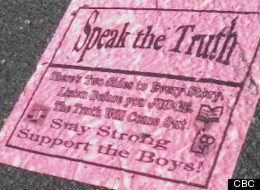
If something like that happened (just as it did with Walkerton or Ipperwash) Harper's enablers would again circulate, reminding us there are two sides to every story and that Harper is a good guy who deserves our support.  Which is exactly what the folk defending the rapers of Rehtaeh Parsons are doing right now.
 
Either bad behaviour is bad behaviour that must be punished, not rationalized, or you need to understand the context to make a sound judgement.  It can't be both.
 
Which is why there is real value in tying judgement and accountability, especially at the highest levels, together.  Those who okay negative attacks that will have real consequences for others should have the courage and conviction to wield the proverbial sword themselves.  Whether or not you're willing to step into the ring and put your own skin in the game is the ultimate test of what someone believes in.  Making it so that you have no alternative might just convince the players to think through their choices before acting rashly.
 
Andrew Coyne's on to something with this personal accountability concept; let's just hope he doesn't lose his head over it.

Tuesday, 16 April 2013

Oakville vs. Boston: Where Ozymandias Went Wrong


Two tales of humanity today:


A Political Party looking to squeeze out another win.  A wealthy community with the highest energy consumption rate in the province wanting to eat their cake but not have the bakery next door.  Companies seeking to be the most competitive to get the gig successfully misrepresenting their capacity and taking the taxpayer for something of a ride - only feasible because it was the lowest price, not the best service, that was prioritized.  Opposition Parties looking to beat down the Governing Party so that they can take the reigns themselves.  Everyone circles the wagons, claims the high ground and looks for ways to undercut others.

It's free-market competition at its best; people compete, out of the competition comes failures, someone gets punished and then the cycle repeats, looking for the next massive failure to pin on others for strategic personal gain.  Oakville threatening attack ad fire and electoral brimstone on anyone that doesn't enable their ridiculously-high energy use but keeps energy generation troubles away from their shores is like North Korea threatening the West for humanitarian aid instead of better managing their own resources.

What we're looking at is a classic example of the tragedy of the commons - people looking to protect their own interests in a social setting cause the system of which they are a part to fail.  Political Parties do it when they put the win above accomplishment.  Voters do it when they put their narrow wants ahead of broader social planning.  Institutions both private and public do the same when they target support for their niche areas in isolation.  When media inflates or creates problems for headlines, they are simply adding fuel to the fire.

Theoretically, we could do what Amazon does successfully; instead of chipping away at the failings of others and denying any failings ourselves, we could aim higher. 

We have it in ourselves to get past the failings of dog-eat-dog politics and collaborate on generating and maintaining systems that work well, when we have the right motivation.


Then, there's the Boston Marathon bombing.  The event itself was horrific; I have been close enough to bloody chaos to know the powerful cocktail of emotions that rise up in true crises (which differ from the PR kind, believe me).  There's the pervasive fear of not knowing what's going on, where safety is, who is in charge.  You also get bravery, self-sacrifice, people spontaneously working together and finding meaning through common purpose - helping your fellow human beings in a collaborative, dare I say social way.

EMS forces using an efficient, universally-recognized Emergency Management System quickly swung into coordinated action.  Hotlines were set up for people to find news of their relatives.  An effective runner-tracking system made the process of identification and reconnection that much easier.

Then, God bless em', there were the people - offering their homes, offering food, offering whatever they had help those in need.  Twitter became an information management system, with instructions being conveyed and re-tweeted, supportive resources being connected with real-time need, second-tier concerns like "do the blood banks have enough plasma" were raised and circulated.  By working together, these individuals have been able to accomplish what none could alone.

Here are some tweets, taken from this site:

N.E. Alerts@NEincidents
BOSTON POLICE IS REQUESTING THAT ALL SOCIAL MEDIA PAGES TO TELL PEOPLE TO GET OUT OF THE AREA OF THE MARATHON ROUTE. DO NOT STICK AROUND
Boston Police Dept. ✔@Boston_Police
BPD asking for tips via @CherylFiandaca

Amanda Soehnlen@asoehnlen
Just called MGH - they have enough blood on hand for the tragedy today, but will need blood later this week to replenish.

The Boston bombing is an example of what's worst about humanity - our capacity to inflict suffering on others for our own personal gain.  It was also an example of what makes us strong - our ability to rise above challenges and create coordinated, effective solutions.

Here's where Ozymandias went wrong - it doesn't take a crisis for people to work together.  The reason crises work best is because they trigger a powerful, emotional response: what led to people the world over contributing their prayers, dollars, resources and tweets wasn't a compulsion to react to a problem but the desire to be part of the solution.  It doesn't take a crisis to trigger proactiveness; the latent urge is always there.  It simply takes leadership to get the ball rolling.
 
As the globe becomes increasingly crowded, the opportunities for social friction are only going to increase.  Think what we may, we cannot silo ourselves off from the problems of the world - there are no Elysiums to be found.  When we attempt to think selfishly, we're simply creating new problems for ourselves down the road.  Fortunately, our increased exposure to diversity also provides us with opportunities for collaboration; as we have seen time and again, we can make the system work when we all find a way to contribute. 
 
None of us are tourists in this world.  We're in this together.  If we're to make a better world, it has to be one designed for all of us to live in.